- Quick Answer: What Is Included in a Mummy Makeover?
- What Is a Mummy Makeover?
- What Procedures Can Be Included in a Mummy Makeover?
- ✓ Abdominoplasty
- ✓ Breast Uplift
- ✓ Breast Reduction
- ✓ Breast Augmentation
- ✓ Breast Implant Removal or Exchange
- ✓ Liposuction
- ✓ Other Selected Procedures
- Is Every Mummy Makeover the Same?
- Can a Mummy Makeover Be Done in One Surgery?
- What Determines Whether Procedures Can Be Combined?
- When Is Staged Surgery Safer?
- How Might a Mummy Makeover Be Staged?
- How Is the Treatment Plan Chosen?
- What Should Patients Prioritise?
- What Are the Benefits of Combining Procedures?
- What Are the Risks of a Mummy Makeover?
- What Are the Risks of Abdominoplasty?
- What Are the Risks of Breast Surgery?
- What Are the Risks of Liposuction?
- Does Combining Procedures Increase Risk?
- What Is Recovery Like After a Mummy Makeover?
- What Happens During the First Week?
- What Happens During the First Few Weeks?
- When Can You Return to Work?
- When Can You Drive?
- When Can You Exercise?
- Why Is Childcare Planning Important?
- What Are the Alternatives to a Mummy Makeover?
- Can Exercise Correct Abdominal Muscle Separation?
- Can Non-Surgical Treatments Replace Surgery?
- Who Is a Good Candidate for a Mummy Makeover?
- Should You Wait Until You Have Finished Having Children?
- How Long Should You Wait After Pregnancy or Breastfeeding?
- Who May Not Be Suitable?
- Mummy Makeover Before and After Photos
- How Much Does a Mummy Makeover Cost?
- Is One Combined Operation Cheaper Than Staged Surgery?
- What Should a Surgical Quotation Include?
- Take our Plastic Surgery Quiz to find out if you'd be a good candidate for cosmetic surgery.
- Summary
- FAQs About Mummy Makeover Procedures UK
- Next Step: Discuss Mummy Makeover Inclusions With Miss Breahna
- Download Miss Anca Breahna's Cost of Surgery Guide
- Further Reading
Miss Anca Breahna, PhD, MSc, FEBOPRAS, FRCS (Plast), Consultant Plastic, Reconstructive and Aesthetic Surgeon in Chester, explains that a mummy makeover is a personalised combination of procedures designed to address changes affecting the breasts, abdomen, waist, and other areas after pregnancy, childbirth, breastfeeding, or weight change. It may sometimes be completed during one operation, but staged surgery can be safer or more appropriate when several extensive procedures are being considered.
A mummy makeover is not a single standard operation or a fixed treatment package. The procedures selected depend on the patient’s anatomy, symptoms, priorities, general health, future pregnancy plans, tolerance for scars, and ability to manage recovery.
For some patients, treatment may involve abdominoplasty and breast surgery, while others may benefit from liposuction or one carefully selected procedure alone. This article explains what may be included, when procedures can be combined, why staged surgery may be recommended, and how a safe treatment plan is developed.
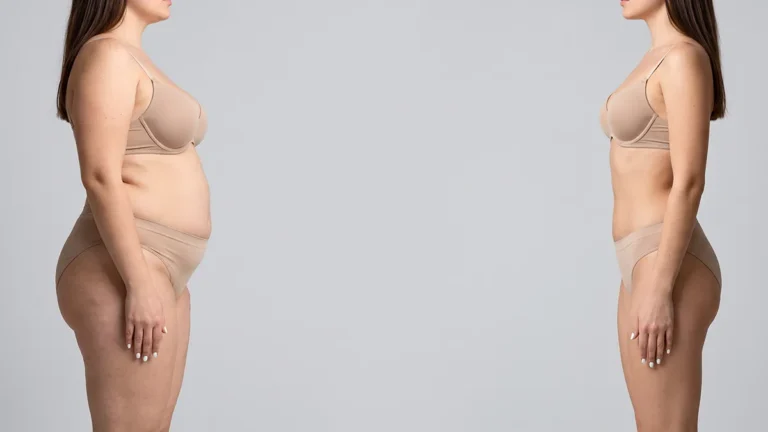
Quick Answer: What Is Included in a Mummy Makeover?
A mummy makeover may include breast surgery, abdominal contouring, liposuction, or a combination of these procedures. The exact plan is individualised, and not every patient requires treatment to every area.
Common procedures include:
- Abdominoplasty
- Breast uplift
- Breast reduction
- Breast augmentation
- Breast implant removal or exchange
- Liposuction
- Abdominal muscle repair
- Selected body-contouring procedures
A mummy makeover can sometimes be performed during one anaesthetic, particularly when the proposed procedures are limited and the patient is medically suitable. Staged surgery may be safer when the total operating time, extent of tissue removal, blood-clot risk, or recovery demands would otherwise be too high.
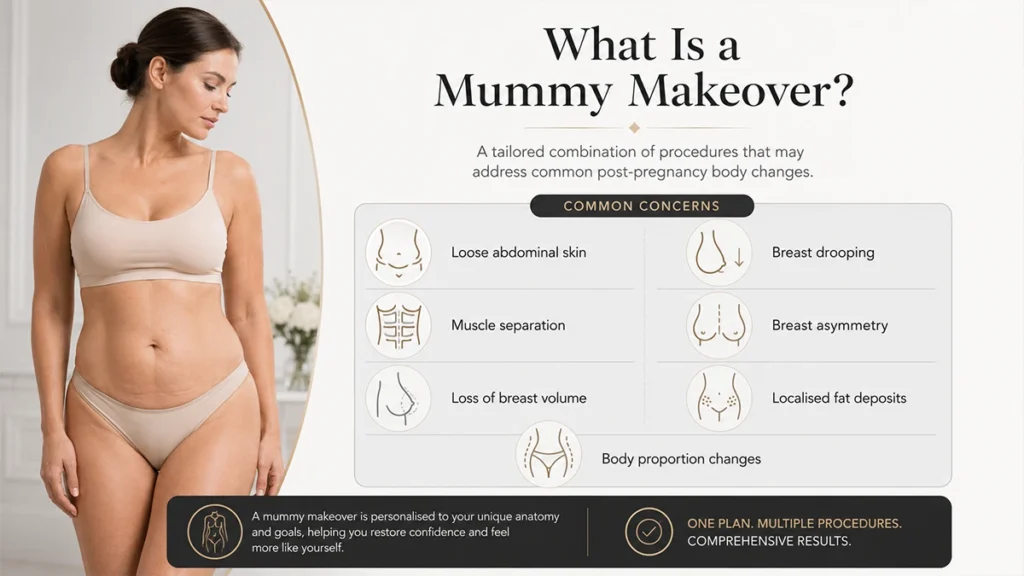
What Is a Mummy Makeover?
A mummy makeover is an informal term for an individualised combination of cosmetic surgical procedures. It is usually intended to address changes affecting the breasts, abdomen, waist, or body contour after pregnancy, childbirth, breastfeeding, ageing, or weight fluctuation.
Common concerns include:
- Loose abdominal skin
- Abdominal muscle separation
- Loss of breast volume
- Breast drooping
- Breast asymmetry
- Localised fat deposits
- Changes in body proportion
The term does not describe one specific operation, and it does not mean that every patient must undergo both breast and abdominal surgery. It can also be considered by patients who have not had children if their anatomy and goals are suited to the procedures involved.
What Procedures Can Be Included in a Mummy Makeover?
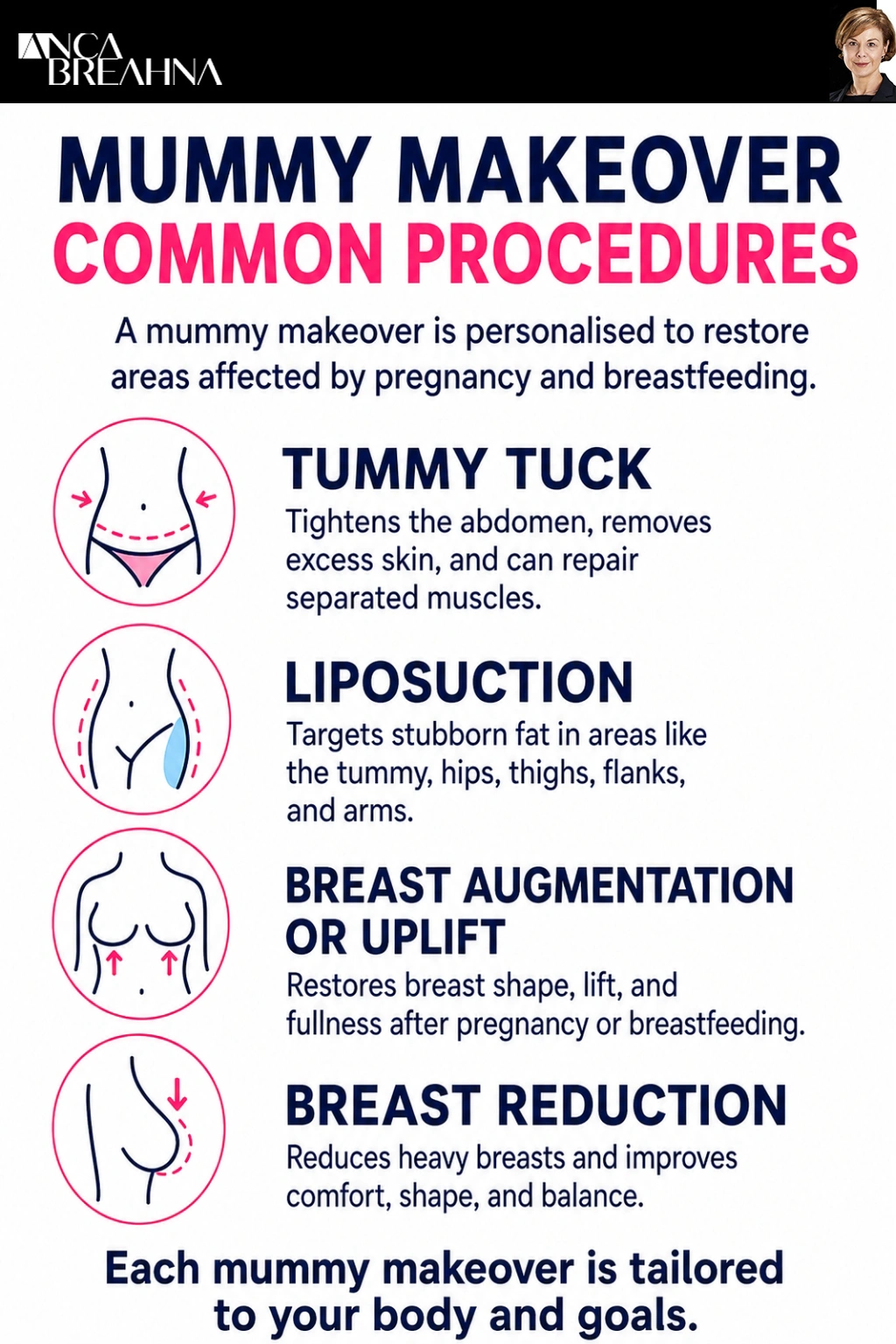
The procedures included in a mummy makeover depend on the areas of concern and the changes found during examination. Most treatment plans involve some form of breast surgery, abdominal surgery, liposuction, or a carefully selected combination.
The main options may include:
- Abdominoplasty
- Breast uplift
- Breast reduction
- Breast augmentation
- Implant removal or exchange
- Liposuction
- Muscle repair
- Selected scar revision
Adding more procedures does not automatically produce a better result. A limited, well-planned combination may be safer and more proportionate than attempting to address every concern at once.
✓ Abdominoplasty
Abdominoplasty, commonly called a tummy tuck, is designed to remove excess abdominal skin and improve the contour of the abdomen. It may also include tightening or repairing separated abdominal muscles when this is clinically appropriate.
Different forms of abdominoplasty include:
- Full abdominoplasty
- Mini abdominoplasty
- Extended abdominoplasty
- Fleur de Lys abdominoplasty
- Abdominoplasty with muscle repair
A full abdominoplasty usually involves a scar across the lower abdomen and a scar around the umbilicus. The exact scar pattern depends on the amount and distribution of excess skin.
Abdominoplasty is not the same as weight-loss surgery, and it is not intended to remove large amounts of internal abdominal fat. Its main purpose is to address loose skin, selected fat deposits, and structural changes affecting the abdominal wall.
✓ Breast Uplift
A breast uplift, or mastopexy, reshapes and raises breast tissue when the breasts have become lower, flatter, or more stretched. It may be performed alone or combined with an implant, breast reduction, implant exchange, or correction of asymmetry.
A breast uplift may address:
- Low nipple position
- Stretched breast skin
- Loss of shape
- Uneven breasts
- Reduced upper-breast fullness
The procedure involves removing excess skin and reshaping the remaining breast tissue. Scar patterns vary and may include scars around the areola, vertically down the breast, or within the fold beneath the breast.
An uplift improves breast position but does not necessarily create significant upper-breast fullness. Patients who want greater volume may require an implant, although an implant is not appropriate or necessary for everyone.
✓ Breast Reduction
Breast reduction removes breast tissue, fat, and skin to reduce volume and improve proportion. It may be considered when enlarged or heavy breasts cause discomfort, restrict activity, or appear out of balance with the abdomen and waist.
Potential benefits may include:
- Reduced breast weight
- Improved breast position
- Better body proportion
- Correction of asymmetry
- Relief from selected physical symptoms
A breast uplift forms part of most breast reductions because the nipple and breast tissue are repositioned. Patients should understand that reduction surgery creates permanent scars and can alter breast or nipple sensation.
The ability to breastfeed may also be affected, although the degree of impact varies according to anatomy and surgical technique. This should be discussed carefully with patients who may wish to breastfeed in the future.
✓ Breast Augmentation
Breast augmentation uses implants to increase volume or restore fullness that has reduced after pregnancy, breastfeeding, weight loss, or ageing. It may be performed alone when the skin and nipple position are suitable.
Planning involves decisions about:
- Implant size
- Implant shape
- Implant profile
- Implant position
- Incision placement
- Overall breast proportion
An implant does not reliably correct significant breast drooping. When the nipple sits too low or there is substantial loose skin, an uplift may be required in addition to augmentation.
Breast implants are not lifetime devices, and future monitoring or surgery may be required. Implant-related risks, including capsular contracture, rupture, displacement, and infection, should be discussed before treatment.
✓ Breast Implant Removal or Exchange
Patients who already have breast implants may include implant removal or exchange within a mummy makeover plan. Pregnancy, breastfeeding, ageing, implant changes, or capsular contracture can alter the appearance and feel of previously augmented breasts.
Treatment options may include:
- Implant exchange
- Implant removal
- Removal with uplift
- Exchange with uplift
- Correction of implant position
- Treatment of capsular contracture
Removing an implant may leave the breast looking smaller, flatter, or more deflated than expected. An uplift may therefore be recommended when there is significant stretched skin or a low nipple position.
The decision should be based on implant condition, breast shape, skin quality, symptoms, and the patient’s long-term preference. Implant exchange should not be treated as a routine addition unless there is a clear reason for it.
✓ Liposuction
Liposuction removes localised deposits of fat through small incisions using a narrow tube called a cannula. It may be used to refine the waist, flanks, hips, abdomen, thighs, back, or bra-line area.
- Improve waist definition
- Reduce localised fullness
- Blend surrounding contours
- Treat the flanks
- Improve proportion
It does not remove significant excess skin or repair separated abdominal muscles. Patients with marked skin laxity may require an excisional procedure rather than liposuction alone.
Liposuction is often used as an adjunct rather than the central part of a mummy makeover. The amount performed must be considered carefully when it is combined with other major procedures.
✓ Other Selected Procedures
 Some patients ask whether a mummy makeover can include additional operations beyond breast and abdominal surgery. These may occasionally be considered, but every added procedure increases operating time, recovery demands, and overall complexity.
Additional procedures might include:
- Arm lift
- Thigh lift
- Labiaplasty
- Scar revision
- Correction of localised asymmetry
It is rarely appropriate to combine every requested procedure in one operation. The safest plan may involve prioritising the main concerns and treating secondary areas at a later stage.
Is Every Mummy Makeover the Same?
No two mummy makeover plans should be identical because pregnancy and weight change affect each body differently. The correct operation depends on the patient’s anatomy, skin quality, breast shape, muscle condition, previous scars, and personal priorities.
Assessment usually considers:
- Breast volume and nipple position
- Abdominal skin excess
- Muscle separation
- Fat distribution
- Previous Caesarean scars
- Weight stability
- Future pregnancy plans
- General health
Some patients require only breast surgery, while others are primarily concerned about abdominal changes. A carefully selected single procedure may sometimes provide more meaningful benefit than a larger combined operation.
Can a Mummy Makeover Be Done in One Surgery?
A mummy makeover can sometimes be completed during one operation under one anaesthetic. This may be suitable when the patient is healthy, the combination is proportionate, and the expected operating time and recovery remain within acceptable limits.
Potential advantages include:
- One anaesthetic
- One hospital admission
- One main recovery period
- Coordinated treatment of several areas
- Fewer separate periods away from work
Convenience should never take priority over safety. The fact that procedures can technically be combined does not mean that they should always be performed together.
What Determines Whether Procedures Can Be Combined?
The decision depends on the total physical burden of the planned surgery rather than the number of procedure names alone. A consultant plastic surgeon must assess how the proposed operations interact and how demanding the combined recovery will be.
Important factors include:
- Anticipated operating time
- Blood-loss risk
- Extent of tissue removal
- Medical history
- BMI
- Smoking or nicotine use
- Blood-clot risk
- Mobility after surgery
- Anaesthetic considerations
- Home support
Combining breast and abdominal surgery can make everyday movements more difficult because both the upper body and core may feel restricted. Getting out of bed, dressing, washing, and managing household responsibilities may require substantial assistance.
When Is Staged Surgery Safer?
Staged surgery means performing procedures during separate operations with recovery between them. It may be recommended when a single combined operation would be too extensive, too long, or unnecessarily difficult to recover from.
Reasons for staging may include:
- Several major procedures
- Significant medical risk
- Higher blood-clot risk
- Extensive skin removal
- Limited recovery support
- Need for more predictable healing
- Uncertainty about priorities
- Concerns about prolonged anaesthesia
Staging does not mean that the treatment plan has failed or that the procedures cannot be completed. It means that separating them is considered a safer or more manageable approach.
How Might a Mummy Makeover Be Staged?
There is no universal order for staged surgery because the sequence should reflect the patient’s priorities and risk profile. One patient may begin with abdominal surgery, while another may address breast concerns first.
Possible approaches include:
- Abdominoplasty followed by breast surgery
- Breast surgery followed by abdominal contouring
- Major surgery followed by limited liposuction
- Implant removal followed by later uplift
- Body-contouring procedures divided by area
The interval between operations depends on healing, recovery, and the patient’s general health. The next stage should only proceed when the surgeon is satisfied that recovery from the first operation is sufficiently complete.
How Is the Treatment Plan Chosen?
Choosing a mummy makeover plan requires a detailed consultation and physical examination. It should not involve selecting procedures from a standard package or attempting to recreate an exact pre-pregnancy body.
The consultation should review:
- Medical history
- Previous surgery
- Pregnancy history
- Breastfeeding history
- Current medication
- Nicotine use
- Weight stability
- Main concerns
- Scar acceptance
- Recovery responsibilities
The surgeon should identify which concerns can be improved, which changes cannot be fully corrected, and whether the proposed combination is safe. The final plan should be proportionate, realistic, and tailored to the patient’s priorities.
What Should Patients Prioritise?
Patients are often more satisfied when they identify the one or two concerns that matter most to them. This allows the surgical plan to focus on meaningful improvement rather than the maximum number of procedures.
Useful questions include:
- Which area affects me most?
- What scars am I prepared to accept?
- Do I want greater or smaller breast volume?
- Am I comfortable having implants?
- How much recovery help is available?
- Am I planning another pregnancy?
A mummy makeover should not be presented as a way to reverse every effect of pregnancy or ageing. The aim is to create a safe and realistic improvement that respects the patient’s natural anatomy.
What Are the Benefits of Combining Procedures?
Combining selected procedures may allow related breast and abdominal concerns to be addressed within one coordinated plan. It can also reduce the need for several separate admissions and recovery periods.
Potential benefits include:
- One anaesthetic
- One principal recovery
- Coordinated contour planning
- Fewer hospital admissions
- Fewer periods away from work
- Balanced correction of several areas
These advantages must be weighed against longer surgery, reduced mobility, and a more demanding early recovery. A smaller combined operation or staged plan may sometimes offer the better balance between benefit and safety.
What Are the Risks of a Mummy Makeover?
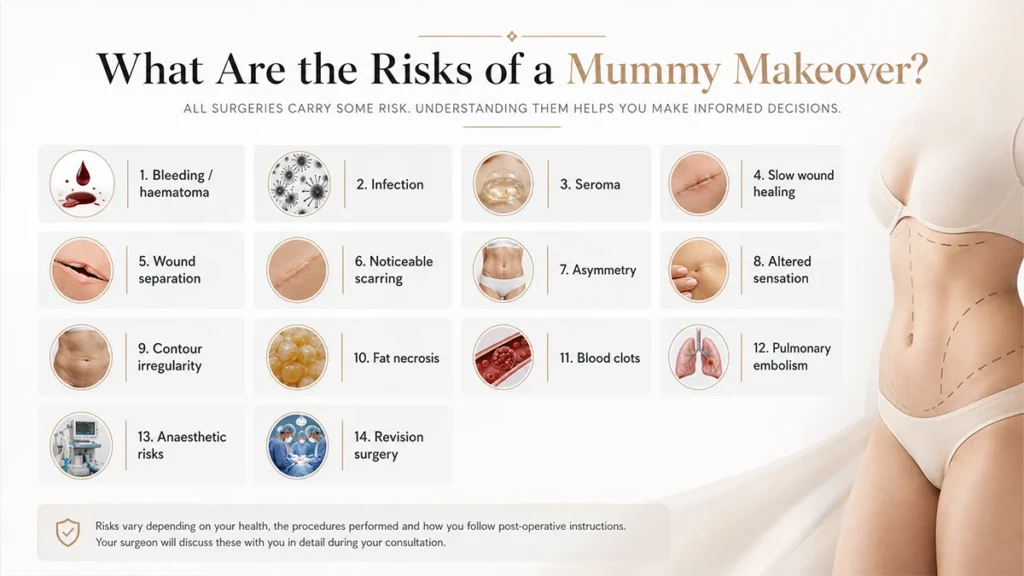
A mummy makeover combines procedures that each carry their own potential complications, so the overall risk profile depends on the exact treatment plan. The risks are influenced by the extent of surgery, operating time, medical history, weight, nicotine use, mobility, and individual healing.
Potential complications include:
- Bleeding or haematoma
- Infection
- Seroma
- Delayed wound healing
- Wound separation
- Unfavourable scarring
- Asymmetry
- Altered sensation
- Contour irregularity
- Fat necrosis
- Blood clots
- Pulmonary embolism
- Anaesthetic complications
- Need for revision surgery
A detailed consultation should explain both common and uncommon risks in the context of the proposed combination. Patients should understand that combining procedures may create a more demanding recovery than undergoing one limited operation.
What Are the Risks of Abdominoplasty?
Abdominoplasty is a substantial operation because it involves removing skin, reshaping the abdomen, and sometimes tightening the abdominal wall. The size of the surgical area and the effect on early mobility make careful risk assessment particularly important.
Specific risks may include:
- Seroma
- Delayed wound healing
- Skin or fat necrosis
- Abdominal numbness
- Widened or raised scars
- Contour irregularity
- Umbilical healing problems
- Blood clots
The lower abdominal scar is permanent, although it usually fades with time. Scar position and quality depend on anatomy, skin tension, healing, and postoperative care.
What Are the Risks of Breast Surgery?
Breast procedures may involve uplift, reduction, augmentation, implant exchange, or implant removal. Each option has a different risk profile, and implant-related risks apply when implants are used.
Possible risks include:
- Breast asymmetry
- Changes in nipple sensation
- Wound-healing problems
- Nipple or skin loss
- Fat necrosis
- Implant infection
- Capsular contracture
- Implant rupture
- Implant displacement
- Future implant surgery
Perfect symmetry cannot be guaranteed because natural differences are present before surgery and may remain afterwards. Breast shape also continues to change over time with ageing, weight fluctuation, pregnancy, and gravity.
What Are the Risks of Liposuction?
Liposuction may be a smaller component of a mummy makeover, but it still carries recognised risks. The total amount treated must be considered carefully when liposuction is combined with other major procedures.
Possible complications include:
- Contour irregularity
- Asymmetry
- Persistent swelling
- Seroma
- Skin laxity
- Altered sensation
- Fluid imbalance
- Infection
- Rare deeper injury
Liposuction should not be used to compensate for significant loose skin or poor tissue quality. Attempting excessive fat removal may increase the risk of unevenness and compromise the safety of the overall operation.
Does Combining Procedures Increase Risk?
Combining procedures can increase the physical demands of surgery and recovery, particularly when operating time is prolonged. However, risk cannot be judged simply by counting how many procedures are included.
Important considerations include:
- Total operating time
- Amount of tissue removed
- Blood-loss risk
- Extent of dissection
- Postoperative mobility
- Blood-clot risk
- Anaesthetic duration
- General health
The safest plan may involve limiting the combined procedure or staging surgery. A responsible recommendation should be based on what is proportionate and safe rather than what is technically possible.
What Is Recovery Like After a Mummy Makeover?
Recovery is usually more demanding than recovery from one limited cosmetic procedure because several areas may be healing at the same time. The experience depends on whether treatment involves the breasts, abdomen, liposuction, muscle repair, or a combination.
Patients may experience:
- Pain and tightness
- Swelling and bruising
- Reduced mobility
- Temporary numbness
- Difficulty standing fully upright
- Dressings or drains
- Compression garment use
- Fatigue
Recovery should be planned before surgery, especially when childcare, work, driving, or household responsibilities are involved. Patients should arrange sufficient practical support rather than assuming they will be independent immediately. If your treatment includes abdominal surgery, our tummy tuck recovery guide explains the practical aspects of healing, including posture, compression garments, work and everyday activities. Your recovery instructions will reflect the full combination of procedures performed.
What Happens During the First Week?
The first week usually involves the greatest restriction in movement and daily activity. Patients may need help with washing, dressing, meals, medication, wound care, and getting in and out of bed.
Early recovery advice may include:
- Taking prescribed pain relief
- Walking gently and regularly
- Caring for drains where used
- Wearing support garments
- Sleeping in a recommended position
- Avoiding lifting and stretching
- Monitoring wounds and swelling
Breast and abdominal surgery together may make pushing, pulling, and using the arms more difficult. Assistance should be arranged in advance, particularly for patients with young children.
What Happens During the First Few Weeks?
Mobility usually improves gradually, although swelling, tightness, and fatigue can continue for several weeks. The abdomen and breasts may initially appear high, firm, uneven, or more swollen than expected.
Patients may gradually return to:
- Light daily activities
- Short walks
- Desk-based work
- Driving when safe
- Independent washing and dressing
- Gentle household tasks
Recovery should not be rushed simply because the wounds appear closed. Internal healing continues for much longer than the visible surface recovery.
For breast procedures, see our guides to breast uplift recovery, breast augmentation recovery and what is normal during breast reduction recovery. These explain procedure-specific recovery; advice after combined surgery may differ.
When Can You Return to Work?
Return to work depends on the procedures performed and the physical demands of the job. Desk-based work may be resumed earlier than work involving lifting, prolonged standing, driving, or repetitive upper-body movement.
Relevant factors include:
- Pain and fatigue
- Mobility
- Wound healing
- Garment use
- Driving requirements
- Access to breaks
- Physical workload
Patients should plan for a realistic period away from work rather than relying on the earliest possible return date. A phased return may be more manageable for some roles.
When Can You Drive?
Driving can resume only when the patient can enter and leave the car comfortably, wear a seat belt, control the vehicle, and perform an emergency stop safely. Pain medication, restricted movement, drains, and fatigue may delay readiness.
Patients should also check:
- Surgeon advice
- Insurance requirements
- Medication warnings
- Comfort with steering
- Ability to look over the shoulder
- Confidence performing sudden movements
Driving too early can place the patient and others at risk. Readiness should be based on safe physical function rather than a fixed number of days.
When Can You Exercise?
Gentle walking usually begins early to support circulation and reduce the risks associated with immobility. More strenuous exercise must be delayed until the surgeon confirms that the tissues have healed sufficiently.
A gradual return may include:
- Short walks
- Longer gentle walks
- Light cardiovascular activity
- Progressive lower-body exercise
- Delayed abdominal training
- Delayed chest and upper-body training
Heavy lifting and intense exercise can increase pain, swelling, bleeding, wound tension, or muscle-repair strain. Each stage should be introduced according to healing rather than fitness level alone.
Why Is Childcare Planning Important?
Patients may be unable to lift babies or young children during the early recovery period. Even routine tasks such as carrying, bathing, dressing, or placing a child into a car seat may exceed postoperative restrictions.
Before surgery, patients should arrange help with:
- Lifting children
- School or nursery journeys
- Bathing and dressing
- Bedtime routines
- Meal preparation
- Household duties
Childcare planning is a significant part of safe recovery rather than a minor convenience. Limited support may be one reason to reduce the extent of surgery or consider staging.
What Are the Alternatives to a Mummy Makeover?
A combined operation is not the only way to address post-pregnancy or weight-related changes. Some patients achieve their goals more safely through one procedure, staged treatment, non-surgical management, or no treatment.
Alternatives may include:
- Abdominoplasty alone
- Breast surgery alone
- Liposuction alone
- Staged surgery
- Physiotherapy
- Non-surgical body contouring
- Supportive clothing or bras
- Choosing no surgery
The best alternative depends on which concern is most important and what level of change is realistic. A smaller operation may offer a more manageable balance of benefit, scars, risk, and recovery.
Can Exercise Correct Abdominal Muscle Separation?
Targeted exercise and physiotherapy may improve core strength, posture, and function in selected patients. They cannot remove substantial loose skin and may not fully correct significant structural separation.
Physiotherapy may be particularly valuable for:
- Core weakness
- Poor abdominal control
- Back discomfort
- Postural changes
- Mild muscle separation
- Preparation before surgery
An assessment can help distinguish functional weakness from changes that require surgery for structural correction. Exercise remains beneficial for health even when it cannot reproduce the effects of abdominoplasty.
Can Non-Surgical Treatments Replace Surgery?
Non-surgical treatments may offer modest improvements in localised fat, skin texture, or tissue firmness for carefully selected patients. They cannot reliably remove large amounts of loose skin, lift significantly drooping breasts, or repair abdominal muscles.
Possible options include:
- Non-surgical fat reduction
- Skin-tightening treatments
- Physiotherapy
- Medical weight management
- Supportive bras
- Compression clothing
These approaches may be suitable for patients seeking limited change or wishing to avoid surgery. Expectations should remain realistic because non-surgical treatment does not provide the same degree of reshaping as an operation.
Who Is a Good Candidate for a Mummy Makeover?
A suitable candidate is generally in good health, has realistic expectations, and understands the scars, risks, and recovery involved. The patient should also have practical support and enough time to recover safely.
Common suitability factors include:
- Stable weight
- Good general health
- Realistic goals
- No active nicotine use
- Adequate home support
- Ability to follow restrictions
- Acceptance of permanent scars
- Stable family plans
Suitability is not based on appearance alone. Medical history, medication, previous operations, BMI, clotting risk, and emotional readiness must also be considered.
Should You Wait Until You Have Finished Having Children?
Pregnancy is still possible after many mummy makeover procedures, but it may alter the result. Abdominal skin, repaired muscles, and breast tissues can stretch again during a future pregnancy.
Patients planning pregnancy soon are often advised to delay surgery because future changes may:
- Stretch abdominal skin
- Reopen muscle separation
- Alter breast volume
- Change nipple position
- Affect scars
- Create a need for revision
The decision is personal and should reflect reproductive plans, age, symptoms, and treatment priorities. Surgery may still be considered in selected circumstances after a detailed discussion.
How Long Should You Wait After Pregnancy or Breastfeeding?
There is no single interval that is correct for every patient. The body, weight, breasts, and hormones should have stabilised before surgery is assessed.
The surgeon will usually consider whether:
- Breastfeeding has finished
- Breast volume is stable
- Weight has stabilised
- Hormonal changes have settled
- The patient has recovered from childbirth
- Childcare support is available
Operating too soon may make the result less predictable because the breasts and abdomen may still be changing. Timing should be decided after individual assessment rather than by calendar alone.
Who May Not Be Suitable?
Some patients may be advised to delay surgery or choose a different approach. This may relate to medical risk, ongoing body changes, recovery limitations, or unrealistic expectations.
Reasons to delay or avoid surgery may include:
- Unstable weight
- Ongoing breastfeeding
- Planned pregnancy soon
- Nicotine use
- Uncontrolled medical conditions
- High blood-clot risk
- Inadequate home support
- Unrealistic expectations
Being advised to wait does not mean the patient’s concerns are unimportant. It means that the current timing or proposed procedure may not offer an acceptable balance of safety and benefit.
Mummy Makeover Before and After Photos


How Much Does a Mummy Makeover Cost?
There is no single price for a mummy makeover because it is not one standard procedure. The total cost depends on the operations selected, their complexity, operating time, hospital requirements, and whether treatment is combined or staged.
Costs may include:
- Surgeon’s fee
- Anaesthetist’s fee
- Hospital and theatre charges
- Breast implants where required
- Compression garments
- Medication
- Overnight stay
- Routine follow-up
- Pathology where appropriate
A personalised quotation should only be provided after consultation and examination. Patients should understand exactly what is included and whether any additional fees may arise.
For procedure-specific pricing information, see our guides to tummy tuck cost in Chester, breast uplift surgery cost, breast reduction cost and breast augmentation cost. These provide context for individual procedures; your combined or staged treatment requires a personalised quotation rather than simply adding the individual prices together.
Is One Combined Operation Cheaper Than Staged Surgery?
Combining procedures may reduce duplication of some hospital, anaesthetic, and recovery-related costs. However, financial convenience should never be used to justify a combination that is not considered safe.
Staged surgery may involve:
- Separate hospital fees
- More than one anaesthetic
- Additional time away from work
- More than one recovery period
- Separate garments or medication
The safest surgical plan should be chosen first, with cost discussed afterwards. A lower total price does not compensate for increased medical risk or an unmanageable recovery.
What Should a Surgical Quotation Include?
A clear quotation should identify the procedures included and the services covered. It should also explain whether implants, garments, follow-up, or revision policies are included.
Patients should ask about:
- Surgeon’s fee
- Anaesthetist’s fee
- Hospital costs
- Implant costs
- Overnight stay
- Garments
- Medication
- Follow-up
- Revision policy
Comparisons should be based on the complete treatment package rather than the headline price alone. Surgeon qualifications, hospital standards, aftercare, and safety planning are equally important.
Take our Plastic Surgery Quiz to find out if you’d be a good candidate for cosmetic surgery.
Summary
A mummy makeover is a personalised combination of procedures that may include breast surgery, abdominoplasty, liposuction, or selected additional treatment. It can sometimes be completed during one operation, but staging may be safer when surgery would otherwise be too extensive or recovery too demanding.
The correct plan should be based on anatomy, general health, future pregnancy plans, practical support, and realistic goals. Safety, proportionate treatment, and an achievable recovery should always take priority over performing the maximum number of procedures at once.
FAQs About Mummy Makeover Procedures UK

If I only hate my body in certain clothes, does that mean surgery is not for me?
Not necessarily. Clothing can reveal the specific areas where shape and skin laxity bother you most. A good consultation translates “this dress always pulls here” into an anatomical assessment rather than dismissing it as vanity.
What is the weirdest sign I might not need liposuction even if I want it?
If most of what you dislike is loose, crepey skin rather than a true fat pocket. Liposuction removes fat, not excess skin, and BAAPS notes it is most effective when skin is firm and elastic.
Can a mummy makeover fix a bloated belly feeling?
A tummy tuck can improve the skin envelope and sometimes abdominal wall support, but it does not treat digestive bloating. The NHS frames abdominoplasty as contour surgery, not a digestive treatment.
If I want my breasts “higher” but not “bigger,” what is usually the most direct option?
A breast lift is designed to lift and reshape. BAAPS describes mastopexy as lifting and reshaping breasts, often after pregnancy and breastfeeding changes.
Is it a red flag if a clinic says everyone should do it in one operation to save money?
Yes. “One surgery” may be appropriate for some people, but it should never be presented as the default for everyone. Professional expectations emphasise informed consent, time to decide, and avoiding pressure.
What if I want the results but I cannot afford much time off work?
This is a common reason to stage surgery, or to reduce the scope of the plan. A good surgeon helps you prioritise what matters most rather than pushing the biggest combination.
What is a strange but important question to ask about recovery support?
Ask who will help you do basic things in the first few days, like getting out of bed, showering, and lifting a child. The “help at home” variable often matters as much as the medical plan.
Medical References
- Mommy Makeover / Stanford Medicine – https://med.stanford.edu/cosmeticsurgery/aestheticservices/body/mommy-makeover.html
- Combined Surgery (Mommy-Makeover) Compared to Single Procedure (Abdominoplasty) in After-Pregnancy Women: A Prospective Study on Risks and Benefits / Aesthetic Plastic Surgery – https://link.springer.com/article/10.1007/s00266-023-03579-6
- The Association of Abdominoplasty with Breast Reduction (Mommy Makeover): Experience in An African University Hospital / Academic Journal of Surgery – https://ajs.tums.ac.ir/index.php/ajs/article/view/258
- ‘Mommy makeover’ combines procedures for postpartum body contouring / Science Daily – https://www.sciencedaily.com/releases/2015/07/150730093659.htm
Next Step: Discuss Mummy Makeover Inclusions With Miss Breahna
A mummy makeover is a tailored combination, most commonly involving a tummy tuck and breast surgery, sometimes with liposuction to refine contour. The NHS describes abdominoplasty as removing excess skin and fat and sometimes tightening abdominal muscles, particularly relevant after pregnancy or major weight loss. BAAPS leaflets describe breast uplift and abdominoplasty in a way that supports informed planning rather than marketing promises.
Whether it is done in one surgery depends on your health, your anatomy, the extent of the plan, and the safest recovery pathway for you. Studies have examined combined procedures and their safety profiles, which supports why the decision should be evidence-informed and individual.
If you want a personalised plan in Chester, UK, book a consultation with Miss Anca Breahna, Consultant Plastic & Reconstructive Surgeon. For those preferring the online approach, her clinic website has a contact page and a complimentary photo assessment page where you can send enquiries, photos, or appointment requests securely and privately. Miss Anca Breahna can help you understand what mummy makeover procedures UK would realistically include for your body and whether one surgery or a staged approach is the safer, more satisfying route.
Download Miss Anca Breahna’s Cost of Surgery Guide

Further Reading
- Read Miss Anca Breahna’s Procedure Page on Mastopexy Augmentation (Uplift With Implants)
- Read Miss Anca Breahna’s Blog about Mummy Makeover FAQs in Chester
- Read Miss Anca Breahna’s Blog about How to Reduce Swelling and Bruising After a Mummy Makeover Surgery
- Read Miss Anca Breahna’s Blog about Is Abdominoplasty Major Surgery?
- Read Miss Anca Breahna’s Blog about Do I Need a Breast Uplift or Can Implants Alone Fix Sagging?