Breast Uplift Recovery: Complete Guide to Healing Safely and Comfortably
This complete breast uplift recovery guide explains what to expect after mastopexy, from early swelling, soreness, and support bras to returning safely to work, exercise, driving, and normal activities. Ms Anca Breahna also outlines practical advice on sleep, scar healing, clothing, nutrition, and warning signs to help patients recover safely and comfortably.
Breast uplift surgery, also called mastopexy, reshapes and lifts drooping breasts by removing excess skin and tightening surrounding tissue. This recovery guide explains what healing usually involves with Ms Anca Breahna, Consultant Plastic Surgeon in Chester, and gives practical advice on swelling, support bras, sleep, work, exercise, scars, and returning safely to everyday life.
What Does Recovery Look Like At A Glance?
Breast uplift recovery makes much more sense when it is viewed as a sequence of stages rather than one long healing period. That usually helps patients judge progress more calmly and stops them expecting the final result too soon.
A simple overview usually looks like this:
At a glance
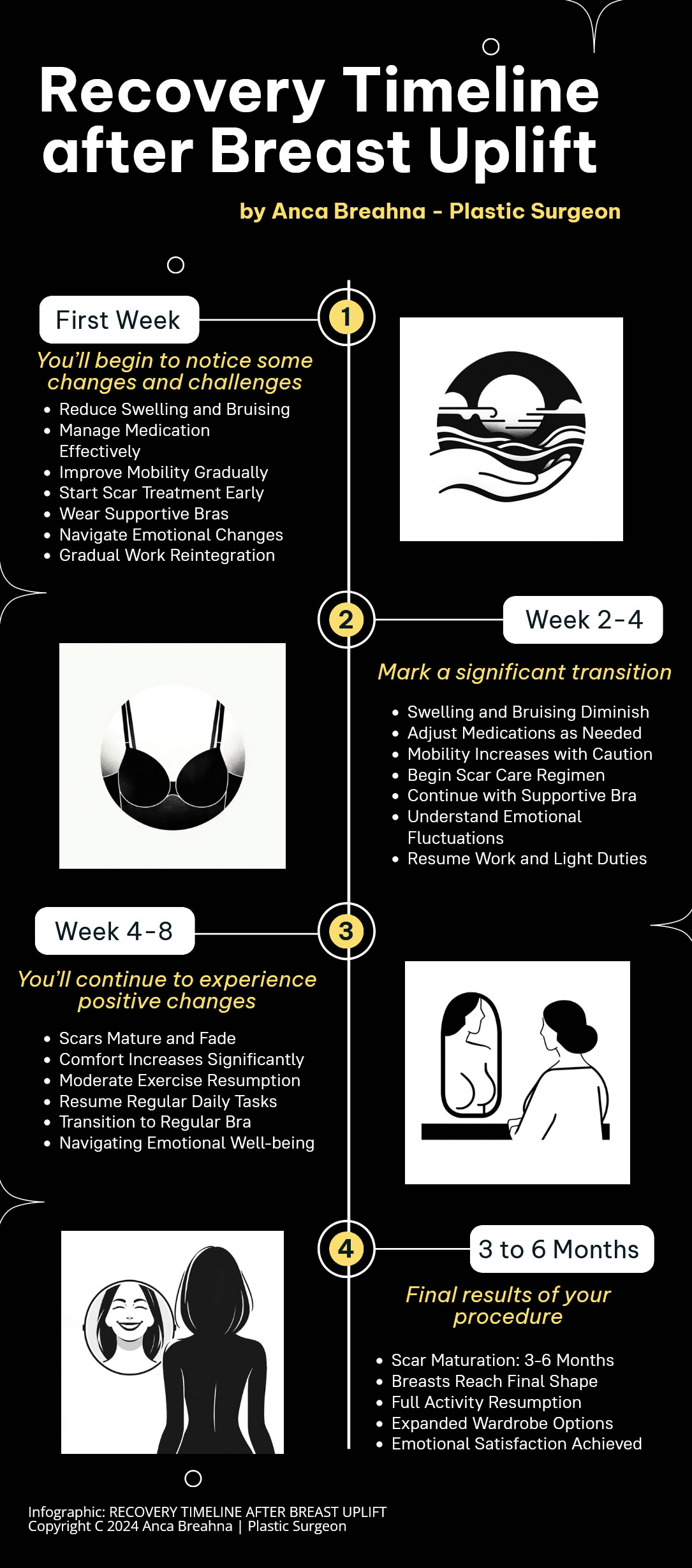
First 24 to 72 Hours
Soreness, swelling, bruising, and reduced arm comfort are often most noticeable
Week 1
The breasts often feel swollen, firm, and clearly post-operative
Week 2
Many women feel more comfortable, but the tissues are still healing
Week 3 to 4
Daily life often feels easier, though swelling may still be present
Week 4 to 6
Movement, stamina, and confidence often improve a lot
Beyond 6 weeks
Settling continues, and scars and breast softness keep changing over time
Surgeon
Miss Anca Breahna – Consultant Plastic Surgeon
The overall pattern is usually steady improvement with patience, not instant normality. Recovery becomes much less stressful when you expect progress to happen in layers.
Which Recovery Points Matter Most Right At The Start?
Breast uplift recovery usually improves in stages, with the first 1 to 2 weeks focused on swelling, tenderness, rest, and protecting the chest from too much movement. Many women feel significantly better after that point, but swelling, bra comfort, scar change, and full confidence with exercise often take longer.
The key early facts are usually these:
Sleeping – often easier on your back with the upper body slightly raised
When To Ask For Help – worsening pain, redness, unusual swelling, or wound concerns need review
The most useful principle is simple. Early recovery, practical recovery, and final settling are not the same thing.
What Are The Fastest Answers About Breast Uplift Recovery?
The shortest summary is that breast uplift recovery usually feels tight, swollen, and restrictive at first, then gradually becomes easier over the following weeks. Many women feel encouraged by the lifted shape early on, but still need patience with swelling, bras, work, sleep, and return to exercise.
The fastest practical answers are usually these:
the first week is often the most physically noticeable
swelling, bruising, and heaviness are common early on
a soft supportive bra usually helps a great deal
desk-based work often feels possible before physical work
walking usually comes before structured exercise
upper-body and high-impact gym work usually need extra caution
scars continue changing long after the early recovery phase
the breasts may sit higher or feel firmer before they soften and settle
A short overview like this helps patients focus on what matters most early on. It also makes the rest of recovery feel easier to understand.
How Does Healing Usually Feel After A Breast Uplift?
Recovery after mastopexy usually feels more tight, heavy, sore, and protective than sharply painful at rest, especially in the early phase. What many women notice most is not severe pain, but how often the chest is involved in sitting up, dressing, lifting the arms, sleeping, and ordinary movement.
The most common early sensations often include:
breast heaviness
chest tightness
tenderness around the incisions
soreness underneath the breasts
awareness of swelling
limited comfort when lifting the arms
tiredness after small amounts of activity
These sensations are usually normal because the body is adjusting to swelling, reshaping, wound healing, and the new lifted breast position. Recovery often feels more physically noticeable and restrictive than patients expect, even when it is progressing normally.
Ms Breahna’s Clinical Note
Many women expect a breast uplift to feel instantly neater and more comfortable because the breast shape is improved straight away. In reality, better shape often comes alongside temporary swelling, tightness, and tenderness while the tissues are still settling.
How Do The First 24 To 72 Hours Usually Go?
The first 24 to 72 hours are usually the most physically noticeable stage, with soreness, swelling, bruising, and reduced movement all feeling very present. This is also when getting dressed, sitting up, and lifting the arms can feel more awkward than many patients expected.
Many women notice:
breast soreness
swelling
bruising
tightness
tiredness after short periods upright
limited comfort with lifting the arms
strong awareness of dressings and the support bra
A steady early routine often helps most:
rest sensibly
take short gentle walks
stay on top of pain relief
wear the bra as advised
avoid lifting
avoid stretching too far overhead
The aim is to protect healing tissues, not to move normally straight away. Small, careful decisions in this stage often shape how manageable the rest of the first week feels.
Which Changes Are Most Common In Week 1?
Week 1 is usually when the breasts feel most swollen, sore, and obviously post-operative, even if the pain is not severe all the time. The chest may feel firm, supported, and slightly protective, and the breasts may sit higher or feel more swollen than expected.
Common week 1 features often include:
swelling
bruising
soreness around the incisions
heaviness or firmness
cautious arm movement
fatigue
frequent awareness of the support bra
This is often the week when patients focus most on wound care, comfort, and whether the breasts look higher or firmer than expected. In many cases, that early appearance reflects normal swelling rather than the final result.
How Does Week 2 Often Compare With Week 1?
By week 2, many women feel noticeably better, but the tissues are still healing and still need protection from pressure, strain, and overconfidence. Improvement is often obvious by this point, yet it is also common to feel well enough to do more than is actually sensible.
Week 2 often brings:
less soreness at rest
easier walking
better confidence with light daily tasks
swelling that is still present
breasts that may still feel firm
less fear about moving normally
Feeling improved is not the same as being fully healed. The chest still benefits from a cautious approach to work, lifting, sleep, and exercise.
What Improvement Is Often Seen In Weeks 3 And 4?
Weeks 3 and 4 often bring more visible and practical improvement, especially in movement, day-to-day comfort, and confidence with ordinary routines. The breasts may still feel somewhat firm or swollen, but daily life usually feels less dominated by recovery by this point.
Progress in this stage often includes:
easier arm movement
less chest tightness
improved posture comfort
reduced swelling
more confidence with desk-based work
less awareness of the breasts during light activity
This is often when patience matters most. Feeling better is helpful, but it does not automatically mean the chest is ready for gym work, lifting, or sleeping in any position you like.
How Does Recovery Often Change Between Weeks 4 And 6?
Weeks 4 to 6 are often a turning point, with movement, stamina, and general comfort usually feeling much more normal by this stage. Many women feel encouraged here, but swelling, scar change, and deeper tissue healing are still continuing in the background.
This stage often brings:
less swelling
easier daily movement
improved stamina
more comfort in bras and clothing
fewer sleep interruptions
growing confidence about work and routine
This phase often feels reassuring, but it is still part of recovery. The chest may feel ready for more before the tissues are actually ready to tolerate it.
What Usually Continues To Improve After 6 Weeks?
Beyond 6 weeks, many women are through the main early recovery phase, but the breasts still continue to soften, settle, and feel more natural over time. This is often the point when recovery feels less like active healing and more like gradual refinement.
Longer-term improvement often includes:
subtle swelling settling further
scars softening and changing colour
breasts feeling less firm
more confidence in clothing
increased comfort during exercise
greater comfort with the lifted breast shape
This is why early recovery and full settling should be treated as different stages. Feeling better often comes before the final shape and scar maturity are fully established.
How Much Pain, Tightness, And Early Discomfort Are Usually Normal?
Most women do not describe breast uplift recovery as constant severe pain, but they often describe soreness, tenderness, tightness, and a strong awareness of the chest. In practical terms, recovery usually feels more restrictive and physically noticeable than dramatically painful.
A practical way to think about discomfort is this:
0 to 2 out of 10 – mild awareness only
3 to 4 out of 10 – noticeable soreness, especially with movement
5 to 6 out of 10 – movement still feels guarded, and sleep or seatbelts may feel uncomfortable
7 out of 10 or more – significant discomfort, not a good point for driving or demanding activity
Many women feel more reassured once they understand that recovery often feels tight and heavy rather than dramatically painful. That distinction usually makes the whole process feel less alarming.
How Can A Pain Scale Help With Driving Decisions?
Driving is best judged by comfort, arm movement, and safe control rather than by a fixed number of days after surgery. The key question is not whether enough time has passed, but whether you can sit, steer, reposition, and brake without hesitation or significant distress.
A practical self-check often includes:
Can you steer comfortably?
Can you wear a seatbelt without significant discomfort?
Can you lift and move your arms safely?
Can you reverse or park without hesitation?
Can you brake suddenly if needed?
Are you no longer taking medication that affects alertness?
If the answer is no to any of these, it is usually too early to drive. This is practical guidance rather than a legal rule, so your surgeon’s advice still matters.
How Long Does Swelling Last After Breast Uplift?
Swelling after breast uplift usually lasts longer than patients first expect, even when the worst early discomfort settles quite quickly. The most obvious swelling improves first, but residual swelling can continue for weeks and may still affect shape, firmness, and bra comfort while the breasts settle.
What patients often notice is:
the breasts feel fuller early on than expected
swelling is often most obvious in the first days
one side may look slightly more swollen than the other for a while
the breasts may feel firmer while swelling is still present
activity can make swelling feel more noticeable later in the day
shape changes gradually as swelling eases
Swelling is one of the biggest expectation gaps after mastopexy. Many women feel better physically before the breasts look fully settled, which is why the early shape should not be judged too quickly.
When Does Work Start Feeling More Manageable Again?
Going back to work usually feels more manageable once sitting upright, moving your arms, wearing supportive clothing, and getting through the day all feel less intrusive than they did in the first week. For many women, that is around 2 to 4 weeks for lighter roles, but the real timing depends much more on what the working day actually involves than on the calendar alone.
Key factors often include:
whether the role is desk-based or active
whether lifting is required
whether commuting is involved
whether work clothing is comfortable
how tired you still feel
whether regular breaks are possible
Helpful return-to-work strategies often include:
returning gradually
taking posture breaks
avoiding carrying heavy bags
wearing soft supportive bras
planning realistic rather than perfect productivity
A phased return is often more comfortable than expecting a full normal workday immediately.
How Can You Restart Exercise Without Rushing Healing?
Exercising after breast uplift usually needs to be reintroduced in stages because the body may feel better before the chest is ready for repetitive movement, impact, or upper-body strain. Gentle walking is often the first thing to resume, but structured workouts usually need more patience and a steadier return.
A sensible return often looks like this:
first days – gentle walking only
first 2 weeks – light movement, no strain
weeks 3 to 4 – gradually increase walking and light activity
weeks 4 to 6 – broader movement may feel more realistic
after 6 weeks – more structured exercise may be possible depending on symptoms
Exercise usually goes best when it follows comfort and tissue tolerance rather than impatience. A slower return often makes recovery feel more secure and much less frustrating.
When Can Returning to the Gym be Handled More Safely?
The gym usually needs more patience than walking because it adds impact, repetition, bracing, and upper-body strain that healing tissues may not tolerate well yet. Many women feel mentally ready to go back before the breasts are physically ready for what gym activity actually demands.
Activities that often need the most cautioninclude:
running
jumping
rowing
heavy upper-body work
push-ups
high-impact classes
lifting that strains the chest or shoulders
A safer gym return often means:
starting with low impact
keeping weights light
delaying strenuous chest and upper-body work
stopping if swelling or soreness increases afterwards
progressing gradually rather than trying to regain fitness quickly
Daily life often feels easier before the gym does, and that difference is normal. Feeling better is encouraging, but it does not automatically mean the chest is ready for training.
When Is Intimacy Usually More Comfortable To Resume?
Intimacy usually needs a cautious return because pressure, movement, and breast sensitivity can still matter even when soreness is already improving. The key question is not only whether enough time has passed, but whether the breasts and chest feel comfortable and less protective with ordinary contact and position changes.
A sensible approach usually involves asking:
does breast movement feel comfortable?
would pressure still feel too tender?
are the wounds healing normally?
do position changes feel natural rather than stressful?
A gradual return usually feels safer and more reassuring than treating intimacy as a fixed-date milestone. Most women feel more confident when this part of recovery is guided by comfort as well as time.
Which Clothes Usually Feel Best While Healing Continues?
Clothing can quietly support recovery or make the chest feel more irritated all day without you fully realising why. The first few weeks usually feel easier when bras, tops, and fabrics reduce rubbing, pressure, and awkward dressing movements.
Clothing that often feels better usually includes:
soft non-underwired support bras
front-fastening bras if advised
loose tops
button-up or zip-up clothing
fabrics that do not rub the incisions
Clothing that often needs more caution usually includes:
underwired bras too early
very tight sports bras unless specifically advised
rough fabrics over the incisions
tops that are difficult to pull on over the head
Comfortable clothing reduces daily friction and makes dressing less tiring. This is one of those details that seems small before surgery and then matters a great deal afterwards.
How Can Sleep Feel Easier During Mastopexy Recovery?
Sleep usually becomes easier when pressure on the chest is reduced and movement in bed feels more supported and less awkward. Most women sleep better when they focus on minimising pulling and pressure rather than trying to find one perfect position.
Helpful sleep adjustments often include:
sleeping on your back
raising the upper body slightly
using pillows for arm support
avoiding lying directly on the chest
wearing soft, comfortable nightwear
The goal is not perfect sleep. The goal is to reduce pressure enough that nights feel less physically demanding.
When Can You Sleep On Your Side After Breast Uplift?
Side sleeping usually feels realistic only once chest pressure has eased enough that rolling or lying sideways no longer feels uncomfortable or protective. Many women want a fixed date for this, but in practice it is usually better judged by comfort, swelling, and whether the breasts still feel tight or sore.
Useful signs that side sleeping may still be too soon often include:
sharp awareness of pressure
soreness when rolling over
a pulling feeling through the chest
tenderness from bra pressure already feeling significant
poor sleep because the position feels awkward
More reassuring signs often include:
less tightness through the chest
easier movement in bed
reduced swelling
much less tenderness with ordinary pressure
more normal comfort through the night
Side sleeping is usually best reintroduced gradually rather than all at once. If one position makes the chest feel strained, it is reasonable to avoid it for longer.
How Do Food, Fluids, And Nutrition Help With Recovery?
Good healing usually goes more smoothly when the body is properly nourished, hydrated, and not under extra stress from restrictive eating. Recovery is not only about the incisions – it also depends on whether the body has what it needs to repair tissue and manage inflammation.
Helpful recovery habits often include:
eating regular meals
getting enough protein
drinking enough fluid
including fruit and vegetables
avoiding long periods without eating
It often helps to avoid:
restrictive dieting
poor hydration
excess alcohol early on
under-eating because appetite is reduced
The early healing phase is usually not the time for calorie cutting. Good recovery is supported by nourishment, not restraint.
What Usually Gives Mastopexy Scars The Best Chance To Heal Well?
Scar healing usually starts best when the incisions are protected, kept calm, and not irritated by strain or friction in the first phase. Early scar appearance is never the final result, and many women feel more reassured once they understand how slowly scar change can happen.
Helpful early scar-care priorities often include:
protecting the incisions
following dressing advice
not smoking
wearing comfortable support
avoiding strain too early
asking before using scar products or massage
The main point is simple. Good early healing usually matters more than doing too much too soon. A calm start often gives scars the best chance to settle well over time.
When Can You Wear A Normal Bra Or Underwired Bra Again?
A normal bra or underwired bra usually needs more patience than patients first expect because the chest may look better before it is ready for firmer pressure, different support, or rubbing over the healing areas. Many women feel ready to return to their usual bras before the breasts and incisions are physically comfortable with firmer pressure. Our guide to post-operative bras after breast surgery explains why supportive bras are commonly used during early recovery.
Signs that it may still be too soon often include:
tenderness along the incision line
discomfort with even soft bra pressure
ongoing swelling
breasts still feeling firm or high
friction making the chest more noticeable by the end of the day
More reassuring signs often include:
much less tenderness
reduced swelling
the support bra feeling easy rather than necessary
more natural breast movement
less awareness of the incisions in daily life
This is one of those stages that usually goes better when it is not rushed. In most cases, comfort should guide timing more than wardrobe frustration.
What Happens If You Do Too Much Too Soon After Breast Uplift?
Doing too much too soon usually does not cause dramatic problems immediately, but it often makes recovery feel more swollen, more sore, and more frustrating than it needs to be. Many setbacks happen because the chest starts to feel better before the tissues are ready for the amount of movement or strain being asked of them.
Patients often notice this when they:
restart workouts too early
lift more than they should
spend too long without rest
switch into less supportive bras too soon
stretch or reach repeatedly overhead
assume reduced soreness means full healing
The body often gives a warning before a bigger setback. More swelling, more tightness, or a return of discomfort usually means it is time to slow down rather than push through.
Which Habits Help – And Which Ones Usually Set Recovery Back?
Recovery usually feels smoother when the basics are kept simple and steady rather than when patients keep testing how much they can get away with. The most helpful routine is often one built around support, patience, gentle movement, and realistic pacing.
Helpful habits usually include:
take short gentle walks
wear your support bra as advised
keep wounds clean and dry as instructed
arrange help with lifting if needed
eat and drink properly
ask for review if something worries you
Habits that often set recovery back include:
returning to the gym too early
doing strenuous upper-body exercise too soon
lifting heavy bags or children too early
switching into uncomfortable bras too soon
assuming less soreness means full healing
ignoring wound or swelling concerns
Most setbacks happen when patients feel better and then overestimate how healed the tissues really are. A steady approach is usually the most comfortable one.
Which Signs Usually Suggest That Healing Is Going Normally?
Normal healing often includes symptoms that still feel worrying if they were not clearly explained beforehand, especially in the first few weeks when the breasts can feel high, firm, and unfamiliar. What matters most is whether the overall direction is gradual improvement, even if recovery does not feel perfectly even every day.
Common normal signs often include:
swelling
bruising
tenderness
firmness
tiredness
restricted comfort with arm movement
scars that are still early and noticeable
breasts feeling supported or slightly tight
These changes usually become less noticeable with time. The presence of these symptoms does not automatically mean something is wrong if they are gradually settling rather than worsening.
Which Changes Mean Review Is More Important?
Some symptoms need proper review rather than reassurance because they suggest recovery may not be following the expected pattern. The most useful distinction is usually whether things are gradually settling or clearly escalating.
You should seek advice if you notice:
worsening pain rather than improvement
increasing redness
fever
unusual swelling
offensive discharge
wound opening
sudden breast shape change
symptoms that feel clearly more severe over time
A simple rule helps here. Gradual settling is reassuring, while escalation deserves review. Patients usually feel much safer when they know exactly which changes are worth calling about.
Why Can Recovery Feel Different From One Woman To Another?
Recovery often feels different from one woman to another because the surgery itself varies, and so do lifestyle, body type, pain sensitivity, and daily demands. Even when operations are similar, healing still does not happen in exactly the same way for every patient.
Variation is normal, and most patients feel more reassured once that is explained clearly. Improvement can still be completely normal even when one recovery feels slower or more uncomfortable than someone else’s.
What Problems Can Occasionally Interfere With Healing?
Mastopexy has recognised risks and complications, which is one reason honest recovery guidance matters. Clear information usually feels more reassuring, not more frightening, because it helps patients understand what is common and what needs review.
Problems that can affect healing usually include:
infection
delayed wound healing
bleeding or haematoma
prolonged swelling
scar problems
asymmetry concerns during healing
persistent tightness or pain
the need for further review in some cases
Explaining these does not make recovery more alarming. It makes it more realistic and more useful.
How Does Ms Breahna Frame Breast Uplift Recovery?
Good recovery should be treated as part of the procedure itself and never as something separate that is left until afterwards. A strong result depends not only on the surgery, but also on clear preparation, realistic expectations, and careful pacing throughout the weeks that follow.
practical guidance on bras, sleep, work, and exercise
sensible pacing rather than rushing normal life
timely review when concerns arise
What matters most in follow-up is often not the general advice, but the specific questions patients actually ask. Why the breasts still feel tight early on. Why sleep is awkward. Why the support bra matters so much.
Send an enquiry
"*" indicates required fields
Breast Uplift Surgery Before & After
See the difference of Breast Uplift Chester has made for our clients
Blurred images may contain sensitive or explicit content. Click the toggle button to reveal the images.
Take our Plastic Surgery Quiz to find out if you'd be a good candidate for cosmetic surgery.
FAQs About Breast Uplift Recovery
That is common early on because swelling and tissue tension can make the breasts sit higher and feel firmer than the final result. They usually soften and settle gradually as healing progresses.
Yes, mild differences in swelling can happen because the body does not always heal in perfect symmetry. Small differences often settle as recovery continues, but worsening asymmetry should be reviewed.
That pulling feeling is often caused by healing skin, internal tissue tension, and the scars adjusting to movement. It usually improves over time, but reaching and stretching should still be done carefully in the early phase.
Yes, that is very common after breast uplift surgery. The long-term feeling of improved shape can exist alongside short-term soreness, swelling, and tightness while the tissues are still healing.
Clothing can rub against healing incisions, scar lines, and swollen tissue, even if it feels soft at first. Many women find that loose tops and supportive non-underwired bras feel much easier during the first few weeks.
Yes, many women notice scars and tightness more in the evening because swelling and general body awareness can feel stronger later in the day. That does not necessarily mean anything is wrong if symptoms still settle overall.
That can happen because the relief of seeing a lifted shape may come earlier than full tissue settling and comfort. Recovery often improves emotionally and physically at different speeds.
Knowing that your recovery advice comes from reputable sources can be reassuring. These sources help support the guidance on this page and give you a broader medical context, but your own surgeon’s advice should still come first.
Long-term results measured by BREAST-Q reveal higher patient satisfaction after “autoimplant-mastopexy” than augmentation-mastopexy – Gland Surgery – https://gs.amegroups.org/article/view/30073/26273
These sources support the broad recovery principles used throughout this page, but personalised advice from your own surgeon should always take priority.
Patients planning treatment may also want to review our guide to breast uplift surgery cost in Chester, which explains indicative pricing, what may be included and factors that can affect an individual quotation.
Ready To Schedule A Consultation With Ms Anca Breahna In Chester?
For many women, mastopexy is about more than breast position alone. It is often about restoring shape after pregnancy, weight loss, or ageing changes, feeling more confident in clothes, improving proportion, and feeling more at ease in your body. A good consultation should turn uncertainty into a clear plan - what surgery may help, what recovery is likely to involve, and how to make the process feel safe, well supported, and manageable close to home in Chester, Cheshire, and the wider North West.
Miss Anca Breahna, PhD, MSc, FEBOPRAS, FRCS (Plast), is a Consultant Plastic, Reconstructive and Aesthetic Surgeon in Chester with extensive experience in cosmetic and reconstructive breast surgery. Her training is especially relevant to mastopexy, where reshaping the breast requires careful judgement of skin excess, breast tissue, nipple position and symmetry rather than simply reducing or increasing volume.
Miss Breahna performs breast uplift surgery in Chester for women affected by breast sagging following pregnancy, breastfeeding, weight change or ageing. Depending on the degree of ptosis, she may recommend a crescent, peri-areolar, vertical or anchor-pattern lift, with treatment planned around the amount of reshaping required and the position of the nipple and areola. As an experienced plastic surgeon in Chester, she also considers whether an uplift alone is appropriate or whether another breast procedure may better address the patient’s goals, while discussing scarring, recovery and realistic long-term expectations in detail.