- Why Might You Need a Fleur de Lis Tummy Tuck?
- What Is a Standard Tummy Tuck?
- What Type of Loose Skin Does a Standard Tummy Tuck Treat?
- What Is a Fleur de Lis Abdominoplasty?
- Why Is It Called a Fleur de Lis Abdominoplasty?
- What Is the Difference Between a Fleur de Lis and a Standard Tummy Tuck?
- Why Can the Additional Vertical Excision Matter?
- Why Does Major Weight Loss Create Complex Skin Excess?
- Does the Method of Weight Loss Affect the Skin?
- Why Might a Standard Tummy Tuck Be Insufficient?
- What Can Happen if the Vertical Laxity Is Not Addressed?
- How Does a Surgeon Decide Which Operation You Need?
- How Is the Skin Examined?
- Is the Abdominal Wall Also Assessed?
- Abdominoplasty Before and After Images
- What Scars Does a Fleur de Lis Abdominoplasty Leave?
- Is the Additional Vertical Scar Worth It?
- Who Is Suitable for a Fleur de Lis Abdominoplasty?
- How Stable Should Your Weight Be?
- Can You Have Surgery After Bariatric Weight Loss?
- Who May Be Advised to Wait?
- What Are the Risks of Fleur de Lis Abdominoplasty?
- Why Is Wound Healing Particularly Important?
- Can Scars Become Thick or Raised?
- Are Blood Clots a Risk?
- What Is Recovery Like After a Fleur de Lis Abdominoplasty?
- What Happens During the First Few Days?
- When Can You Return to Work?
- When Can You Exercise Again?
- When Will the Final Result Be Visible?
- What Results Can You Expect?
- How Long Do the Results Last?
- What Are the Alternatives to Fleur de Lis Abdominoplasty?
- ✓ Standard Tummy Tuck
- ✓ Extended Tummy Tuck
- ✓ Lower Body Lift
- ✓ Panniculectomy
- Can Non-Surgical Treatment Replace Surgery?
- What Costs Should You Consider?
- Take our Plastic Surgery Quiz to find out if you'd be a good candidate for cosmetic surgery.
- Summary
- FAQs About Fleur de Lis Abdominoplasty After Weight Loss
- Next Step: Schedule a Post-Weight-Loss Body-Contouring Consultation With Miss Breahna
- Download Miss Anca Breahna's Tummy Tuck Surgery Guide
- Further Reading
Miss Anca Breahna, PhD, MSc, FEBOPRAS, FRCS (Plast), Consultant Plastic, Reconstructive and Aesthetic Surgeon in Chester, explains that some patients need a Fleur de Lis abdominoplasty because major weight loss can leave excess abdominal skin in both a vertical and horizontal direction. A standard tummy tuck mainly removes skin by drawing it downwards, while the Fleur de Lis technique also narrows the abdomen from side to side.
Loose skin after substantial weight loss can affect the upper and lower abdomen, waist, flanks, comfort, hygiene, and the way clothing fits. The most appropriate operation depends not only on how much skin remains but also on where it is located and how it hangs across the abdominal wall.
A Fleur de Lis abdominoplasty can provide more comprehensive contouring for carefully selected patients, but it also creates an additional permanent vertical scar and involves a significant recovery. This guide explains the differences between the procedures, why a standard tummy tuck may sometimes be insufficient, how the operation is planned, and what patients should consider before making a decision.
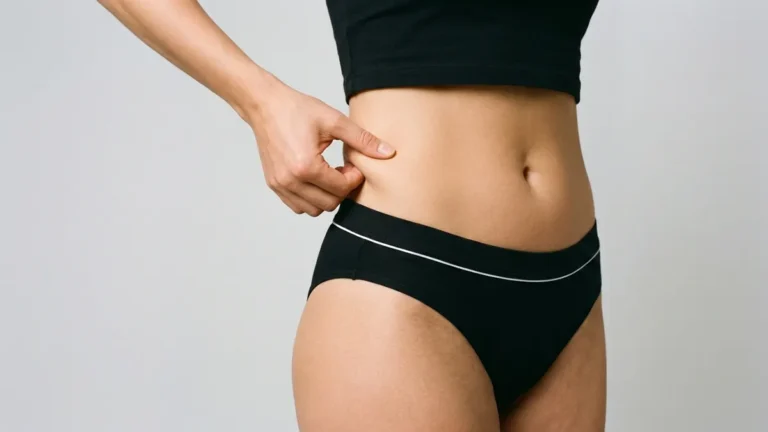
Why Might You Need a Fleur de Lis Tummy Tuck?
A Fleur de Lis abdominoplasty may be recommended when major weight loss has left substantial loose skin across both the width and height of the abdomen. The additional vertical skin removal can narrow the central abdomen in a way that a standard horizontal tummy tuck cannot always achieve.
- Loose skin affects the upper and lower abdomen.
- The abdominal skin is lax from side to side.
- A standard tummy tuck would leave residual folds.
- The waist remains broad after major weight loss.
- You accept a vertical scar for greater correction.
The key trade-off is a more comprehensive improvement in contour in exchange for an additional permanent scar down the centre of the abdomen. The decision should be based on anatomy, safety, expectations, and the degree of correction that matters to you.
What Is a Standard Tummy Tuck?
A standard tummy tuck, or abdominoplasty, removes excess abdominal skin through a horizontal incision placed low across the abdomen. The remaining skin is drawn downwards to create a firmer and smoother abdominal contour.
- Excess lower abdominal skin is removed.
- The umbilicus may be repositioned.
- Abdominal muscle separation may be repaired.
- Limited liposuction may be considered.
- The main scar sits across the lower abdomen.
The precise position and length of the scar depend on the amount of skin being removed and the patient’s anatomy. Although surgeons usually aim to place it where it can be covered by underwear, the scar is permanent.
What Type of Loose Skin Does a Standard Tummy Tuck Treat?
A standard tummy tuck is most effective when the main problem is excess skin that can be corrected by pulling the abdominal tissues downwards. It is often suitable when laxity is concentrated below the umbilicus or when the upper abdominal skin can be advanced without creating excessive bunching.
- Lower abdominal overhang
- Vertical skin laxity
- Moderate upper abdominal looseness
- Abdominal muscle separation
- Limited side-to-side excess
The procedure can achieve a substantial improvement when the pattern of loose skin suits this direction of correction. It may be less effective when the abdomen also needs significant narrowing from side to side.
What Is a Fleur de Lis Abdominoplasty?
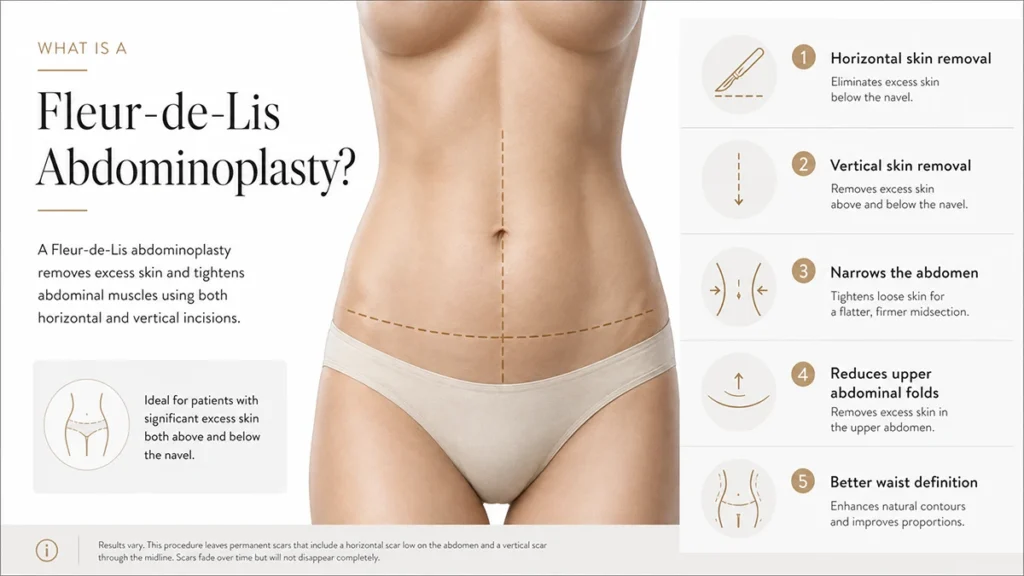
A Fleur de Lis abdominoplasty combines the low horizontal skin removal used in a standard tummy tuck with an additional vertical excision through the central abdomen. This enables the surgeon to tighten the abdominal skin in two directions rather than one.
- Skin is removed horizontally.
- Central skin is removed vertically.
- The abdomen can be narrowed.
- Upper abdominal folds can be reduced.
- The waist may become better defined.
The operation is generally considered for patients with extensive skin redundancy, particularly after major weight loss. It is not simply a larger standard tummy tuck because it addresses a different pattern of laxity.
Why Is It Called a Fleur de Lis Abdominoplasty?
The name refers to the pattern created by the combined horizontal and vertical skin excisions. The shape of the planned removal has traditionally been compared with the stylised fleur-de-lis symbol.
- A low horizontal component removes lower abdominal skin.
- A central vertical component reduces width.
- Both directions are tightened during closure.
- The umbilicus is usually repositioned.
- Muscle repair may be included when needed.
The name describes the surgical pattern rather than the appearance of the final scar. After healing, the patient is left with a horizontal lower abdominal scar and a vertical central scar.
What Is the Difference Between a Fleur de Lis and a Standard Tummy Tuck?
The main difference is the direction in which excess skin is removed and the number of scars created. A standard tummy tuck mainly tightens from top to bottom, while a Fleur de Lis procedure also tightens from side to side.
| Feature | Standard Tummy Tuck | Fleur de Lis Abdominoplasty |
|---|---|---|
| Direction of correction | Mainly vertical | Vertical and horizontal |
| Scar pattern | Lower horizontal scar | Lower horizontal and central vertical scars |
| Typical concern | Lower abdominal laxity | Extensive laxity after major weight loss |
| Waist narrowing | More limited | More substantial |
| Surgical extent | Significant | More extensive |
| Recovery | Individual | Often more involved |
The most appropriate option is not necessarily the one with the shortest scar. It is the procedure that can address the actual pattern of excess skin while offering a proportionate balance between benefit, scarring, recovery, and risk.
Why Can the Additional Vertical Excision Matter?
A horizontal incision allows skin to be drawn downwards, but it may not sufficiently reduce the width of a lax abdominal envelope. Removing a central vertical section enables the remaining tissues to be brought towards the midline.
- Narrows the central abdomen
- Reduces side-to-side looseness
- Improves upper abdominal contour
- Limits residual central folds
- Creates greater waist definition
This can be particularly important when weight loss has left the abdomen broad and deflated rather than simply hanging downwards. Without the vertical component, substantial looseness may remain despite a well-performed standard tummy tuck.
Why Does Major Weight Loss Create Complex Skin Excess?
Skin expands gradually during weight gain to accommodate increased body volume. After substantial weight loss, it may not contract fully because its elasticity has been affected by stretching, age, genetics, pregnancy, sun exposure, smoking, and the duration of previous weight gain.
- The abdominal volume decreases significantly.
- Skin elasticity may be reduced.
- Loose tissue can extend above the umbilicus.
- Folds may develop across the central abdomen.
- Laxity may continue towards the flanks.
The resulting excess does not always hang in one simple direction. Some patients develop a lower abdominal apron, while others also have broad upper abdominal folds and marked side-to-side looseness.
Does the Method of Weight Loss Affect the Skin?
Loose skin can occur after bariatric surgery, medication-supported weight loss, or sustained changes to diet and activity. The amount and pattern of excess skin depend more on the total weight lost, skin quality, age, weight history, and individual anatomy than on one particular method.
- Amount of weight lost
- Speed of weight change
- Duration of previous obesity
- Age and skin elasticity
- Pregnancy and previous surgery
Patients who have undergone bariatric surgery may also require assessment of their nutritional status before body-contouring surgery. Deficiencies in protein, iron, vitamins, or other nutrients can affect wound healing and surgical safety.
Why Might a Standard Tummy Tuck Be Insufficient?
A standard tummy tuck can remove a significant amount of skin, but its ability to narrow the abdominal envelope is limited. If substantial transverse laxity remains, the abdomen may still appear wide or folded after the tissues have been pulled downwards.
- Upper abdominal looseness may remain.
- Central folds may not be fully corrected.
- Waist narrowing may be limited.
- Side bunching may become more noticeable.
- The result may not match the patient’s anatomy.
This does not mean that the standard operation has failed. It means that the direction of correction does not fully match the direction of the skin excess.
What Can Happen if the Vertical Laxity Is Not Addressed?
When broad central looseness is left untreated, patients may retain folds or fullness through the upper abdomen. Clothing fit may improve below the waist while the central torso still feels loose or disproportionate.
- Residual upper abdominal folds
- Limited waist definition
- Persistent central skin excess
- Uneven transition towards the flanks
- Ongoing difficulty with fitted clothing
A surgeon should explain these limitations before recommending a standard tummy tuck to a major weight-loss patient. Understanding what each technique cannot achieve is as important as understanding its benefits.
How Does a Surgeon Decide Which Operation You Need?
The choice between a standard and Fleur de Lis abdominoplasty is made through a detailed assessment of skin excess, abdominal anatomy, previous surgery, health, weight stability, and personal priorities. Photographs can provide useful preliminary information, but they do not replace an in-person examination.
- Direction and amount of skin laxity
- Upper and lower abdominal folds
- Width of the abdominal envelope
- Skin quality and existing scars
- Patient preferences regarding scarring
The surgeon should also consider whether the concern is confined to the front of the abdomen or extends around the flanks and lower back. In some cases, an extended tummy tuck or body lift may be more appropriate.
How Is the Skin Examined?
The skin is assessed while the patient is standing because loose tissue may behave differently when lying down. The surgeon may gently bring the skin together vertically and horizontally to estimate how much correction each surgical pattern could provide.
- Skin is assessed above and below the umbilicus.
- Side-to-side looseness is examined.
- Hanging folds are evaluated.
- Previous scars are reviewed.
- Skin thickness and mobility are considered.
This examination helps determine whether downward tightening alone is likely to create a balanced contour. It also allows the surgeon to show the patient why an additional vertical scar may or may not be justified.
Is the Abdominal Wall Also Assessed?
The assessment includes the muscles and deeper abdominal wall as well as the skin. Rectus diastasis, hernias, previous operations, abdominal projection, and muscle tone can all influence the surgical plan.
- Rectus muscle separation
- Abdominal wall hernia
- Previous surgical scars
- Muscle tone
- Abdominal projection
Muscle repair may be performed during either a standard or Fleur de Lis abdominoplasty when clinically appropriate. The additional vertical skin excision does not automatically mean that more extensive muscle repair is required.
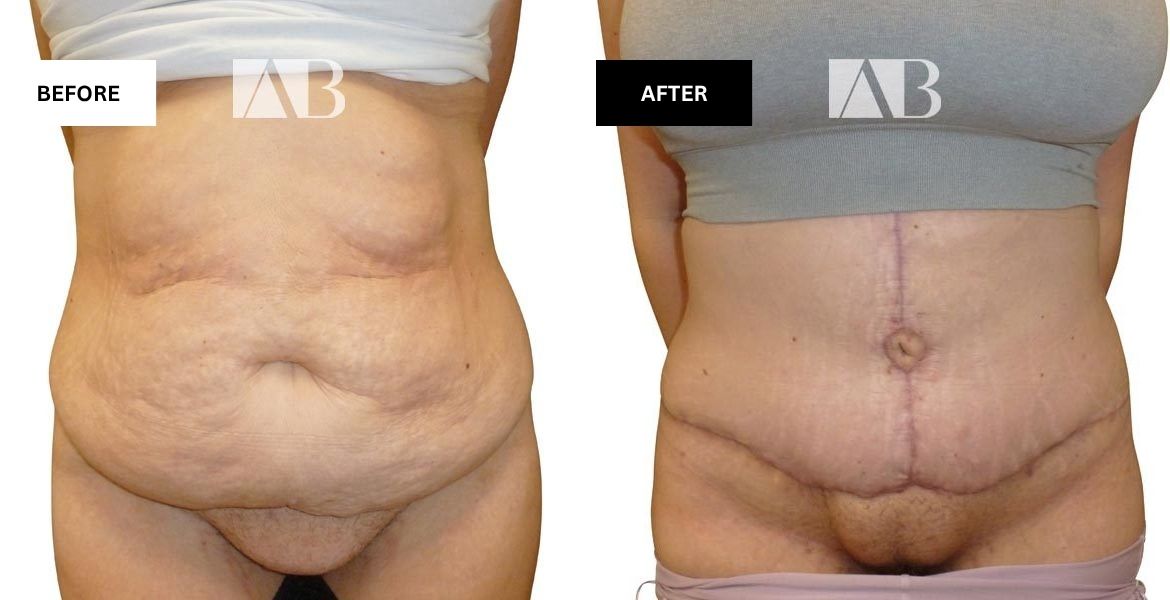
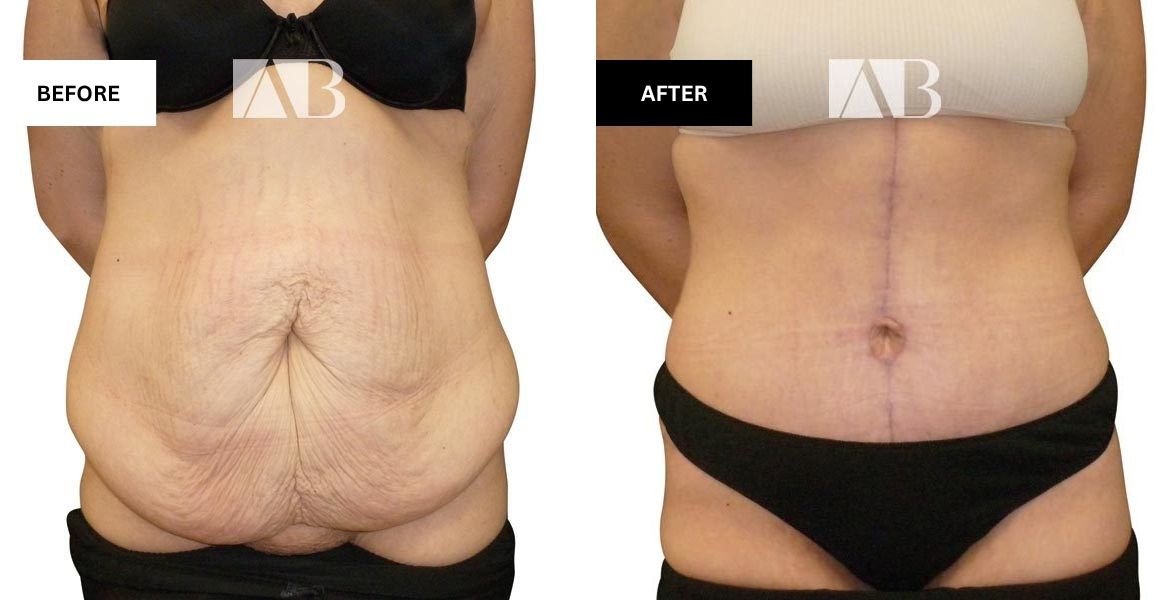
Abdominoplasty Before and After Images
What Scars Does a Fleur de Lis Abdominoplasty Leave?
A Fleur de Lis abdominoplasty leaves a low horizontal scar across the lower abdomen and a vertical scar through the centre of the abdomen. Both scars are permanent, although they usually change considerably as they mature.
- A horizontal scar sits low on the abdomen.
- A vertical scar runs through the central abdomen.
- A scar is also present around the umbilicus.
- Early scars are often red or firm.
- Maturation can continue for many months.
The final appearance of the scars varies between patients and cannot be guaranteed. Genetics, skin type, tension, wound healing, infection, smoking, and postoperative care may all influence scar quality.
Is the Additional Vertical Scar Worth It?
For some patients, the vertical scar is an acceptable trade-off for removing substantially more loose skin and achieving a narrower abdominal contour. For others, the scar may feel more significant than the additional improvement.
- Greater central skin removal
- Better waist narrowing
- Fewer residual folds
- Improved clothing fit
- More comprehensive reshaping
There is no universally correct preference because the balance between contour and scarring is personal. A responsible consultation should allow the patient to compare the likely result of each option without pressure.
Who Is Suitable for a Fleur de Lis Abdominoplasty?
A Fleur de Lis abdominoplasty is usually considered for patients with extensive abdominal skin excess that cannot be corrected adequately through a standard horizontal tummy tuck. The best candidates are medically fit, at a stable weight, and able to accept the longer scar pattern required for more comprehensive contouring.
- Significant loose skin after major weight loss
- Skin laxity in both vertical and horizontal directions
- Stable weight
- Good general health
- Realistic expectations about scars and recovery
Suitability cannot be decided by photographs alone. A face-to-face examination is important because the surgeon must assess the skin, abdominal wall, previous scars, body proportions, and the extent of laxity around the flanks and lower back.
How Stable Should Your Weight Be?
Weight should generally be stable before surgery because further substantial loss can create additional loose skin, while weight gain can stretch the result. The appropriate period of stability depends on the patient’s health, weight-loss method, and whether further weight change is expected.
- No ongoing rapid weight loss
- No planned major weight reduction
- Stable nutritional intake
- Realistic long-term weight goals
- Ability to maintain healthy habits
For patients who have undergone bariatric surgery, timing may also depend on nutritional blood tests and advice from the bariatric team. Surgery should not proceed until deficiencies that could impair wound healing have been identified and managed.
Can You Have Surgery After Bariatric Weight Loss?
Many patients who consider Fleur de Lis abdominoplasty have previously undergone bariatric surgery. These patients may benefit considerably from body contouring, but their nutritional status and overall health require careful review.
- Iron levels may need checking.
- Protein intake should be adequate.
- Vitamin deficiencies should be corrected.
- Weight should be stable.
- Medical conditions should be well controlled.
Previous bariatric surgery does not automatically make someone unsuitable. It simply means that preparation must be thorough because anaemia, nutritional deficiency, or ongoing weight loss can increase surgical risk.
Who May Be Advised to Wait?
Some patients may be asked to delay surgery until modifiable risk factors have been addressed. Waiting can improve safety, wound healing, and the durability of the result.
- Active smoking or nicotine use
- Unstable weight
- Poorly controlled diabetes
- Untreated anaemia
- Nutritional deficiency
- Plans for pregnancy
- Inadequate recovery support
Being advised to wait is not a rejection of the patient’s concerns. It is part of responsible surgical planning and may substantially improve the eventual outcome.
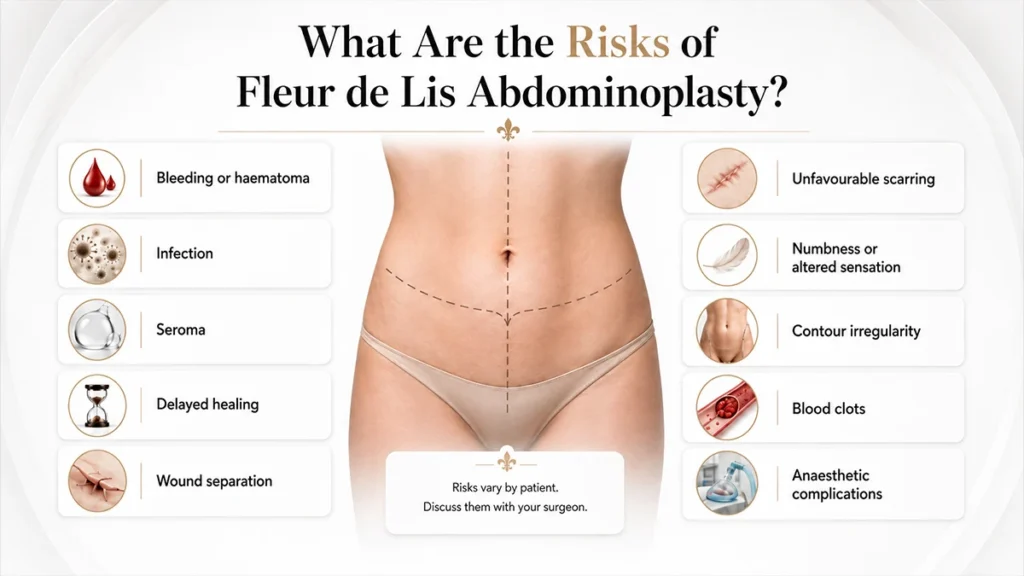
What Are the Risks of Fleur de Lis Abdominoplasty?
Fleur de Lis abdominoplasty is a major surgical procedure and carries risks even when performed by an experienced consultant plastic surgeon in a regulated hospital. The operation is more extensive than a standard tummy tuck because it involves a greater area of tissue removal and a second direction of closure.
- Bleeding or haematoma
- Infection
- Seroma
- Delayed wound healing
- Wound separation
- Unfavourable scarring
- Numbness or altered sensation
- Contour irregularity
- Blood clots
- Anaesthetic complications
Not every complication is common, but every significant risk should be discussed before consent. The aim of consultation is not to remove uncertainty but to ensure that the patient understands the balance between benefit and risk.
Why Is Wound Healing Particularly Important?
The vertical and horizontal scars meet at a central junction, which may be exposed to greater tension and more complex blood supply than a single incision. This area can therefore be more vulnerable to delayed healing or a small wound breakdown.
- Greater tension at the central junction
- Longer total incision length
- Reduced tissue mobility
- Effects of previous scars
- Influence of smoking and nutrition
Minor wound-healing problems can often be managed with dressings and observation, but some cases require prolonged care. Patients should understand that recovery may not always follow an ideal timetable.
Can Scars Become Thick or Raised?
All scars mature differently, and some patients are more prone to hypertrophic or widened scars. The vertical scar is particularly visible, so scar quality is an important part of preoperative discussion.
- Early redness
- Firmness
- Itching
- Widening
- Raised scar tissue
- Uneven pigmentation
Scar massage, silicone products, sun protection, and other treatments may be recommended after the wounds have healed. No surgeon can guarantee a fine or barely visible scar.
Are Blood Clots a Risk?
Abdominoplasty is associated with a recognised risk of deep vein thrombosis and pulmonary embolism. Risk-reduction measures may include early mobilisation, compression devices, stockings, and anticoagulant medication when clinically appropriate.
- Individual risk assessment
- Early walking
- Compression measures
- Hydration
- Medication where indicated
Patients should be advised about warning symptoms and when to seek urgent medical attention. The exact prevention plan depends on medical history, procedure length, mobility, and other personal risk factors.
What Is Recovery Like After a Fleur de Lis Abdominoplasty?
Recovery is usually more involved than after a smaller abdominal procedure because a large area has been reshaped and the skin has been tightened in two directions. Patients commonly experience swelling, tightness, bruising, fatigue, and difficulty standing completely upright during the early stages.
- Support is needed at home.
- Walking begins early but gently.
- Compression garments may be worn.
- Dressings require monitoring.
- Activity increases gradually.
Recovery should be treated as a planned part of the operation rather than an inconvenience to work around. Arranging help, transport, time away from work, and practical support before surgery can reduce stress and improve safety.
What Happens During the First Few Days?
Patients are encouraged to mobilise carefully to support circulation and reduce the risk of blood clots. Movement may feel tight, and a slightly flexed posture may be more comfortable at first.
- Regular short walks
- Prescribed pain relief
- Monitoring of wounds
- Support with washing and dressing
- Attention to hydration and nutrition
Drains may be used depending on surgical technique and the extent of the procedure. Their removal is based on the surgeon’s protocol and the amount of fluid collected.
When Can You Return to Work?
Return to work depends on the physical demands of the job, the extent of surgery, individual healing, and whether any complications occur. Desk-based work may be possible earlier than work involving lifting, prolonged standing, or travel.
- Sedentary work may require several weeks away.
- Physical work usually requires longer.
- Remote working may still be tiring.
- Driving should only resume when safe.
- Heavy lifting must be avoided.
Patients should not plan around the earliest possible recovery date. A more cautious allowance is often sensible because fatigue can persist after the wounds appear superficially healed.
When Can You Exercise Again?
Gentle walking usually begins soon after surgery, but strenuous exercise must be delayed. Progression should follow the surgeon’s instructions rather than a fixed online timetable.
- Start with short walks.
- Increase distance gradually.
- Avoid abdominal strain.
- Delay heavy lifting.
- Resume structured exercise after clearance.
When muscle repair has been performed, restrictions may be longer. Returning too quickly can increase discomfort, swelling, and stress on the healing tissues.
When Will the Final Result Be Visible?
The early contour may be obscured by swelling, firmness, and changes in posture. Improvement becomes clearer over time, but the final result should not be judged during the first few weeks.
- Swelling decreases gradually.
- The abdomen softens over several months.
- Scars continue to mature.
- Residual asymmetry may become clearer later.
- Final assessment takes time.
The contour may continue to refine for several months, while scar maturation can take considerably longer. Patience is essential because early appearance does not represent the final outcome.
What Results Can You Expect?
A Fleur de Lis abdominoplasty can remove substantial loose skin and improve the shape of the abdomen more comprehensively than a standard tummy tuck in suitable patients. The aim is a more proportionate contour rather than perfection or a guaranteed clothing size.
- Flatter abdominal profile
- Narrower central abdomen
- Reduced hanging folds
- Improved waist definition
- Better clothing fit
- Easier hygiene and skin care
Some patients also report improved comfort during exercise and daily activities. The degree of benefit depends on the original skin excess, body shape, healing, scars, and the limits imposed by surrounding areas.
How Long Do the Results Last?
The removed skin does not grow back, so the structural improvement can be long lasting. However, ageing, pregnancy, weight gain, weight loss, and changes in skin quality can alter the result over time.
- Maintain a stable weight.
- Avoid smoking.
- Continue regular activity.
- Follow nutritional guidance.
- Attend postoperative reviews.
The result should be viewed as durable rather than immune to future change. Long-term satisfaction is usually highest when surgery is performed after weight has stabilised and expectations are realistic.
What Are the Alternatives to Fleur de Lis Abdominoplasty?
Not every patient with loose skin after weight loss requires a Fleur de Lis procedure. The right alternative depends on whether the excess is concentrated at the front of the abdomen or extends around the flanks, hips, and lower back.
- Standard tummy tuck
- Extended tummy tuck
- Lower body lift
- Circumferential body lift
- Panniculectomy
- Staged surgery
- No surgery
Each option addresses a different distribution of skin excess. A smaller operation is not automatically better if it leaves significant residual laxity, while a larger procedure is not justified if a more limited approach can meet the patient’s goals.
✓ Standard Tummy Tuck
A standard tummy tuck may be appropriate when the main excess can be corrected by drawing the skin downwards. It avoids the central vertical scar but provides less side-to-side tightening.
- Best for predominantly vertical laxity
- Lower horizontal scar
- Possible muscle repair
- Less central narrowing
- More limited correction of upper folds
This may be the preferred option for patients with moderate skin excess who place a high priority on avoiding a vertical scar.
✓ Extended Tummy Tuck
An extended tummy tuck lengthens the lower horizontal scar towards the flanks. It can improve excess skin beyond the central abdomen without creating a midline vertical scar.
- Treats front and side laxity
- Longer horizontal scar
- Improved flank contour
- Limited central narrowing
- May suit selected weight-loss patients
It is useful when laxity extends sideways but does not require removal of a large central vertical segment.
✓ Lower Body Lift
A lower body lift may be more suitable when loose skin continues around the hips, buttocks, and lower back. It addresses circumferential laxity rather than focusing only on the front of the abdomen.
- Abdominal excess
- Flank laxity
- Lower back folds
- Buttock descent
- Circumferential contour
This is a more extensive procedure with a different scar pattern and recovery. It should be discussed when the abdomen is only one part of a broader lower-body concern.
✓ Panniculectomy
A panniculectomy removes an overhanging apron of lower abdominal skin. It may improve hygiene and discomfort but does not necessarily provide the same degree of muscle repair, waist shaping, or upper abdominal contouring.
- Removes lower overhang
- May reduce skin irritation
- Focuses on function
- Limited contouring
- Does not always reposition the umbilicus
It can be appropriate when the primary goal is removal of a symptomatic pannus rather than comprehensive aesthetic reshaping.
Can Non-Surgical Treatment Replace Surgery?
Non-surgical skin-tightening treatments cannot remove large folds of hanging skin after major weight loss. They may offer modest improvement in skin quality, but they should not be presented as equivalent to excisional surgery.
- Limited tightening
- No removal of large skin folds
- Variable response
- Multiple sessions may be required
- Results are less predictable
For patients who do not wish to accept scars or surgical recovery, choosing no treatment is also valid. The purpose of consultation is to provide options, not to persuade every patient to proceed.
What Costs Should You Consider?
The cost of Fleur de Lis abdominoplasty varies according to surgical complexity, operating time, hospital arrangements, anaesthetic requirements, and whether additional procedures are performed. A personalised quotation should therefore follow a proper consultation.
- Surgeon’s fee
- Hospital and theatre charges
- Anaesthetist’s fee
- Compression garments
- Follow-up care
- Revision policy
Patients should also consider indirect costs such as time away from work, transport, childcare, help at home, and travel for follow-up appointments. Choosing surgery on price alone may overlook important differences in qualifications, hospital standards, and aftercare.
Take our Plastic Surgery Quiz to find out if you’d be a good candidate for cosmetic surgery.
Summary
Some weight-loss patients need a Fleur de Lis abdominoplasty because their loose abdominal skin extends in both a vertical and horizontal direction. The additional vertical excision allows greater central narrowing and more complete removal of upper and lower abdominal folds than a standard tummy tuck can usually provide.
The trade-off is a longer scar pattern, a more extensive recovery, and a potentially higher risk of wound-healing problems. Careful assessment by an appropriately qualified plastic surgeon is essential to determine whether the expected improvement justifies those additional considerations.

FAQs About Fleur de Lis Abdominoplasty After Weight Loss
Why can I pull my skin down and still look wrinkly above my belly button?
Because you likely have significant horizontal laxity and upper abdominal redundancy. A standard tummy tuck mainly tightens downward, so side-to-side looseness can remain.
What is a less obvious sign that I might need a Fleur de Lis procedure?
If you can pinch a wide “tube” of loose skin from side to side across the upper abdomen, even when you are slim. That often signals horizontal excess that a vertical excision is designed to address.
Does Fleur de Lis mean I have “worse” skin than other people?
No. It usually means your skin was stretched in multiple directions during weight gain and did not retract evenly after weight loss. It is a geometry issue, not a personal failure.
Why do some people avoid Fleur de Lis even when it would give a better shape?
Scar preference. The vertical midline scar is a major trade-off. BAAPS describes this additional vertical scar as part of the technique.
Is the T junction always a problem?
Not always, but it is a known area at higher risk for wound healing issues because of tension and blood supply factors. Patient information notes the T junction as a susceptible area.
If I choose a standard tummy tuck instead, can I “fix the rest later”?
Sometimes, but not always cleanly. Secondary corrections may be possible, but they mean more surgery, more recovery, and potentially more scarring. It is often better to choose the right pattern first if your anatomy clearly needs it.
Is Fleur de Lis only for bariatric surgery patients?
No. It is commonly discussed for massive weight loss patterns, whether the weight loss was surgical or non-surgical. The key is the pattern of excess skin, not how you lost the weight.
Medical References
- Fleur-de-Lis abdominoplasty: a safe alternative to traditional abdominoplasty for the massive weight loss patient / Plastic and Reconstructive Surgery – https://journals.lww.com/plasreconsurg/abstract/2010/05000/fleur_de_lis_abdominoplasty__a_safe_alternative_to.28.aspx
- Fleur-de-Lis abdominoplasty–a consecutive case series / British Journal of Plastic Surgery – https://www.jprasurg.com/article/S0007-1226(03)00174-7/fulltext
- Safety of Fleur-de-lis Abdominoplasty after Massive Weight Loss / Journal Of Plastic, Reconstructive And Aesthetic Surgery – https://www.jprasurg.com/article/S1748-6815(20)30257-6/abstract
- Abdominoplasty Surgery: Patient Information Guide and Consent Document / British Association of Aesthetic Plastic Surgeons (BAAPS) – https://baaps.org.uk/_userfiles/pages/files/procedures/baaps_abdominoplasty_updated_may_24.pdf
Next Step: Schedule a Post-Weight-Loss Body-Contouring Consultation With Miss Breahna
Some weight loss patients need Fleur de Lis because their excess skin is not only a lower belly problem. It is an upper belly and side-to-side laxity problem, too. Fleur de Lis adds a vertical excision to correct horizontal laxity, which is why BAAPS describes it as a combined lower resection with a midline vertical excision.
A standard tummy tuck can still be the right choice for some post-weight-loss patients, especially when the main excess is vertical. The right decision is the one that matches your anatomy, your scar tolerance, and your real-life goals.
If you want a personalised plan in Chester, UK, book a consultation with Miss Anca Breahna, Consultant Plastic & Reconstructive Surgeon. Explore her clinic’s online contact page and complimentary photo assessment page for private and secure sending of enquiries, images, or appointment requests. Miss Anca Breahna can assess whether a standard tummy tuck will truly meet your goals or whether a Fleur de Lis abdominoplasty after weight loss is the more realistic route to the contour you actually want.
Download Miss Anca Breahna’s Tummy Tuck Surgery Guide
Further Reading
- Read Miss Anca Breahna’s Blog on Is Abdominoplasty Major Surgery?
- Read Miss Anca Breahna’s Blog on What Is a Healthy Weight for Tummy Tuck Surgery?
- Read Miss Anca Breahna’s Blog on Mini Tummy Tuck Vs Full Tummy Tuck
- Read Miss Anca Breahna’s Blog on Drains vs Drainless Tummy Tuck: Pros, Cons and Recovery Differences
- Read Miss Anca Breahna’s Blog on How to Reduce Swelling and Bruising after Tummy Tuck Surgery
- Read Miss Anca Breahna’s Blog on Myths and Facts about Tummy Tuck Surgery