- Understanding What Surgical Drains Do
- Take our Plastic Surgery Quiz to find out if you'd be a good candidate for cosmetic surgery.
- What a Drainless Tummy Tuck Means
- Benefits of Using Drains in a Tummy Tuck
- Download Miss Anca Breahna's Tummy Tuck Surgery Guide
- Drawbacks of Using Drains
- Advantages of the Drainless Approach
- Limitations and Considerations of the Drainless Technique
- How Miss Anca Breahna Guides You Through the Decision
- Tummy Tuck Before and After Photos
- The Emotional Impact of Technique on Your Recovery and Confidence
- Tips for Preparing for Your Tummy Tuck Consultation in Chester
- FAQs About Drains or Drainless Tummy Tuck
- Further Reading
- About Anca Breahna – Consultant Plastic Surgeon
Choosing a tummy tuck is a major decision for many women after pregnancy, weight change or life‑transition. In the recovery phase the details of how your surgeon manages the skin, including whether to use drains or a drainless technique, are important. Consultant Plastic, Reconstructive and Aesthetic Surgeon Miss Anca Breahna, practising in Chester, offers a compassionate, patient‑centred approach. She guides women through the key differences between traditional tummy tuck with drains and a drainless tummy tuck, helping you understand which option suits your body, your goals and your lifestyle.
Understanding What Surgical Drains Do
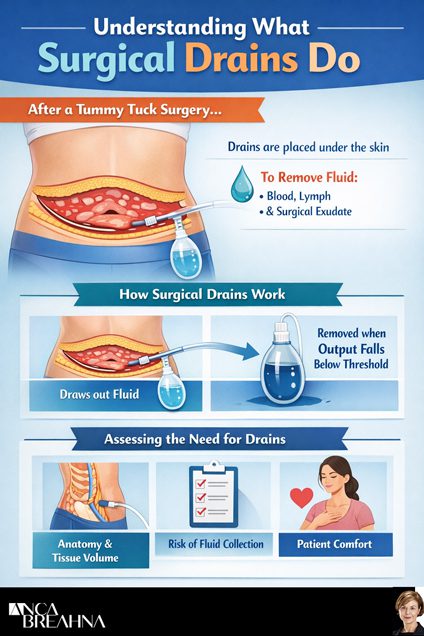
Surgical drains are thin tubes placed beneath the skin at the end of a tummy tuck operation. Their function is to remove fluid that collects as the body responds to surgical movement and the creation of space under the skin. When an abdominal flap is lifted, even subtly, a potential space is created where fluid can accumulate; this fluid is composed of blood, lymph and surgical exudate.
In conventional tummy tuck surgery the aim has been to manage that fluid collection by placing drains, which continuously draw out fluid until the output falls below a threshold and the drain is removed. This practice has been widely adopted and is familiar to many surgeons and patients alike.
At her Chester clinic, Miss Anca Breahna explains that drains remain a viable option for some patients, especially when the anatomy or volume of tissue removed creates a higher risk of fluid collection. The choice is not made by habit but by assessment of risk, anatomy and patient comfort.
Take our Plastic Surgery Quiz to find out if you’d be a good candidate for cosmetic surgery.
What a Drainless Tummy Tuck Means
A drainless tummy tuck uses techniques aimed at eliminating or dramatically reducing the need for external drains. One key method is the progressive tension suture (PTS) technique, where internal sutures anchor the skin to the underlying tissue, reducing the “dead space” where fluid can collect.
In addition to PTS, careful surgical planning, minimal flap undermining, preservation of lymphatic pathways and sometimes adjuncts such as glue or meshes can be used. The goal is to allow the body to reabsorb any small fluid collections via its normal pathways rather than relying on an external drain.
Miss Anca Breahna points out that drainless techniques are not suitable for everyone. They require specific patient selection, good tissue quality, and a surgical plan that minimises risk. When chosen appropriately in her Chester practice, they can offer a smoother recovery for the right patient.
Benefits of Using Drains in a Tummy Tuck
Drains have traditionally been used in abdominoplasty to help manage fluid that builds up under the skin following surgery. They offer a direct way to evacuate this fluid, especially in procedures where larger tissue spaces are created or when significant liposuction is performed. The pros of using drains are as follows:
- Provide a clear exit route for fluid that could otherwise collect under the skin.
- Allow monitoring of output, helping the surgeon assess healing during the early recovery period.
- Commonly used in cases with greater surgical dissection or higher body mass, where the risk of seroma is elevated.
In practices like Miss Anca Breahna’s in Chester, the use of drains may be recommended when the anatomy or surgical plan makes fluid management a priority. The goal is always to reduce complications and support a smoother recovery.
Download Miss Anca Breahna’s Tummy Tuck Surgery Guide
Drawbacks of Using Drains
While drains are effective in preventing fluid accumulation, they can introduce certain inconveniences for patients during recovery. Some find the presence of drains restrictive, both physically and emotionally, especially in the first week after surgery. The cons of using drains that are worth considering include:
- May cause discomfort during movement or sleep, especially if placed near areas of tension.
- Require at-home management, including measuring and emptying fluid regularly.
- Slightly increase the risk of infection at the drain insertion site.
For patients with busy routines or limited support at home, the extra steps involved with drain care can be a source of stress. During consultation, Miss Breahna discusses whether the expected benefits of using drains outweigh these practical concerns.
Advantages of the Drainless Approach
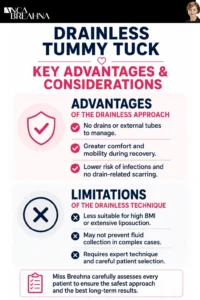
A drainless tummy tuck uses internal sutures to eliminate the need for drains. This technique reduces the space beneath the skin where fluid would otherwise collect and encourages the body to absorb minor fluid naturally. Other pros of the drainless approach are the following:
- Eliminates the need to manage external tubes during recovery.
- Allows greater mobility and comfort in the first few weeks after surgery.
- Reduces risk of site-related infections and avoids potential scarring from drain exit points.
For appropriate candidates, the drainless method can make the recovery process feel more manageable. Miss Breahna offers this approach when the patient’s anatomy and surgical plan make it a suitable and safe option.
Limitations and Considerations of the Drainless Technique
The drainless method is not ideal for every patient. Certain factors, such as previous abdominal surgery, poor skin elasticity, or a high volume of tissue removal, may increase the risk of fluid retention, even when internal sutures are used. The cons of the drainless technique that are worth noting include:
- Less effective in patients with high BMI or extensive liposuction in the same session.
- May not prevent fluid collection in cases with complex surgical dissection.
- Demands a high level of surgical precision and proper intraoperative technique.
Miss Breahna carefully assesses each case during consultation to determine whether the drainless approach can be safely and effectively applied. Her decision always balances recovery comfort with long-term outcomes.
How Miss Anca Breahna Guides You Through the Decision
At the Chester clinic, Miss Anca Breahna begins each journey with a thorough consultation. She reviews your abdominal anatomy, prior surgeries, skin tone, weight history and personal goals. She describes both options, tummy tuck with drains and tummy tuck without drains, explaining how each aligns or conflicts with your individual case.
Her approach is collaborative, not directive. She invites you to ask questions about comfort, mobility, recovery timeline, clothing restrictions and the support you need at home. Simply put: she helps you find which method fits your life and your body.
Since she is a highly regarded female plastic surgeon in the region, her patients often value her attention to detail, ability to listen and the fact that she practices in Chester with access to both NHS and private surgical environments. Whether your review is for Cheshire, Liverpool, Wirral or North Wales, you are guided through the process with transparency, respect and personalised care.
Tummy Tuck Before and After Photos
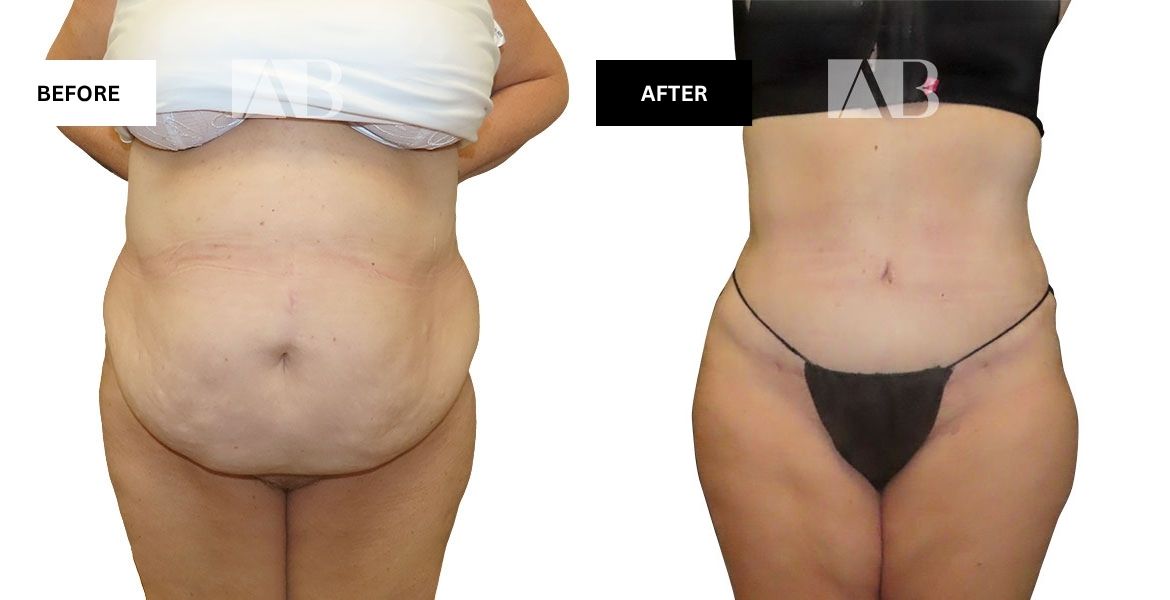
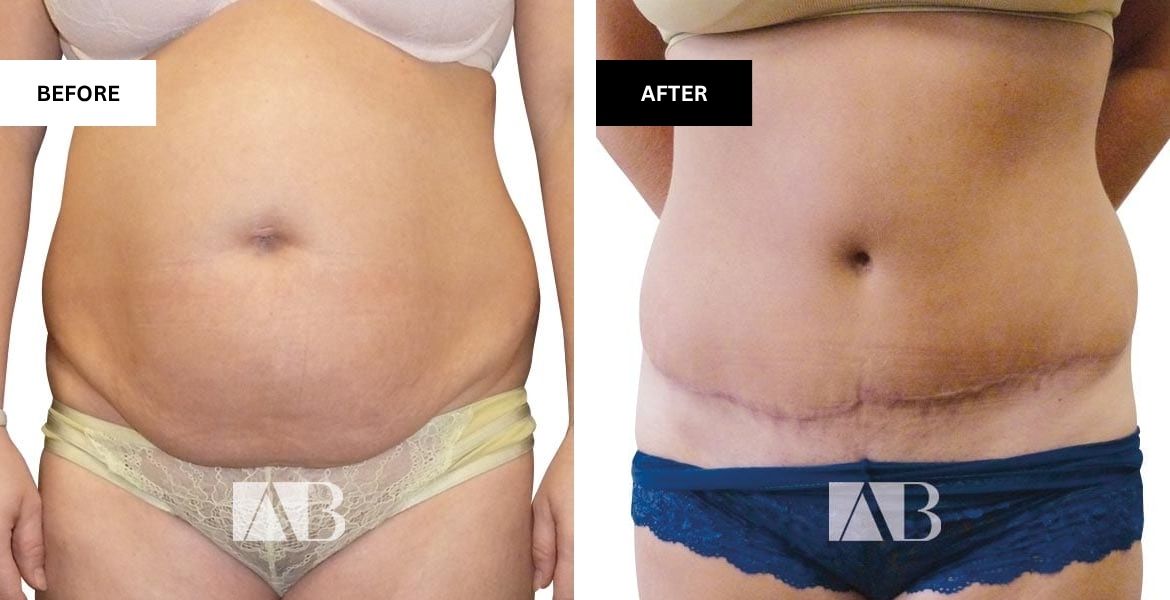
The Emotional Impact of Technique on Your Recovery and Confidence
A tummy tuck is more than an aesthetic change; it can mark a turning point in how a woman feels in her body. The choice between a drain‑based or drainless recovery can influence how confident and comfortable you feel in those early days.
When recovery involves fewer tubes, fewer reminders of surgery and less post‑operative complexity, many women find it easier to reconnect with their body, gradually return to dressing and daily tasks, and feel more at ease with movement. Miss Anca Breahna hears from many patients that this sense of ease contributes to their overall satisfaction.
At the same time, choosing the “right” technique means more than just ease: it means aligning your recovery with your life. For example a busy mother in Chester who needs to lift children, or a professional returning to work in Liverpool, may prioritise fewer restrictions in early recovery. The surgeon you choose, and the technique chosen, should support your physical, emotional and everyday goals.
Tips for Preparing for Your Tummy Tuck Consultation in Chester
Before you book a tummy tuck with Miss Anca Breahna in Chester you might prepare by thinking through: what you want your body to feel like after recovery, how much downtime you can allow, what post‑operative support you have, and whether minimal equipment (no drains) is a priority or whether safety and traditional technique are more important.
During the consultation, she will assess your body, ask about your medical history, your lifestyle, your recovery environment, and your expectations. She will walk through the pros and cons of both options, explain potential complications (seroma, hematoma, infection, delayed healing) and show how the decision will affect your recovery and comfort.
It helps to bring up questions such as: How many drains might I need? How long would a drain stay? What is the risk of seroma with/without drains in my case? What will I feel, and how will this affect my mobility and clothing? Miss Anca Breahna will answer with honesty, drawing on evidence and her experience in cases from Cheshire, Wirral and beyond.
Ready to explore your tummy tuck options with clarity and confidence? Complete the Enquiry Form or submit photos for a surgical assessment to begin the conversation. Book a consultation at your convenience with Consultant Plastic, Reconstructive and Aesthetic Surgeon Miss Anca Breahna in Chester. Whether you live in Cheshire, Wirral, Liverpool or North Wales, you will receive a personalised assessment, discussion of drains vs drainless techniques, and a plan tailored to your body and your life.

FAQs About Drains or Drainless Tummy Tuck
Can I request a drainless tummy tuck even if I’ve had previous abdominal surgery?
Patients with a history of abdominal operations may still be suitable for a drainless tummy tuck, but it depends on how much internal scarring or disrupted anatomy is present. During a consultation in Chester, Miss Anca Breahna carefully evaluates each case using a detailed surgical history and physical assessment.
How does my activity level or job type influence the choice between drains and no drains?
Women with active jobs or who care for young children may benefit from a drainless approach, as it often involves fewer movement restrictions. That said, the final choice depends on surgical findings, not lifestyle alone. Miss Breahna will help weigh both sides based on your personal routine.
Are there long-term differences in how the results look depending on which method is used?
Both techniques aim to produce the same contouring and skin-tightening effects. The presence or absence of drains does not usually affect aesthetic results. What matters more is how well fluid is managed early in recovery and how the tissues settle during healing.
If I’m prone to swelling or fluid retention, does that rule out a drainless procedure?
Some patients naturally retain more fluid post-surgery. In such cases, a drainless method may still work, but it must be combined with progressive tension sutures and close monitoring. Miss Breahna will explain if drains might offer a safer outcome for your specific body type.
Will I be awake when the drains are removed, and is it painful?
Drain removal is a quick clinic procedure and is done while the patient is awake. Most describe the sensation as odd rather than painful. It may feel like a tug or pull, but it usually lasts only a few seconds. Miss Breahna will guide you through what to expect step by step.
Can seromas still form even if I have drains?
Yes, fluid can still collect under the skin after drains are removed. Drains reduce the risk but don’t eliminate it entirely. Seroma formation depends on individual healing, movement during recovery, and how much space was created under the skin during surgery.
How soon can I resume gentle walking or driving with each method?
Most patients begin gentle walking within a few days, regardless of technique. Driving is delayed until you can move freely and are off pain medication. Those without drains may find mobility returns slightly sooner, but Miss Breahna’s advice will be tailored to your recovery progress.
If I have drains, how long will they stay in place?
The length depends on your fluid output and your surgeon’s protocol. Miss Anca Breahna reviews the expected duration in your plan, explains how monitoring works and what your home care will involve.
Does choosing drainless mean no restrictions on movement or downtime?
No, even a drainless tummy tuck requires careful recovery. You will still need time for healing, support, compression garments, and guidance on lifting. The technique may reduce some equipment, but it does not eliminate the need for rest and care.
Medical References
- “Systematic Review and Meta‑Analysis Evaluating the Surgical Outcomes of Progressive Tension Suturing Compared to Drains in Abdominoplasty Surgery” / Aesthetic Surgery Journal – https://academic.oup.com/asj/article/45/1/71/7724072
- “Gallagher, S., et al. (2018). Safety and utility of the drainless abdominoplasty in plastic surgery” / Plastic and Reconstructive Surgery Journal – https://pubmed.ncbi.nlm.nih.gov/29319578
- “Abdominoplasty without Drains or Progressive Tension Suturing” / Aesthetic Plastic Surgery – https://link.springer.com/article/10.1007/s00266-021-02177-8
Further Reading
- Read more about Mini Tummy Tuck
- Read more about Liposuction
- Read more about Mummy Makeover
- Read Miss Breahna’s Blog on How to Reduce Swelling and Bruising after Tummy Tuck Surgery
- Read Miss Breahna’s Blog on Is Abdominoplasty Major Surgery?
- Read Miss Breahna’s Blog on Liposuction vs Tummy Tuck
- Read Miss Breahna’s Blog on Myths and Facts about Tummy Tuck Surgery
About Anca Breahna – Consultant Plastic Surgeon
 Miss Anca Breahna, PhD, MSc, FEBOPRAS, FRCS (Plast), is a Consultant Plastic, Reconstructive and Aesthetic Surgeon based in Chester with extensive experience in abdominal contouring and reconstructive surgery. Her specialist background is particularly relevant to abdominoplasty, where careful assessment of excess skin, abdominal muscle separation, fat distribution and overall waist contour is essential when planning surgery.
Miss Breahna performs tummy tuck surgery in Chester for patients affected by loose abdominal skin, stretched or separated muscles, or changes following pregnancy and significant weight loss. During consultation, she considers skin quality, muscle tone, body shape, medical history and individual goals before deciding whether a full abdominoplasty, mini tummy tuck or another approach is most suitable. As an experienced plastic surgeon in Chester, her approach focuses on balanced abdominal contouring, thoughtful scar placement, appropriate muscle repair and realistic expectations, with liposuction considered in selected cases where it may help refine the final shape.
Back to blog