
- What Is Abdominal Contour Change After Abdominoplasty?
- Who Typically Has This Concern?
- How Does a Surgeon Clinically Assess Long-Term Suitability?
- What Are the Treatment Options?
- ✓ Non-Surgical First
- ✓ Surgical Options
- Download Miss Anca Breahna's Tummy Tuck Guide
- Miss Anca Breahna’s Specific Approach
- What Happens If You Gain Weight After A Tummy Tuck
- ✓ Small Weight Gain Often Changes Softness More Than Shape
- ✓ Larger Weight Gain Can Stretch The Envelope Again
- ✓ Weight Gain Can Show Up In Places You Did Not Expect
- What Happens If You Lose Weight After A Tummy Tuck
- ✓ Moderate Weight Loss Can Look Excellent
- ✓ Significant Weight Loss Can Create New Loose Skin
- ✓ Massive Weight Loss Has Its Own Contour Considerations
- The Role Of Pregnancy And Hormonal Changes
- Early “Weight Gain” After Surgery That Is Not Fat Gain
- Abdominoplasty Before and After Photos
- How To Protect Results Long Term
- What A Consultation With Miss Anca Breahna In Chester Looks Like
- Weight Gain After Tummy Tuck FAQs
- Next Step: Book a Tummy Tuck Consultation With Miss Breahna
- Further Reading
- About Anca Breahna – Consultant Plastic Surgeon
What Is Abdominal Contour Change After Abdominoplasty?
Long-term changes after a tummy tuck, or abdominoplasty, usually relate to shifts in abdominal contour, skin envelope tension, and fat distribution after surgery. A tummy tuck removes excess abdominal skin and may also remove some subcutaneous fat and tighten the abdominal wall, but it does not prevent future fat gain, skin stretch, or hormonal body changes.
In clinical terms, the result of abdominoplasty is best understood as a reshaped baseline, not a permanent freeze on body change. If weight remains stable, results can last for many years. If there are significant fluctuations, the outer contour can soften, stretch, or change again over time. Learn more about how weight gain or weight loss affects tummy tuck results long term to understand what changes are expected and how to maintain your surgical outcome.
At her clinic in North West England, Miss Anca Breahna, Consultant Plastic & Reconstructive Surgeon, helps patients understand that long-term success depends not only on surgery, but also on timing, weight stability, and realistic expectations.
Who Typically Has This Concern?
This issue is most relevant to patients who are:
- Considering a tummy tuck after pregnancy
- Planning abdominoplasty after major weight loss
- Already slim but dealing with loose abdominal skin or muscle laxity
- Concerned about future hormonal changes, pregnancy, or lifestyle-related weight shifts
- Recovering from a tummy tuck and worried about regaining weight later
Many of these patients have already worked hard to improve their body shape through diet, exercise, or life changes. Because of that, the fear of “ruining” their results can feel emotionally significant, even when actual weight fluctuations are small.
In Miss Anca Breahna’s Chester practice, this is a common consultation topic. Patients often want to know not just whether a tummy tuck works, but whether it will still look good years later if life changes.
How Does a Surgeon Clinically Assess Long-Term Suitability?
A proper tummy tuck consultation should include a detailed assessment of the factors that influence long-term durability. During consultation, Miss Anca Breahna, Consultant Plastic & Reconstructive Surgeon, typically evaluates:
- Skin elasticity and degree of excess skin
- Fat distribution, including whether fullness appears subcutaneous or more central
- Presence of abdominal wall laxity or rectus diastasis
- Weight history and whether the patient is currently stable
- Pregnancy plans or expected major lifestyle changes
- Previous abdominal surgery and scar pattern
This assessment is important because the long-term behaviour of a tummy tuck result depends heavily on the starting anatomy. A patient who is weight-stable with a skin-and-structure issue is different from a patient actively losing weight or still experiencing repeated weight cycling.
This is one of the strongest signals of genuine expertise. Good surgical planning is not just about what can be removed today, but about how the result is likely to behave over the next several years.
What Are the Treatment Options?
✓ Non-Surgical First
Before surgery is considered, it is important to optimise the factors that support long-term abdominal contour:
- Achieving a stable, maintainable weight
- Managing bloating, constipation, or visceral fat through medical and lifestyle support
- Improving core function and posture where appropriate
- Waiting until family planning is complete if pregnancy is likely in the near future
- Avoiding significant weight cycling before surgery
These steps matter because surgery cannot replace long-term body stability. In many patients, the best first step is not surgery itself but getting to a weight and life phase that will support a durable result.
✓ Surgical Options
When the issue is structural, surgery may be appropriate. Options can include:
- Mini tummy tuck for lower abdominal skin excess in carefully selected patients
- Full tummy tuck for broader skin laxity and abdominal wall reshaping
- Tummy tuck with muscle repair when rectus diastasis contributes to contour concerns
- Post-weight-loss body contouring approaches in more complex cases
The right operation depends on the anatomy, not just on the number on the scale. Miss Anca Breahna’s approach in Chester is to match the procedure to the tissue problem rather than forcing a one-size-fits-all solution.
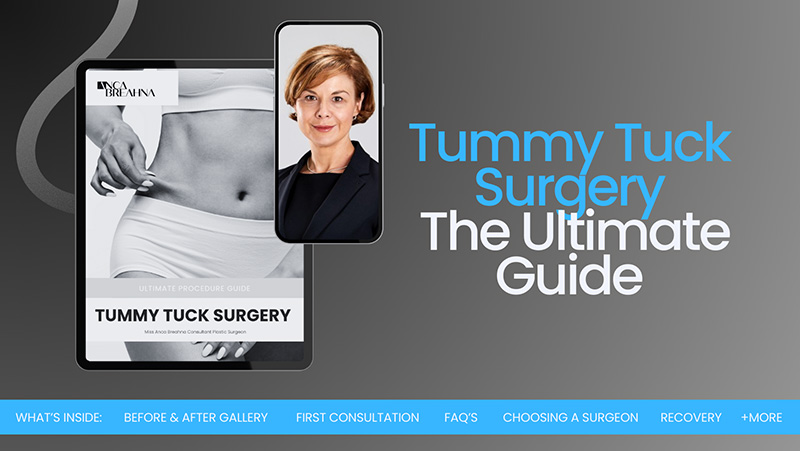
Download Miss Anca Breahna’s Tummy Tuck Guide
Miss Anca Breahna’s Specific Approach
At her Chester-based practice, Miss Anca Breahna, Consultant Plastic & Reconstructive Surgeon, treats long-term tummy tuck results as a planning issue from the beginning, not something to worry about only after surgery. Her focus is on choosing the right time, the right operation, and the right patient for surgery.
That means she will often discuss whether a patient should wait until weight loss is complete, whether muscle repair is likely to improve the contour, and whether the patient’s expectations are based on realistic anatomy rather than social media imagery.
Her clinical perspective is not “Will this look good at six weeks?” but “Will this still make sense for your body years from now?” That long-view planning is one of the clearest ways consultant-led care differs from more generic cosmetic pathways.
What Happens If You Gain Weight After A Tummy Tuck
✓ Small Weight Gain Often Changes Softness More Than Shape
If you gain a small amount of weight, many patients notice the abdomen feels a little softer or less sharply contoured, but the basic shape often remains improved compared with pre-surgery. The reason is simple: the excess skin that created the original “overhang” is gone. You can still gain fat, but you are gaining it in a tighter envelope.
Where that fat appears depends on your genetics and hormone profile. Some people gain more on the hips or thighs. Others gain centrally. Even after a tummy tuck, some fat may still accumulate in the abdomen, especially if that is your natural pattern.
✓ Larger Weight Gain Can Stretch The Envelope Again
With more significant weight gain, fat cells enlarge more dramatically and the abdomen can project forward. If the gain is substantial, the skin can stretch again. That does not always recreate the exact pre-surgery problem, but it can reduce definition and can create new looseness.
If your tummy tuck included muscle tightening, significant central weight gain can also place more pressure on the abdominal wall. That does not automatically “undo” the repair, but it can change the way the abdomen looks and feels. Patients sometimes describe this as losing the “cinched” waist or noticing the lower abdomen looks rounder.
✓ Weight Gain Can Show Up In Places You Did Not Expect
A common surprise is that after a tummy tuck, some patients gain weight more noticeably in other areas. This is not because fat has been “redirected,” but because the abdominal envelope is tighter and may show less visible expansion early on compared with other regions. So the hips, back, arms, or thighs may look like they changed more, even if overall weight gain was modest.
This is a good reason not to judge results by one area alone. A tummy tuck is about proportion, and proportion is influenced by the whole body.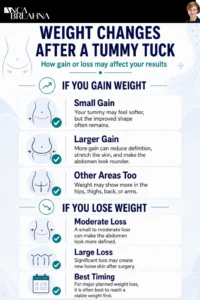
What Happens If You Lose Weight After A Tummy Tuck
✓ Moderate Weight Loss Can Look Excellent
If you lose a modest amount of weight after a tummy tuck, many patients love the effect because the abdomen often becomes even more defined. The tighter envelope can reveal the improvement more clearly as the overall fat reduces.
This is why some patients choose to do abdominoplasty after they have already lost weight and reached a stable plateau. The NHS notes that a tummy tuck is often used to remove excess skin after losing a lot of weight.
✓ Significant Weight Loss Can Create New Loose Skin
If you lose a large amount of weight after a tummy tuck, you may develop new looseness. The operation removed a portion of skin, but it cannot prevent skin from becoming lax if the body becomes much smaller than the envelope it was tailored to.
This is especially relevant for patients who are planning further major weight loss. In those cases, timing matters. If you are likely to lose a large amount, it is often better to reach a stable weight first, then tailor the skin envelope once. BAAPS materials emphasise careful reading and realistic planning, which supports this timing approach.
✓ Massive Weight Loss Has Its Own Contour Considerations
For patients who have experienced massive weight loss, abdominoplasty may be part of broader body contouring. Studies in post-bariatric populations discuss technique and complication considerations, which reinforces that “weight history” matters for planning and for long-term expectations.
The practical takeaway is that weight loss can improve definition, but large losses after surgery can reintroduce the very skin laxity the procedure was designed to correct.
The Role Of Pregnancy And Hormonal Changes
Pregnancy is a special case because it can stretch the abdominal wall and skin rapidly. Many surgeons recommend completing family planning before abdominoplasty, but the evidence is more nuanced than online rules suggest.
Aesthetic Surgery Journal published a study discussing pregnancy after abdominoplasty, noting that common recommendations exist but evidence has not clearly demonstrated certain feared correlations in all cases. A 2024 AJOG MFM retrospective study also discusses perinatal outcomes following abdominoplasty while acknowledging limited literature.
What this means for you is not “pregnancy is safe and changes nothing,” and it is not “pregnancy will definitely ruin your tummy tuck.” It means counselling should be individual. Some women maintain an improved contour, while others experience stretching, laxity, or separation recurrence. If pregnancy is likely in the near future, timing discussions should be honest and practical.
Hormonal changes outside pregnancy can also influence weight distribution, water retention, and appetite. These shifts can change how the abdomen looks even without dramatic fat gain. The safest approach is to plan around what you can control and avoid catastrophising what you cannot.
Early “Weight Gain” After Surgery That Is Not Fat Gain
Many patients step on the scale after surgery and panic. Early changes on the scale are very often not fat. They can reflect swelling, fluid retention, inflammation, constipation, and reduced activity. Even posture changes can affect how your abdomen looks in the mirror in the first weeks.
Seroma, which is a fluid collection that can occur after abdominoplasty, is also a known complication that can change contour and create a sense of lower abdominal fullness. A meta-analysis on seroma prevalence after abdominoplasty highlights that this is a recognised issue in the literature, which supports taking early contour concerns seriously without assuming they reflect fat gain.
The most helpful mindset early on is this: do not judge the final contour by early swelling or early scale changes. Follow your surgeon’s recovery plan, attend follow-ups, and focus on healing first.
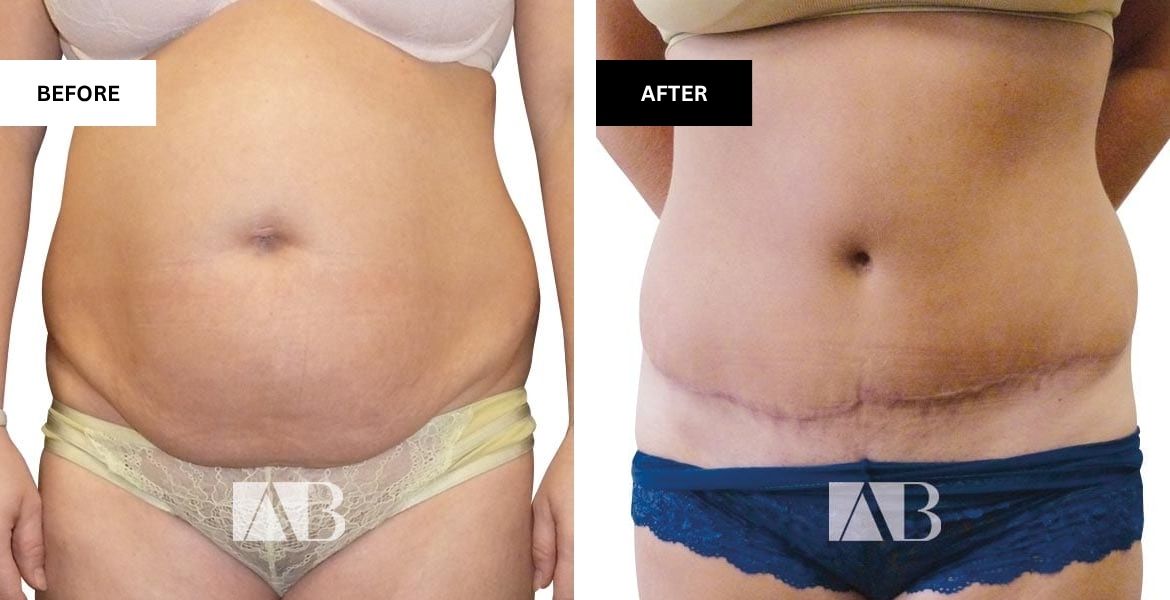
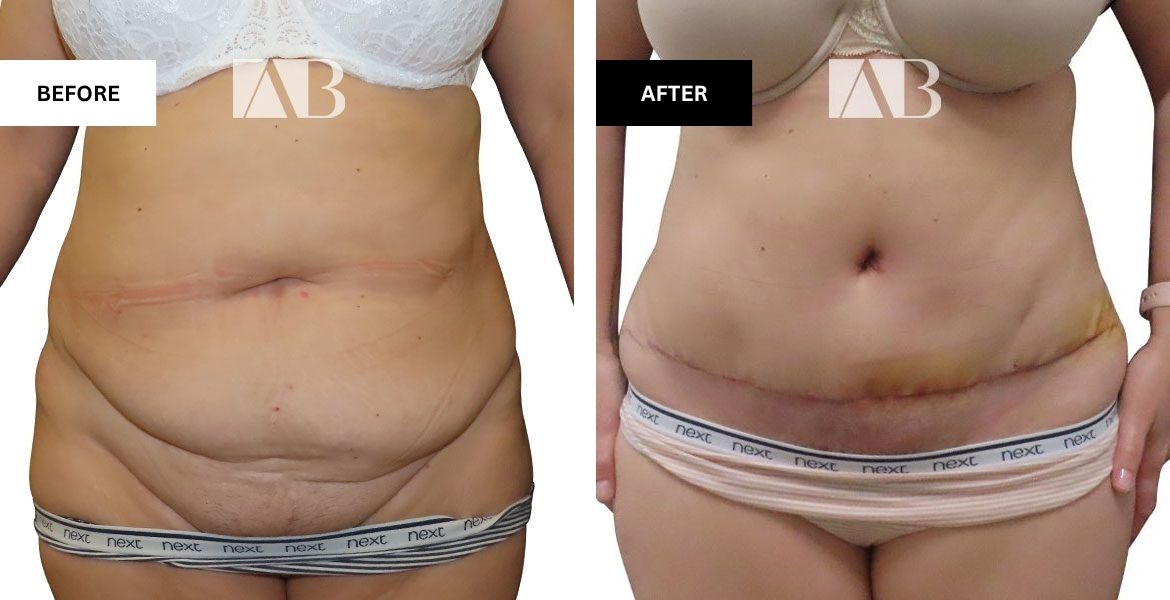
Abdominoplasty Before and After Photos
How To Protect Results Long Term
Long-term protection is not about perfection. It is about reducing the forces that stretch tissues.
Stable nutrition and a realistic activity routine matter because they support a stable weight range. Strength and core control matter because they support posture and how the abdomen holds itself. If your tummy tuck included muscle tightening, building back to safe, progressive core function is often part of feeling confident long term, but it must be done on your surgeon’s timeline.
Scar care also matters for how “long-term” your result feels. A scar that matures well is easier to live with, and scar management is part of the overall satisfaction picture.
Finally, avoid the trap of chasing an unchanging abdomen. Everyone bloats sometimes. Everyone fluctuates. Your tummy tuck result should be judged by your baseline and your clothing fit, not by one evening in harsh lighting after a salty meal.
What A Consultation With Miss Anca Breahna In Chester Looks Like
In Chester, UK, Miss Anca Breahna, Consultant Plastic & Reconstructive Surgeon, typically approaches long-term results as a planning conversation, not just an operative one. That includes assessing your skin quality, fat distribution, and whether abdominal wall laxity is part of your contour concern.
Miss Anca Breahna, Consultant Plastic & Reconstructive Surgeon in Chester, UK will also discuss timing in relation to weight goals. If you are planning significant weight loss, the discussion may focus on whether to wait until your weight is stable. If you are weight-stable now but worried about future change, the focus may be on what degree of change is likely to matter and what strategies reduce risk.
The consultation should also clarify that abdominoplasty is intended to improve contour, not to lock in a body permanently. The NHS framing is helpful here because it emphasises removing excess skin that cannot be removed through exercise, often after pregnancy or losing a lot of weight. That sets realistic expectations and helps patients avoid using surgery as a substitute for a long-term lifestyle.
If you are seeking advice specifically about weight gain after a tummy tuck, Miss Anca Breahna can help you think in ranges and scenarios rather than in fear. That tends to create better decisions and better satisfaction.

Weight Gain After Tummy Tuck FAQs
If I gain a little weight, will it go straight to my tummy because the area was “worked on”?
Not necessarily. Your body still follows its usual fat-storage pattern. Some people notice changes more in hips, back, or thighs because the abdominal envelope is tighter, so changes may look more obvious elsewhere.
What is a strange early sign that my “weight gain” is really swelling or fluid, not fat?
If the scale rises but your appetite is low, and your abdomen feels tight, firm and puffy rather than soft, that is often inflammation and fluid. Persistent or shifting lower fullness should be assessed because fluid collections like seroma can affect contour.
Can weight loss after a tummy tuck make me look more wrinkled in the lower belly?
It can if the loss is substantial. The surgery removes skin, but large losses can create a new mismatch between the skin envelope and body size.
If I had muscle tightening, can weight gain split my muscles again?
Large and sustained central weight gain can put extra load on the abdominal wall and may change contour. Whether it affects a repair depends on many factors, so it is best discussed with your surgeon rather than assumed.
Does pregnancy always ruin a tummy tuck result?
Not always. Evidence discussed in surgical literature suggests outcomes vary, and counselling should be individual rather than absolute.
Why do some people keep losing weight after abdominoplasty instead of gaining it back?
Some patients report continued weight loss in follow-up, possibly related to lifestyle changes after body contouring and improved comfort with activity. ASPS summarised findings suggesting continued weight loss for some patients in the years after a tummy tuck.
What is the weirdest way weight gain can change the look of a tummy tuck?
Some patients notice the waist thickens while the lower scar area remains relatively flat, which can make the midsection look less tapered. This is usually a proportion change rather than a “failed surgery” sign.
Medical References
- Patients Continue to Lose Weight in the Years After ‘Tummy Tuck’ / American Society of Plastic Surgeons / – https://www.plasticsurgery.org/news/press-releases/patients-continue-to-lose-weight-in-the-years-after-tummy-tuck
- Pregnancy Reverses Abdominoplasty Aesthetic Outcome: Myth or Misconception? A Cross-Sectional Study / Aesthetic Surgery Journal / – https://academic.oup.com/asj/article/42/1/NP20/6383599
- Experience in Post-Bariatric Abdominoplasty for Patients with Significant Weight Loss: A Prospective Study / Journal of Personalized Medicine / – https://www.mdpi.com/2075-4426/14/7/681
- What Happens to Weight following Abdominoplasty: An Analysis of 188 Consecutive Cases / Plastic and Reconstructive Surgery / – https://pubmed.ncbi.nlm.nih.gov/39808067/
Take our Plastic Surgery Quiz to find out if you’d be a good candidate for cosmetic surgery.
Next Step: Book a Tummy Tuck Consultation With Miss Breahna
Weight gain and weight loss can affect tummy tuck results, but the impact depends on the size and pattern of the change. Small fluctuations usually soften definition more than they erase results. Larger gains can reduce contour and can stretch tissues again. Significant weight loss after surgery can improve definition, but very large losses can create new loose skin.
If you are considering abdominoplasty in Chester, UK, and you want long-term confidence, book a consultation with Miss Anca Breahna, Consultant Plastic & Reconstructive Surgeon. Her clinic’s online Contact Page and Complimentary Photo Assessment Page are excellent tools for enquiries and setting appointments. She can help you plan around your weight goals, your lifestyle, and your anatomy so your results are both beautiful and realistic long term.
Further Reading
- Read more about Mummy Makeover
- Read more about Liposuction
- Read Miss Anca Breahna’s Blog on How a Tummy Tuck Can Improve the Abdomen Post Pregnancy
- Read Miss Anca Breahna’s Blog on Mini Tummy Tuck Vs Full Tummy Tuck
- Read Miss Anca Breahna’s Blog on Liposuction vs Tummy Tuck
- Read Miss Anca Breahna’s Blog on Is Abdominoplasty Major Surgery?
About Anca Breahna – Consultant Plastic Surgeon
 Miss Anca Breahna, PhD, MSc, FEBOPRAS, FRCS (Plast), is a Consultant Plastic, Reconstructive and Aesthetic Surgeon based in Chester with extensive experience in abdominal contouring and reconstructive surgery. Her specialist background is particularly relevant to abdominoplasty, where careful assessment of excess skin, abdominal muscle separation, fat distribution and overall waist contour is essential when planning surgery.
Miss Breahna performs tummy tuck surgery in Chester for patients affected by loose abdominal skin, stretched or separated muscles, or changes following pregnancy and significant weight loss. During consultation, she considers skin quality, muscle tone, body shape, medical history and individual goals before deciding whether a full abdominoplasty, mini tummy tuck or another approach is most suitable. As an experienced plastic surgeon in Chester, her approach focuses on balanced abdominal contouring, thoughtful scar placement, appropriate muscle repair and realistic expectations, with liposuction considered in selected cases where it may help refine the final shape.
Back to blog