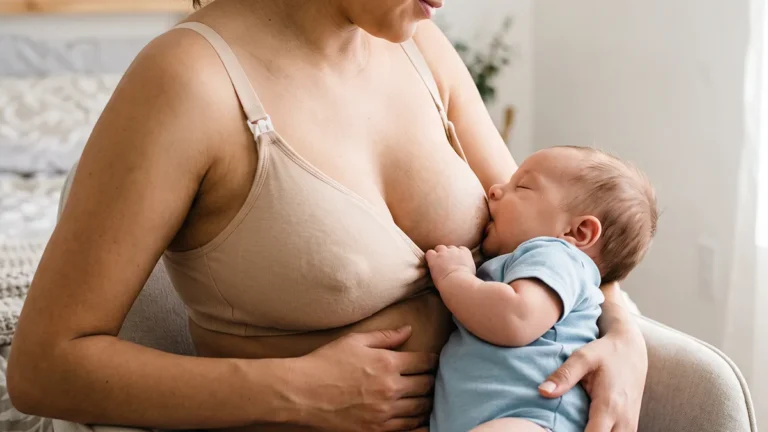
- What Changes After Breastfeeding?
- ✓ Loss of Upper Pole Fullness
- ✓ Breast Drooping and Lower Nipple Position
- ✓ Softer Skin and Breast Tissue
- ✓ Changes in Areola Size and Shape
- ✓ Breast Asymmetry
- Which Changes May Settle Naturally?
- What Is Less Likely to Improve Without Surgery?
- Which Breast Surgery Actually Helps?
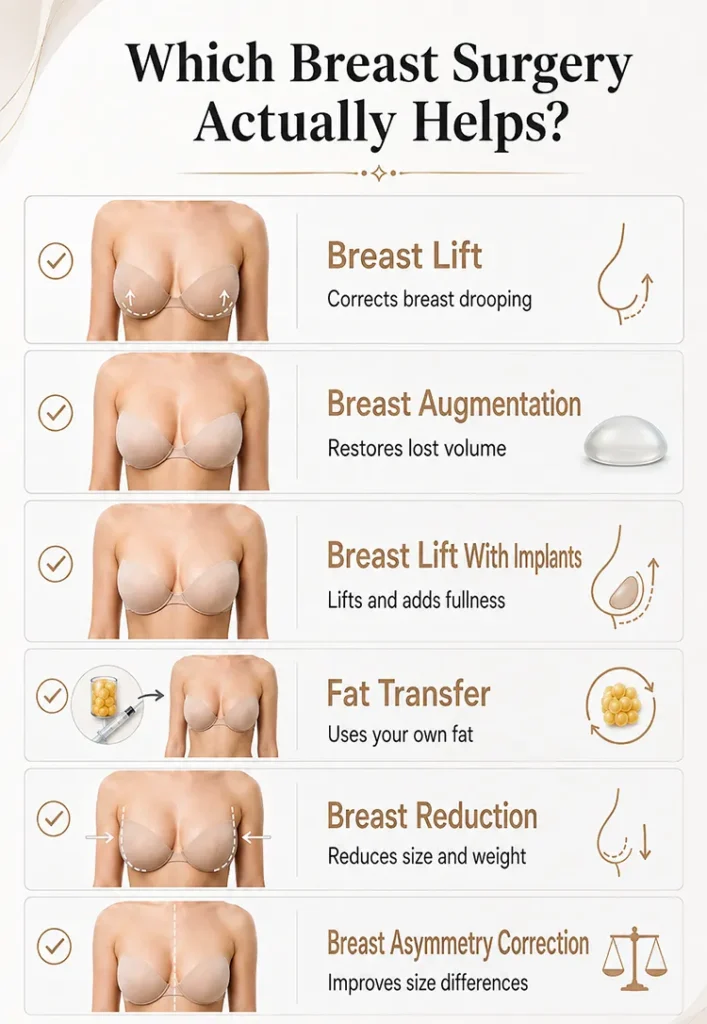
- ✓ Breast Lift
- ✓ Breast Augmentation
- ✓ Breast Lift With Implants
- ✓ Fat Transfer
- ✓ Breast Reduction
- ✓ Breast Asymmetry Correction
- When Should You Consider Surgery After Breastfeeding?
- What If You Are Planning Another Pregnancy?
- Can You Breastfeed After Breast Surgery?
- Who Is Suitable for Breast Surgery After Breastfeeding?
- Who May Be Advised to Wait?
- What Are the Risks of Breast Surgery?
- ✓ Risks of Breast Implants
- ✓ Risks of Breast Lift and Reduction
- Breast Surgeries Before and After Photos
- What Is Recovery Like?
- When Will the Final Result Be Visible?
- When Should You Contact Your Surgeon?
- What Are the Alternatives to Surgery?
- Download Miss Anca Breahna's Breast Augmentation Surgery Guide
- Can You Simply Wait?
- How Much Does Breast Surgery After Breastfeeding Cost?
- Summary
- Breast Surgery After Breastfeeding FAQs
- Take our Plastic Surgery Quiz to find out if you'd be a good candidate for cosmetic surgery.
- Next Step: Discuss Breast Changes After Breastfeeding With Miss Breahna
- Further Reading
Miss Anca Breahna, PhD, MSc, FEBOPRAS, FRCS (Plast), is a Consultant Plastic, Reconstructive and Aesthetic Surgeon in Chester. After breastfeeding, the breasts may lose volume, droop, become softer, or develop greater asymmetry, and the most helpful operation depends on which of these changes is present.
Pregnancy and breastfeeding affect each patient differently, so there is no single procedure that suits every post-breastfeeding breast. Breast implants can restore lost fullness, a breast lift can improve position and remove excess skin, breast reduction can address heaviness, and asymmetry correction may involve different techniques on each side.
This article explains which breast changes may settle naturally, which are more likely to persist, and how the main surgical options differ. The aim is to help you understand what each procedure can realistically achieve so that any decision is based on anatomy, health, future pregnancy plans, and personal goals.
Breastfeeding may be followed by changes in breast volume, firmness, skin elasticity, nipple position, and symmetry. The most suitable treatment depends on whether the main concern is deflation, drooping, heaviness, asymmetry, or more than one of these together.
- A breast lift helps when the breast and nipple sit lower.
- Breast implants help restore lost fullness and volume.
- A lift with implants may be needed when both volume loss and drooping are present.
- Breast reduction may help when the breasts remain heavy or uncomfortable.
- Fat transfer may provide a more subtle increase in volume.
Some breast changes continue to settle after weaning, so surgery should not be rushed. A consultation is needed to determine whether the breasts have stabilised and which option, if any, best matches your goals.
What Changes After Breastfeeding?
The breasts enlarge during pregnancy and lactation as glandular tissue develops and milk production begins. After weaning, that tissue reduces again, but the skin and internal support structures do not always return to their previous condition.
- Loss of upper breast fullness
- Softer or less dense breast tissue
- Breast drooping, also called ptosis
- Stretched skin or enlarged areolae
- Increased asymmetry between the breasts
The final appearance depends on several factors, including genetics, skin quality, breast size, weight change, age, pregnancy history, and how much the breasts enlarged. Breastfeeding is only one part of the process, and pregnancy-related expansion may contribute significantly to the changes patients notice afterwards.
✓ Loss of Upper Pole Fullness
Upper pole fullness describes the volume in the upper part of the breast, above the nipple. After breastfeeding, this area may appear flatter even when the overall bra size has not changed dramatically.
- Bras may gape at the top.
- The breast may look fuller in the lower half.
- Necklines may sit differently.
- The breast can appear deflated without being significantly smaller.
This pattern is usually caused by a change in tissue distribution rather than a simple reduction in cup size. The appropriate treatment depends on whether the breast remains in a good position or has also developed ptosis.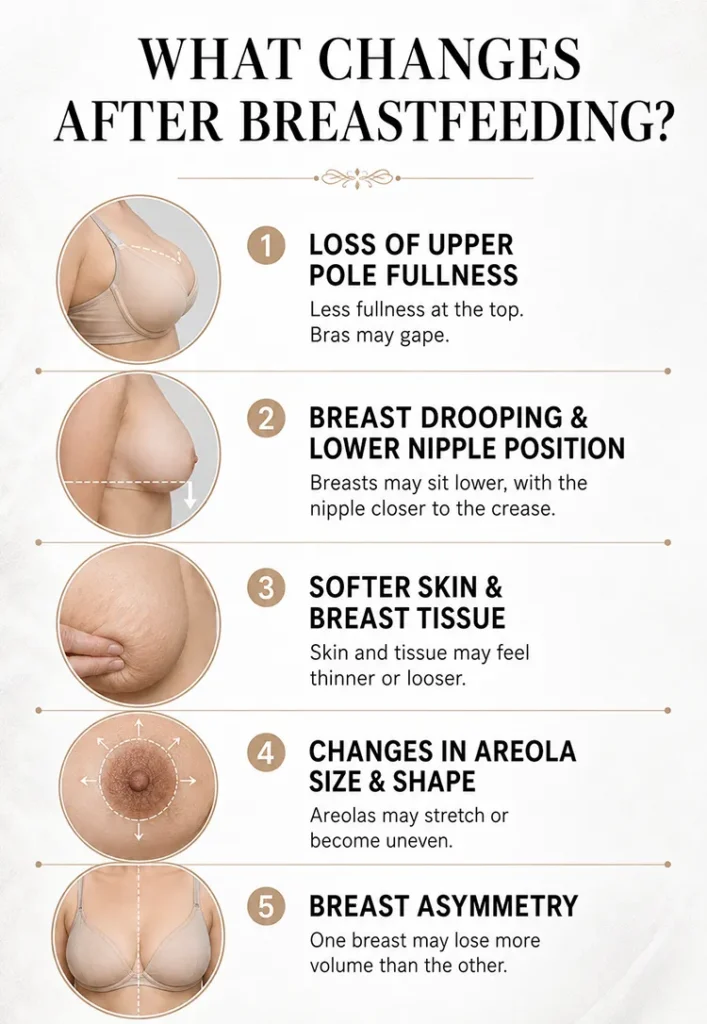
✓ Breast Drooping and Lower Nipple Position
Breast drooping occurs when the breast tissue and nipple sit lower on the chest than before. Clinically, the degree of ptosis is assessed in relation to the natural crease beneath the breast.
- The nipple may sit at or below the breast crease.
- The nipple may point downwards.
- More breast tissue may rest in the lower part of the breast.
- The upper breast may look empty.
- Supportive bras may lift the breast temporarily but not permanently.
Ptosis is not a criticism of the breast or a judgement about appearance. It is an anatomical description that helps determine whether a lift is required.
✓ Softer Skin and Breast Tissue
After pregnancy and breastfeeding, the breast envelope may feel softer and less firm. This can make the breast more mobile inside a bra and may contribute to wrinkling, folding, or poor cup support.
- Skin may feel thinner or looser.
- Breast tissue may settle lower.
- The breast may move more during activity.
- Stretch marks may become more visible.
- Bra fit may vary more between styles.
Soft tissue alone does not automatically mean that surgery is needed. However, when looseness is combined with low breast position or excess skin, a breast lift may be more effective than volume replacement alone.
✓ Changes in Areola Size and Shape
The areolae often enlarge or darken during pregnancy and breastfeeding. In some patients, they reduce after weaning, while in others they remain larger or become stretched by changes in breast shape.
- One areola may become larger than the other.
- The areola may appear oval rather than round.
- The nipple may sit lower within the breast.
- Areolar skin may look stretched.
- The two sides may differ more noticeably.
Areolar changes can sometimes be addressed during a breast lift or reduction. The extent of correction depends on skin quality, scar placement, and the position of the nipple.
✓ Breast Asymmetry
Most women have some degree of natural breast asymmetry before pregnancy. Breastfeeding can make this difference more apparent because each breast may respond differently to milk production, expansion, and involution.
- One breast may lose more volume.
- One nipple may sit lower.
- One breast may remain larger.
- One side may develop more loose skin.
- Bra cups may fit differently on each side.
Surgery can often improve balance, but perfect symmetry cannot be guaranteed. The goal is usually to make the breasts more proportionate in size, shape, position, and appearance in clothing.
Which Changes May Settle Naturally?
The breasts continue to change for a period after breastfeeding ends. Early assessment can be misleading because residual milk production, hormonal changes, weight fluctuation, and tissue remodelling may still affect breast size and firmness.
- Residual fullness may reduce.
- Minor asymmetry may improve.
- Breast tenderness may settle.
- Skin and tissue may contract to some degree.
- Bra size may continue to change.
It is sensible to allow the breasts to reach a stable baseline before making a surgical decision. The exact timing varies, so stability is more important than following one fixed waiting period.
What Is Less Likely to Improve Without Surgery?
Some anatomical changes are less likely to reverse once the breasts have stabilised. These usually involve stretched skin, persistent low breast position, marked volume loss, or significant asymmetry.
- Excess skin
- Low nipple position
- Established breast ptosis
- Significant loss of upper pole fullness
- Persistent size or shape asymmetry
Bras can support and reshape the breasts while they are being worn, but they cannot permanently remove excess skin or reposition the nipple. Surgery may be considered when these changes remain troubling and non-surgical measures no longer provide enough improvement.
Which Breast Surgery Actually Helps?
The most suitable procedure is determined by the main anatomical problem rather than by the label “post-breastfeeding breasts”. A careful assessment considers breast volume, nipple position, skin quality, breast footprint, asymmetry, and the patient’s preferred size and shape.
- A lift treats position and excess skin.
- Implants treat volume loss.
- A lift with implants treats both drooping and deflation.
- Reduction treats excess volume and heaviness.
- Fat transfer provides a modest increase in volume.

Some patients need only one procedure, while others may benefit from a combination. Choosing the simplest operation that addresses the actual concern is often preferable to adding treatments that are not necessary.
✓ Breast Lift
A breast lift, or mastopexy, raises and reshapes the breast by removing excess skin and repositioning the breast tissue. The nipple and areola are usually moved to a higher position while remaining attached to the underlying tissue.
- Corrects breast drooping
- Raises low nipple position
- Improves breast shape
- Reduces excess skin
- Can reduce the size of stretched areolae
A lift does not necessarily make the breasts larger, and some patients may appear slightly smaller because loose skin is removed and the breast is reshaped. Scars are an unavoidable part of the procedure and should be discussed carefully during consultation.
✓ Breast Augmentation
Breast augmentation uses implants to increase breast volume and improve fullness. It may suit patients whose breasts remain in a relatively good position but have become smaller or flatter after breastfeeding.
- Restores lost volume
- Improves upper pole fullness
- Creates a fuller breast contour
- May improve mild size asymmetry
- Can enhance balance with the hips and torso
Implants do not reliably correct significant drooping or raise a low nipple position. When the skin envelope is loose, adding an implant alone may create a larger breast that still sits too low.
✓ Breast Lift With Implants
A breast lift with implants may be recommended when the breast has both volume loss and significant ptosis. The lift improves position and removes excess skin, while the implant restores fullness.
- Raises the breast
- Repositions the nipple
- Restores upper breast volume
- Improves the breast envelope
- Addresses both deflation and drooping
This is a more complex operation than either procedure alone. Implant size, skin tension, scar pattern, and the balance between lifting and filling must be planned carefully.
✓ Fat Transfer
Fat transfer to breasts uses fat collected from another area of the body and injects it into the breast. It may suit patients seeking a subtle increase in volume without an implant.
- Uses the patient’s own tissue
- Provides modest volume enhancement
- Can improve minor contour irregularities
- May help with mild asymmetry
- Produces a soft, natural feel
Fat transfer does not create a major lift and may not provide enough volume for every patient. Some transferred fat is naturally reabsorbed, so the final retained volume can be less than the amount initially placed.
✓ Breast Reduction
Breast reduction may help patients whose breasts remain large, heavy, or uncomfortable after pregnancy and breastfeeding. The procedure removes excess breast tissue, fat, and skin while reshaping and lifting the breasts.
- Reduces breast weight
- May relieve neck and shoulder discomfort
- Improves bra fit
- Raises the nipple position
- Creates a more proportionate breast shape
Reduction is not simply a size-reducing procedure because it also reshapes the breast. It may be the most appropriate option when physical symptoms and heaviness are more important than loss of fullness.
✓ Breast Asymmetry Correction
Breast asymmetry correction is individually planned because the two breasts may differ in more than one way. One side may need a lift, reduction, implant, fat transfer, or a combination of adjustments.
- Corrects volume differences
- Improves nipple position
- Balances breast shape
- Addresses different degrees of ptosis
- Improves fit in bras and clothing
The aim is improvement rather than identical breasts. Natural differences in the chest wall, ribs, breast footprint, and soft tissue mean that some asymmetry will usually remain.
When Should You Consider Surgery After Breastfeeding?
The right time to consider breast surgery is when breastfeeding has finished and the breasts have reached a stable size and shape. This is more important than following one fixed waiting period because recovery after weaning varies between patients.
- Milk production should have stopped.
- Ongoing nipple discharge should have resolved.
- Breast size should be stable.
- Body weight should be reasonably stable.
- Future pregnancy plans should be considered.
Operating while the breasts are still changing can make surgical planning less reliable and may affect the final result. A consultation with Miss Anca Breahna can help determine whether the tissues have stabilised sufficiently for an accurate assessment.
What If You Are Planning Another Pregnancy?
Another pregnancy can alter breast volume, skin elasticity, and nipple position after surgery. This does not necessarily mean that surgery must be delayed, but the possibility of future change should form part of the decision.
- Pregnancy may stretch the breast skin again.
- Breast size may increase and reduce.
- Previous drooping may recur.
- Implant appearance may change.
- Revision surgery may be considered later.
Some patients prefer to wait until their family is complete, while others decide that improving their breasts now is important to their wellbeing. The decision should reflect your priorities, timing, health, and understanding that future pregnancy can affect the result.
Can You Breastfeed After Breast Surgery?
Many patients can breastfeed after breast surgery, but full milk production cannot be guaranteed. The effect depends on the procedure, incision placement, nipple involvement, and how much glandular tissue is removed or disturbed.
- Breast augmentation may preserve much of the milk-producing tissue.
- Incisions around the areola may affect ducts or nerves.
- Breast reduction may reduce future milk production.
- A breast lift may affect breastfeeding depending on the technique.
- Previous breastfeeding ability does not guarantee future supply.
Future breastfeeding goals should be discussed before surgery because they may influence the operative plan. Miss Breahna can explain how different techniques may affect milk production while being clear that no surgeon can promise a particular breastfeeding outcome.
Who Is Suitable for Breast Surgery After Breastfeeding?
Suitability depends on physical health, breast stability, personal goals, and whether the expected benefits justify the risks. A good candidate is not defined by one breast shape or degree of change, but by whether surgery is appropriate for the individual.
- Breastfeeding has finished.
- Breast size and weight are stable.
- General health is good.
- Expectations are realistic.
- The patient understands scars, recovery, and possible complications.
Patients should be choosing surgery for themselves rather than to satisfy another person or meet an unrealistic standard. A careful consultation helps determine whether surgery is likely to produce a meaningful and proportionate improvement.
Who May Be Advised to Wait?
Some patients benefit from delaying surgery until their body, health, or circumstances are more stable. Waiting can improve surgical planning and reduce the chance that further changes will compromise the result.
- Ongoing breastfeeding or milk production
- Recent or continuing weight loss
- Planned pregnancy in the near future
- Uncontrolled medical conditions
- Smoking or unwillingness to stop before surgery
Patients with unrealistic expectations or a desire for perfect symmetry may also need further discussion before proceeding. Surgery can improve shape and proportion, but it cannot create a flawless or permanently unchanging breast.
What Are the Risks of Breast Surgery?
All breast operations carry risks, even when performed carefully by an appropriately qualified plastic surgeon. The likelihood and significance of each complication depend on the procedure, anatomy, health, smoking status, and healing response.
- Bleeding or haematoma
- Infection
- Delayed wound healing
- Noticeable or widened scars
- Changes in nipple or breast sensation
Other possible concerns include asymmetry, contour irregularity, dissatisfaction with size or shape, and the need for revision surgery. These risks should be discussed in relation to the exact procedure being considered rather than as a generic list.
✓ Risks of Breast Implants
Breast implants have additional short-term and long-term considerations that should be understood before surgery. Implants are medical devices and should not be viewed as lifetime devices that will never require review or further treatment.
- Capsular contracture
- Implant rupture
- Implant displacement
- Visible rippling
- Future replacement or revision surgery
Rare implant-associated complications should also form part of informed consent. Miss Breahna will explain implant-specific risks, monitoring, and the possibility that further surgery may be needed in the future.
✓ Risks of Breast Lift and Reduction
Breast lift and reduction involve reshaping the breast and repositioning the nipple, which creates additional considerations. These procedures also require scars because excess skin must be removed to achieve the lift.
- Delayed healing at scar junctions
- Reduced nipple sensation
- Difficulty breastfeeding
- Recurrent drooping
- Partial nipple or skin loss, although uncommon
Scars usually soften and fade over time, but they remain permanent. The final balance between improved shape and visible scarring should be considered carefully before surgery.
Breast Surgeries Before and After Photos


What Is Recovery Like?
Recovery varies according to whether you have a lift, augmentation, reduction, fat transfer, or a combined procedure. Most patients experience swelling, bruising, tightness, and temporary changes in breast shape during the early healing period.
Recovery also differs by procedure: patients considering a breast reduction recovery can read what symptoms are commonly expected after reduction surgery, while our breast augmentation recovery timeline explains the typical stages of healing after implant surgery.
- A supportive postoperative bra is usually required.
- Driving is restricted until movement is comfortable and safe.
- Heavy lifting should be avoided.
- Exercise is reintroduced gradually.
- Follow-up appointments are needed to monitor healing.
You should arrange practical help at home, particularly if you have young children who need lifting or carrying. Recovery tends to be smoother when childcare, work, transport, and household responsibilities are planned in advance.
When Will the Final Result Be Visible?
Breast shape changes gradually as swelling reduces and the tissues settle. Early results should not be judged as final because the breasts may initially look high, firm, uneven, or more swollen on one side.
- Swelling reduces over several weeks.
- Implants gradually settle into position.
- Lifted tissue softens with time.
- Scars mature over many months.
- Bra size may change during recovery.
It is usually sensible to delay buying expensive new bras until swelling has stabilised and your surgeon advises that fitting is reliable. The final result should be assessed over months rather than days or weeks.
When Should You Contact Your Surgeon?
Some discomfort and swelling are expected, but certain symptoms require prompt medical advice. Patients should receive clear postoperative instructions explaining how to contact the surgical team if concerns arise.
- Increasing redness or warmth
- Worsening pain
- Sudden one-sided swelling
- Wound discharge or bleeding
- Fever, breathlessness, or feeling acutely unwell
Any sudden or unusual change should be reported, even if it is not included on a standard list. Early assessment allows potential complications to be investigated and treated without unnecessary delay.
What Are the Alternatives to Surgery?
Not every post-breastfeeding breast concern requires an operation. Non-surgical measures may improve comfort, support, appearance in clothing, and confidence, particularly when the changes are mild.
- Professional bra fitting
- Supportive or structured bras
- Removable inserts for asymmetry
- Weight stabilisation
- Clothing alterations
Exercise can strengthen the chest and upper body, but it cannot remove excess breast skin or lift the nipple. Non-surgical options are valuable, although they cannot reproduce the structural changes achieved by a lift, reduction, or augmentation.
Download Miss Anca Breahna’s Breast Augmentation Surgery Guide
Can You Simply Wait?
Waiting is a reasonable option when breastfeeding has ended recently or when future pregnancy is planned. It also allows time to decide whether the concern remains important once hormonal, emotional, and lifestyle changes have settled.
- Breast tissue may continue to soften or contract.
- Mild asymmetry may become less noticeable.
- Weight may stabilise.
- Bra fit may improve.
- Surgical priorities may become clearer.
There is no obligation to pursue surgery simply because breast changes are present. The appropriate decision may be surgery, delayed treatment, or no treatment at all.
How Much Does Breast Surgery After Breastfeeding Cost?
The cost depends on the procedure, hospital, anaesthetic requirements, implants where applicable, and whether more than one technique is needed. Combined surgery, such as a lift with implants, is generally more complex than a single procedure.
For current procedure-specific pricing, see our guides to breast reduction cost in Chester and breast augmentation cost in Chester, which explain indicative fees, what may be included and the factors that can affect an individual quotation.
- Surgeon’s fee
- Hospital and theatre fees
- Anaesthetist’s fee
- Implants or specialist materials
- Follow-up care
Only current, verified fees from Miss Anca Breahna’s practice should be published. A personalised quotation is usually provided after consultation because the final cost depends on the recommended operation and individual treatment plan.
Summary
Breast changes after breastfeeding commonly involve volume loss, drooping, softness, altered nipple position, or asymmetry. The most effective procedure depends on identifying which anatomical change is responsible for the concern.
- A breast lift improves position and removes excess skin.
- Implants restore volume and fullness.
- A lift with implants addresses both deflation and ptosis.
- Breast reduction treats heaviness and excess volume.
- Fat transfer may provide subtle volume correction.
Some changes settle naturally, and surgery should only be considered after the breasts have stabilised. A personalised assessment is essential because no single operation is suitable for every post-breastfeeding breast.

Breast Surgery After Breastfeeding FAQs
If I only breastfed on one side more, can that permanently change my shape, and can surgery balance it?
Yes, one-sided feeding can contribute to asymmetry because the breasts may respond differently to milk production and weaning. Surgery can often improve balance, but the best technique depends on whether the difference is volume, droop, nipple position, or all three. A consultation focuses on improvement and balance rather than perfect symmetry.
Why do my breasts look flatter at the top even though my bra size did not change much?
This is often a redistribution issue, not only a size issue. After breastfeeding, upper fullness can reduce while lower pole tissue remains, creating the “empty top cup” feeling. Implants can restore upper fullness, while a lift can reposition tissue if the breast has dropped.
Can implants make post-breastfeeding sagging look worse if I do not get a lift?
They can, especially if there is significant loose skin or low nipple position. Adding volume does not remove excess skin, and it does not reliably raise the nipple position, so you can end up with a larger breast that still sits low. That is why lift versus implants is decided based on ptosis and skin quality, not trends.
If I might want another baby, is it smarter to delay breast surgery?
Many patients choose to delay because pregnancy can change results. If you do proceed, you should discuss future breastfeeding goals and how technique choices may influence milk production potential. Public health guidance notes that incision type and implant placement can influence milk production outcomes.
Is it normal to feel like my nipples sit lower, even if I do not feel “bigger” or “smaller”?
Yes. Nipple position can change with skin stretch and tissue settling, and it can be one of the most emotionally noticeable changes. A breast lift is the procedure that directly addresses nipple position and reshaping.
Could fat transfer be enough if I want a very natural, subtle improvement?
Sometimes, yes, especially if your main issue is mild deflation rather than significant sagging. Fat transfer is usually best for subtle volume restoration and contour refinement. If the nipple is low or the breast envelope is very loose, a lift may be a more effective foundation.
I feel guilty caring about this after breastfeeding. Is it still valid to consider surgery?
Yes. You can be grateful for what your body has done and still want your breasts to better match how you feel now. The most helpful approach is defining practical goals and choosing an option that fits your health, lifestyle, and long-term plans.
Medical References
- Successful breastfeeding after breast reduction surgery or mastopexy: A retrospective comparative study / Annales de Chirurgie Plastique Esthétique / – https://www.sciencedirect.com/science/article/pii/S0294126024000566
- Breastfeeding and perceived changes in the appearance of the breasts: a retrospective study / Acta Paediatrica / – https://pubmed.ncbi.nlm.nih.gov/15499956/
- Surgical Correction of the “Small” Postpartum Ptotic Breast / Aesthetic Surgery Journal / – https://academic.oup.com/asj/article-abstract/24/3/199/369458
Take our Plastic Surgery Quiz to find out if you’d be a good candidate for cosmetic surgery.
Next Step: Discuss Breast Changes After Breastfeeding With Miss Breahna
After breastfeeding, breasts can look and feel different because volume, skin, and nipple position can change, and those changes are extremely common. The key is matching the procedure to the change. A lift helps position and shape. Implants help volume and fullness. Reduction helps with heaviness and comfort. Asymmetry correction helps balance, and fat transfer can offer subtle refinement.
If you want a personalised plan in Chester, UK, book a consultation with Miss Anca Breahna, Consultant Plastic & Reconstructive Surgeon. Visit her clinic’s Contact Page or Complimentary Photo Assessment Page to securely send images or enquiries, or get started with an appointment. Miss Anca Breahna can assess what has changed for you specifically and explain which breast surgery after breastfeeding UK options are most likely to achieve your goals with realistic expectations and safe planning.
Further Reading
- Read more about Inverted Nipple Correction
- Read more about Tuberous Breast Correction
- Read more about Motiva Preservé Breast Augmentation in Chester
- Read Anca Breahna’s Blog on Benefits of Motiva Breast Implants
- Read Anca Breahna’s Blog on Comparing Mia® Femtech vs Motiva® Preserve Breast Implants
- Read Anca Breahna’s Blog on How to Get Perkier Breasts with Motiva Breast Implants
- Read Anca Breahna’s Blog on What Are Pilates Boobs? The Elegant New Trend in Natural Breast Enhancement