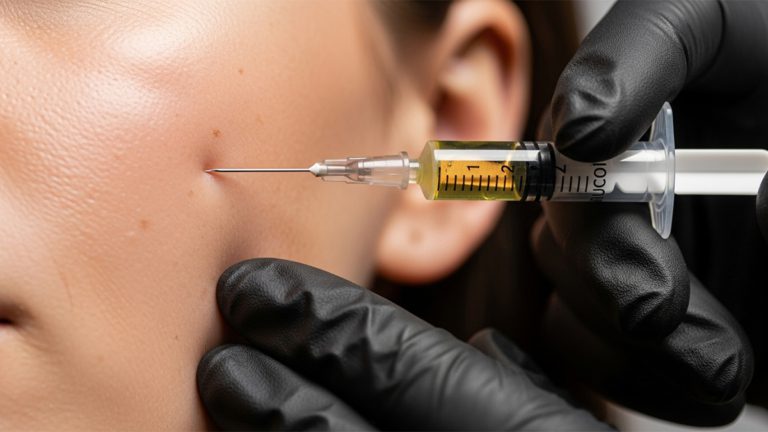
- Take our Plastic Surgery Quiz to find out if you'd be a good candidate for cosmetic surgery.
- Understanding Fat Grafting and Fat Survival
- - What Is Fat Grafting or Lipofilling
- - What Do Surgeons Mean by Fat Survival Rate
- Download Miss Anca Breahna's Liposuction Guide
- Factors That Influence Fat Survival Rate
- ✓ Quality of Donor Fat and Overall Health
- ✓ The Role of Blood Supply and Recipient Site
- Gentle Harvesting of Fat
- Why Low Trauma Harvesting Matters
- Choosing Donor Areas And Planning The Procedure
- Careful Processing to Protect Fat Cells
- Cleaning The Fat Without Damaging It
- Creating a Concentrated, High Quality Graft
- Injection Technique and Layering for Better Fat Survival
- Why Many Small Threads Are Better Than One Large Bolus
- Sculpting, Not Just Filling
- Emerging Ways to Support Fat Survival Rate
- Use of Regenerative Components Where Appropriate
- Combining Fat Grafting With Other Treatments
- Aftercare and Patient Habits That Influence Fat Survival
- ✓ Protecting the Grafted Area in the Early Weeks
- ✓ Weight Stability and Long-Term Results
- Realistic Expectations: Why Top Up Sessions Are Sometimes Needed
- Why One Session May Not Be Enough
- How Miss Anca Breahna Plans Long Term Improvements
- Liposuction Before and After Photos
- The Patient Journey With Miss Anca Breahna in Chester
- ✓ Consultation and Planning
- ✓ The Procedure Day
- ✓ Follow Up and Long Term Care
- Why Choose Miss Anca Breahna for Fat Grafting and Lipofilling
- Consultant Plastic & Reconstructive Surgeon Expertise
- Personalised, Natural Results in Chester
- Start With A Fat Grafting Consultation
- Further Reading
- Medical References
- About Anca Breahna – Consultant Plastic Surgeon
Fat grafting, also called lipofilling or fat transfer, is a technique that uses your own fat to restore or add volume in areas such as the face, breasts, buttocks, or scars. It can soften hard edges, improve contour, and create a very natural look, because the tissue comes from your own body rather than an artificial filler or implant.
One of the most common questions patients ask is how much of the transferred fat will actually last. This is what surgeons call the fat survival rate. Not every fat cell that is moved from one area to another will live permanently. Some of the volume is always absorbed by the body over time. What matters is how much healthy fat survives and how stable the results are in the long term.
At her private practice in Chester, UK, Miss Anca Breahna, Consultant Plastic & Reconstructive Surgeon, uses evidence-based techniques to improve fat survival rate in both aesthetic and reconstructive fat grafting. Her focus is on gentle handling of the fat, careful placement, and thoughtful aftercare so that as much of the graft as possible can integrate and last. This article explains in clear language what affects fat survival rate and how each step of the process can be optimised.
Take our Plastic Surgery Quiz to find out if you’d be a good candidate for cosmetic surgery.
Understanding Fat Grafting and Fat Survival
– What Is Fat Grafting or Lipofilling
Fat grafting or lipofilling is a three step procedure. First, fat is gently removed from a donor area, usually the abdomen, thighs, flanks, or hips. Second, the fat is cleaned and prepared. Third, it is injected into a new area that needs more volume or softness.
Because the tissue is your own, it can feel very natural. In the face, it can restore youthful fullness in the cheeks, temples, or under the eyes. In the breast, it can improve shape, correct asymmetry, or refine a reconstruction. In other areas, it can soften scars, fill dents, or smooth out contour irregularities.
– What Do Surgeons Mean by Fat Survival Rate
When fat is moved from one place to another, the individual fat cells need to connect to a new blood supply in their new home. Cells that do not manage to do this will not survive. Surgeons describe the amount of fat that remains long term as the fat survival rate or volume retention.
It is normal that not all the transferred fat will survive. Depending on the area, technique, and patient factors, a proportion of the volume will be absorbed by the body over several months. Experienced surgeons understand this and plan for it. In some situations, more than one session of fat grafting may be recommended to build the result gradually.
The goal is not to achieve a perfect 100 percent fat survival rate, which is not realistic, but to handle the fat and plan the treatment in a way that maximises healthy, long lasting integration.
Download Miss Anca Breahna’s Liposuction Guide
Factors That Influence Fat Survival Rate
✓ Quality of Donor Fat and Overall Health
The quality of the fat that is taken from a donor site influences how well it will survive after transfer. Some donor areas provide fat with a more favourable structure and cell mix. The abdomen and thighs are commonly used because they often hold a stable layer of subcutaneous fat.
Your general health also matters. Smoking, poorly controlled medical conditions, and extreme fluctuations in weight can all affect blood supply and healing, and therefore fat survival. A stable, healthy weight and good circulation support better graft take. This is one reason why Miss Anca Breahna always takes a full medical history and may recommend lifestyle changes before surgery.
✓ The Role of Blood Supply and Recipient Site
Fat cells need access to oxygen and nutrients. They can only survive in their new position if they are in close contact with well vascularised tissue. Areas that have been damaged by radiotherapy, severe scarring, or previous surgery may have a reduced blood supply. Fat can still be grafted into these regions, but the fat survival rate may be lower, and several small sessions may be better than one large one.
The condition of the recipient site is therefore a key part of planning. In some reconstructive cases, fat grafting is used step by step to gradually improve the bed of tissue, making it softer and better perfused over time.
Gentle Harvesting of Fat
Why Low Trauma Harvesting Matters
The way the fat is removed from the donor area has a major impact on the health of the fat cells. High suction pressures, very small cannulas, or rough movements can damage the walls of fat cells and the delicate stromal vascular cells that support them. Injured cells are less likely to survive once they are transferred.
To protect the graft, surgeons use gentle liposuction techniques and carefully chosen cannulas. The aim is to collect viable fat with as little trauma as possible. The fat is suspended in a solution during harvest and moved through the cannula in a controlled way, rather than being torn or overheated. This low trauma approach begins the process of optimising fat survival rate from the very first step.
Choosing Donor Areas And Planning The Procedure
Donor sites are selected based on where you have enough fat for harvest and how the area will look afterwards. Many patients appreciate the contouring effect in regions such as the abdomen or flanks as a secondary benefit. At the same time, Miss Breahna plans the harvest to leave a smooth, even contour with no dents or sharp edges.
The volume of fat taken and the areas chosen are balanced against your body shape and goals. Careful planning ensures that the donor area remains in proportion while providing enough fat to achieve a meaningful change in the grafted site.
Careful Processing to Protect Fat Cells
Cleaning The Fat Without Damaging It
Once the fat has been collected, it is mixed with fluid, blood, and oily residues from disrupted cells. These need to be removed before the fat is reinjected. The aim is to create a clean graft that contains healthy adipocytes and supportive stromal cells, without unnecessary debris.
This cleaning can be done using gentle centrifugation, filtration, or gravity based separation. The key point is that the processing should be firm enough to remove unwanted components but gentle enough to avoid further injury to the cells. Overly harsh spinning or repeated handling can reduce cell viability and therefore reduce the fat survival rate.
Creating a Concentrated, High Quality Graft
After separation, a concentrated layer of healthy fat is prepared for injection. At this stage, maintaining sterility is vital. The graft is kept within a closed system or carefully controlled field to reduce the risk of contamination. Small syringes are often used to prepare the fat for precise placement.
At her Chester clinic, Miss Anca Breahna focuses on creating a consistent, high quality graft that can be placed accurately and predictably. This attention to detail at the processing stage supports better long term stability.
Injection Technique and Layering for Better Fat Survival
Why Many Small Threads Are Better Than One Large Bolus
The way fat is injected is just as important as how it is harvested and processed. If a large mass of fat is placed in one spot, the cells in the centre of that mass may not receive enough blood supply quickly enough and can die. This can lead to reduced volume, oil cysts, or firm nodules.

To avoid this, surgeons use a technique where fat is delivered as very fine threads or droplets in multiple layers. The cannula passes through the tissues and deposits small amounts as it moves, rather than injecting a large amount in one place. Each small strand of fat is surrounded by living tissue with a healthy blood supply, giving it a better chance of survival.
Sculpting, Not Just Filling
Fat grafting is not simply a matter of adding bulk. It is a form of three dimensional sculpting. In the face, this might mean layering small amounts of fat along the cheekbone, under the eyes, and in the temples to softly recreate youthful contours. In the breast, it may mean shaping the upper pole, correcting subtle differences between sides, or blending the edge of an implant. In reconstructive cases, it can smooth out step offs or soften a scar.
Miss Anca Breahna uses multiple passes and planes to achieve a smooth, natural contour that respects the underlying anatomy. This sculpting approach helps avoid visible lumps and contributes to a more even, reliable fat survival rate across the treated area.
Emerging Ways to Support Fat Survival Rate
Use of Regenerative Components Where Appropriate
Research in regenerative medicine has led to techniques that add extra cellular components back into the fat graft. Some methods concentrate stromal vascular fraction or adipose derived stem cells, while others use platelet rich plasma to bring growth factors that may support blood vessel formation and healing.
These approaches, sometimes called cell assisted lipotransfer, have shown promising results in certain studies, particularly in difficult environments such as irradiated tissue. However, they are still evolving, and not every patient or clinical situation requires them. In the article context, it is helpful to explain that they can be useful tools in selected cases rather than magic solutions.
Combining Fat Grafting With Other Treatments
Fat grafting can also be combined with other procedures. For example, facial fat transfer may be performed alongside a facelift, eyelid surgery, or skin resurfacing. In the breast, fat grafting can refine a reconstruction, smooth the edge of an implant, or improve contour after cancer surgery.
Timing is important. Some treatments are best done at the same time as fat grafting, while others may be staged to reduce stress on the tissues. Miss Breahna plans combined procedures with graft survival in mind, so that the fat is given the best possible environment in which to settle.
Aftercare and Patient Habits That Influence Fat Survival
✓ Protecting the Grafted Area in the Early Weeks
What you do in the first few weeks after fat grafting can make a real difference. The newly placed fat is delicate and should not be compressed or disturbed more than necessary. Patients are usually advised to avoid direct pressure on the grafted area, to sleep in a certain position to protect their results, and to delay heavy exercise or impact sports until healing has progressed.
Some swelling and an initial slight over correction are normal. The fat needs time to integrate, and the body needs time to clear normal postoperative fluid. During follow up appointments in Chester, Miss Breahna checks how the graft is settling and provides personalised advice for ongoing care.
✓ Weight Stability and Long-Term Results
Once the grafted fat has established a blood supply and survived, it behaves like the other fat in that part of your body. If you lose a lot of weight, the grafted area may shrink. If you gain a lot of weight, it may become fuller. For this reason, it is best to be at or close to a stable, sustainable weight before undergoing fat grafting.
If you are considering fat transfer to the breasts, it is also helpful to understand how the results continue to change over the months and years after surgery. Read our guide on the long-term results of breast fat grafting and what to expect over time for a detailed explanation of fat retention, volume changes, and factors that influence lasting outcomes.
Maintaining a healthy lifestyle after the procedure helps to keep the contours and volume that have been achieved. A stable weight, good nutrition, and avoiding smoking are simple but powerful ways to support long term results and protect the investment you have made in your body.
Realistic Expectations: Why Top Up Sessions Are Sometimes Needed
Why One Session May Not Be Enough

Even with excellent technique and careful aftercare, a proportion of the grafted fat will be absorbed by the body. This is expected and does not mean the procedure has failed. In small, delicate areas such as the lips or tear troughs, or in complex reconstructive situations, planning more than one treatment from the outset is often wise.
By working in stages, Miss Anca Breahna can observe how your tissues respond, how much fat survives, and where refinement is needed. This approach can actually produce a more natural result than attempting to do everything in a single, heavy session.
How Miss Anca Breahna Plans Long Term Improvements
At follow up visits, usually over the course of several months, the shape, symmetry, and volume of the treated area are reviewed. If further improvement is needed, a top up session can be scheduled. Because the tissues have already been conditioned by the first graft, subsequent procedures may build on a healthier foundation.
This staged, patient approach reflects Miss Breahna’s broader philosophy: subtle, thoughtful change over time, rather than dramatic one off alterations that risk looking artificial or unstable.
Liposuction Before and After Photos


The Patient Journey With Miss Anca Breahna in Chester
✓ Consultation and Planning
Your journey begins with a detailed consultation at Miss Breahna’s clinic in Chester. During this appointment, you will discuss what you hope to achieve, whether that is facial rejuvenation, breast refinement, buttock shaping, or improvement of a contour irregularity. A full medical history is taken, and a physical examination is carried out to assess both donor and recipient areas.
This is also the stage where fat survival rate is discussed honestly. You will learn what is realistic for your body, what improvements are likely after one session, and when staged treatment might be sensible. Risks, benefits, and alternatives are explained clearly, giving you the information you need to decide whether fat grafting feels right for you.
✓ The Procedure Day
On the day of the procedure, you will be admitted to an accredited hospital or surgical centre. Depending on the extent of the fat grafting and the areas involved, the procedure may be done under local anaesthetic with sedation or under a general anaesthetic.
The steps of harvesting, processing, and grafting are carried out in a controlled, sterile environment. You are monitored throughout, and your comfort is carefully managed by the anaesthetic and nursing teams. Most fat grafting procedures are day cases, which means you can usually return home the same day with clear aftercare instructions.
✓ Follow Up and Long Term Care
Follow up visits play an important role in assessing fat survival rate and overall outcome. Swelling and minor changes are expected in the early weeks, so Miss Breahna will usually monitor your progress over several months before making final judgments about the need for any additional treatment.
Throughout this period, you have access to advice and support from her team. Questions about activity, sensation, or appearance can be addressed promptly. Long term care may include simple lifestyle guidance and occasional review to ensure your results remain in line with your expectations.
Why Choose Miss Anca Breahna for Fat Grafting and Lipofilling
Consultant Plastic & Reconstructive Surgeon Expertise
Miss Anca Breahna is a Consultant Plastic & Reconstructive Surgeon, which represents the highest level of surgical training in her field. Her background includes complex reconstructive work as well as aesthetic surgery. This dual experience means she understands both the artistic and biological aspects of fat grafting.
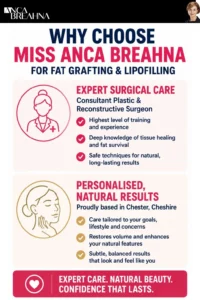
She has a deep understanding of tissue healing, microcirculation, and how different tissues respond to grafting. This informs every decision she makes about donor site choice, processing methods, injection technique, and the pacing of treatment. Her goal is always to maximise fat survival rate while maintaining safety and achieving results that look and feel natural.
Personalised, Natural Results in Chester
From her base in Chester, Cheshire, Miss Breahna offers patients in the region access to modern fat grafting techniques without the need to travel to large city centres. She believes strongly in personalised care and takes time to understand each person’s goals, lifestyle, and concerns.
Her results are characterised by subtlety and balance. Rather than chasing trends or extreme changes, she focuses on enhancing your existing features, restoring lost volume, and creating soft, harmonious contours that sit comfortably with the rest of your body.
Start With A Fat Grafting Consultation
Improving fat survival rate in fat grafting or lipofilling is not about one single trick. It is about doing many things well, from gentle harvesting and careful processing to precise injection and thoughtful aftercare. In the hands of an experienced Consultant Plastic & Reconstructive Surgeon, fat grafting can offer long lasting, natural volume using your own tissue.
If you are considering fat transfer to the face, breasts, body, or to improve scars, Miss Anca Breahna can guide you through your options in a calm, honest, and supportive way at her clinic in Chester. You can choose to book a private one to one consultation for a full assessment and tailored treatment plan. Alternatively, you may prefer to send a confidential enquiry or recent photographs for an initial complimentary photo assessment before attending in person.
Taking the first step can feel daunting, but you do not need to make decisions alone. With expert advice and a clear plan, you can move toward natural, soft volume and long term results that feel like you.
Contact Details
📍 Chester, Cheshire, United Kingdom
📞 01244 646 907
📧 info@ancabreahna.com
🌐 https://ancabreahna.com
Further Reading
- Read about Miss Breahna’s Natural Boob Job – Autologous Fat Transfer to the Breasts Blog
- Read about Miss Breahna’s How to Get Natural Looking Breasts Blog
Medical References
- The Science of Fat Grafting / Seminars in Plastic Surgery / https://pmc.ncbi.nlm.nih.gov/articles/PMC7023968/
- Autologous fat grafting for cosmetic temporal augmentation: a systematic review / Frontiers in Surgery / https://www.frontiersin.org/journals/surgery/articles/10.3389/fsurg.2024.1410162/full
- Fat graft survival in muscle tissue / Global Surgery / https://www.oatext.com/fat-graft-survival-in-muscle-tissue.php
About Anca Breahna – Consultant Plastic Surgeon
 Miss Anca Breahna, PhD, MSc, FEBOPRAS, FRCS (Plast), is a Consultant Plastic, Reconstructive and Aesthetic Surgeon based in Chester with experience in body contouring and reconstructive surgery. Her background is particularly relevant to liposuction, where effective treatment depends not only on removing localised fat, but also on understanding skin quality, body proportions and how each treated area relates to the surrounding contours.
Miss Breahna performs liposuction in Chester for patients with stubborn areas of fat that persist despite a healthy weight and lifestyle. Common treatment areas include the abdomen, thighs, arms, buttocks and neck, and liposuction may also be combined with procedures such as abdominoplasty when appropriate. During consultation, she assesses fat distribution, skin elasticity, medical history and individual goals before recommending treatment. As an experienced plastic surgeon in Chester, her approach focuses on controlled fat removal, balanced contouring and realistic expectations, with clear guidance that liposuction is a body shaping procedure rather than a method of weight loss.
Back to blog