
- Introduction
- At a Glance
- What Is Labiaplasty?
- How Is Labiaplasty Performed?
- Why Do Women Consider Labiaplasty?
- Why Is Preparation Important?
- What Happens During a Labiaplasty Consultation?
- What Should You Tell Your Surgeon?
- Questions to Ask at Your Consultation
- How Should You Prepare Before Labiaplasty?
- Medical Assessment Before Surgery
- Medicine and Supplement Review
- Smoking, Nicotine, and Alcohol
- Nutrition and Hydration Before Surgery
- Lifestyle and Home Preparation
- What Happens on the Day of Surgery?
- What Should You Wear?
- What Should You Pack?
- How Is Labiaplasty Performed?
- Who Is Suitable for Labiaplasty?
- Who May Need to Delay Surgery?
- What Are the Risks of Labiaplasty?
- ✓ Expected Temporary Effects
- ✓ Possible Complications
- When Should You Contact the Surgical Team?
- Labiaplasty Before and After Photos
- What Is Recovery Like After Labiaplasty?
- ✓ The First 24 to 48 Hours
- ✓ The First Week
- ✓ Returning to Work
- ✓ Returning to Exercise and Intimacy
- When Will the Final Result Be Visible?
- Are There Alternatives to Labiaplasty?
- ✓ Practical and Conservative Measures
- ✓ Non-Surgical Treatments
- ✓ Choosing No Treatment
- How Much Does Labiaplasty Cost?
- Take our Plastic Surgery Quiz to find out if you'd be a good candidate for cosmetic surgery.
- Summary
- FAQs About Preparing For Labiaplasty Surgery
- Next Step: Take A Safe Feminine Empowerment Surgery With Miss Breahna
- Download Miss Anca Breahna's Labiaplasty Surgery Guide
- Further Reading
Introduction
Miss Anca Breahna, PhD, MSc, FEBOPRAS, FRCS (Plast), is a Consultant Plastic, Reconstructive and Aesthetic Surgeon with extensive experience performing personalised labiaplasty procedures. Preparing for labiaplasty involves attending a thorough consultation, optimising your general health, reviewing medications, planning your recovery, and carefully following your surgeon’s pre-operative instructions. Taking these steps before surgery can help reduce avoidable risks and support a smoother recovery.
Labiaplasty may be performed to improve physical discomfort, address irritation during everyday activities, or refine the appearance of the labial tissues according to an individual’s goals. Because every woman’s anatomy and reasons for seeking surgery are different, preparation should always be tailored to your medical history, lifestyle, and treatment plan. Understanding what to expect before your procedure can also help you make an informed decision with realistic expectations about surgery and recovery.
This guide explains how to prepare for labiaplasty from your initial consultation through to the day of surgery. It covers medical assessments, medication reviews, lifestyle adjustments, nutrition, practical recovery planning, and other important considerations before your procedure. You will also learn about suitability, potential risks, recovery, alternatives, costs, and the questions patients commonly ask before undergoing labiaplasty.
At a Glance
Preparing for labiaplasty generally involves attending a detailed consultation, reviewing your medical history and medicines, stopping smoking or nicotine when advised, following fasting instructions, arranging transport home, and preparing a comfortable recovery space. You should also plan time away from work, exercise, driving, and sexual activity while the tissues heal.
Key preparation steps include:
- Attend a full surgical consultation
- Review all medicines and supplements
- Stop smoking and nicotine as instructed
- Arrange transport and suitable home support
- Prepare loose clothing and recovery supplies
- Follow personalised fasting and hygiene advice
Good preparation does not guarantee a particular outcome, but it helps identify potential risks and allows you to approach surgery with a clearer understanding of the procedure and recovery.
What Is Labiaplasty?
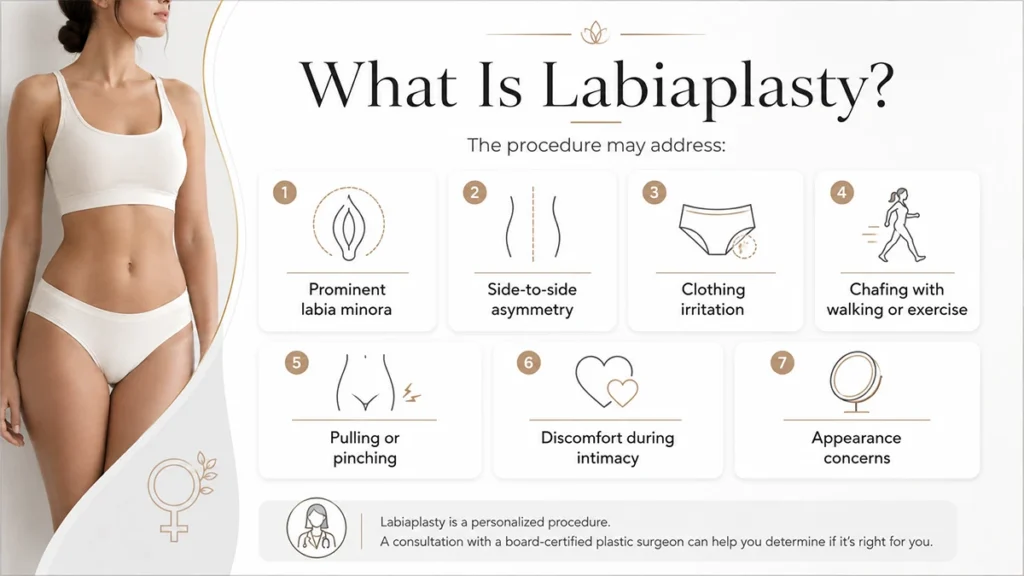
Labiaplasty is an operation that reshapes or reduces the labial tissues. It most commonly involves the labia minora, which are the inner folds of tissue surrounding the vaginal opening. In selected patients, treatment may also involve the labia majora, the outer folds.
The procedure may address:
- Prominent or elongated labia minora
- Differences between the two sides
- Irritation caused by clothing
- Chafing during walking or exercise
- Pulling or pinching of the tissues
- Discomfort during sexual activity
- Appearance-related concerns
Labiaplasty is not a standardised operation. Surgical planning depends on the shape, thickness, pigmentation, symmetry, and degree of tissue prominence. The aim should be to achieve a proportionate result while preserving normal function and avoiding unnecessary tissue removal.
How Is Labiaplasty Performed?
Different labiaplasty techniques may be considered according to the patient’s anatomy and goals. The operation generally involves removing or reshaping a carefully planned amount of tissue before closing the incisions with fine sutures.
Depending on the surgical plan, treatment may involve:
- Reducing the most prominent tissue
- Reshaping an irregular edge
- Improving differences between the two sides
- Preserving natural pigmentation and contour
- Protecting sensitive structures
- Supporting comfortable healing
The specific technique, scar position, anaesthetic, and expected result should be discussed during consultation. Patients should understand that perfect symmetry cannot be guaranteed and that some natural variation will remain.
Why Do Women Consider Labiaplasty?
Women seek labiaplasty for a range of reasons. Research suggests that many patients report both physical and appearance-related concerns rather than a single isolated motivation.
Functional concerns may include:
- Chafing during running, cycling, or walking
- Irritation in tight trousers or underwear
- Tissue becoming pinched or pulled
- Discomfort during intimacy
- Difficulty with certain sporting activities
Other patients may feel self-conscious about size, shape, asymmetry, or changes following childbirth, hormonal changes, or ageing.
There is no medically defined ideal appearance for the labia. Images encountered through advertising, pornography, social media, or edited online content may not reflect the natural diversity of vulval anatomy. A careful consultation should explore whether the patient’s expectations are realistic and whether surgery is the most appropriate response to their concerns.
Why Is Preparation Important?
Preparing for surgery helps identify medical, lifestyle, and practical factors that could affect anaesthesia, bleeding, healing, or recovery. It also gives patients time to make informed decisions without feeling rushed.
Good preparation can support:
- Appropriate anaesthetic planning
- Identification of bleeding or healing risks
- Better organisation at home
- Realistic expectations
- Clearer understanding of aftercare
- Reduced anxiety around the procedure
Preparation is particularly important because swelling and bruising can temporarily make the operated area appear very different from the eventual result. Early asymmetry, firmness, tenderness, and changes in appearance may reflect normal healing rather than the final outcome.
Patients should therefore understand that labiaplasty results develop gradually and cannot be judged during the first days or weeks.
What Happens During a Labiaplasty Consultation?
The consultation allows the surgeon to understand why you are considering surgery and whether labiaplasty is appropriate for you. It should be confidential, respectful, and unhurried.
The appointment may include:
- Discussion of your symptoms and goals
- Review of your general medical history
- Review of previous gynaecological or genital procedures
- Discussion of pregnancies and childbirth where relevant
- Physical examination of the labial tissues
- Explanation of surgical options
- Discussion of scars, risks, and recovery
- Consideration of non-surgical alternatives
The physical examination should only proceed with your understanding and consent. You should feel able to ask questions, request clarification, or pause the consultation at any stage.
What Should You Tell Your Surgeon?
Complete and accurate information helps the surgeon assess risk and plan treatment safely.
You should disclose:
- Prescription medicines
- Over-the-counter medicines
- Vitamins and herbal supplements
- Allergies
- Smoking, vaping, or nicotine use
- Previous operations
- Problems with bleeding or wound healing
- Previous anaesthetic complications
- Diabetes or other long-term conditions
You should also mention any current discharge, irritation, urinary symptoms, skin condition, unexplained pain, or suspected infection. Surgery may need to be delayed until these concerns have been assessed or treated.
Questions to Ask at Your Consultation
Preparing questions in advance can help you make better use of the appointment.
Useful questions include:
- Am I a suitable candidate for labiaplasty?
- Which surgical technique do you recommend?
- Where will the scars be placed?
- How much tissue would be removed?
- What type of anaesthetic is appropriate?
- What are the main risks in my case?
- How long should I take away from work?
- When can I return to exercise and intimacy?
- What follow-up care is included?
- What happens if I have concerns during recovery?
The consultation should also cover the choice not to proceed with surgery.
How Should You Prepare Before Labiaplasty?
Preparation usually begins several weeks before the operation. Your surgeon and hospital should provide written instructions tailored to your health, medicines, and anaesthetic plan.
General preparation may include:
- Reviewing medicines and supplements
- Stopping nicotine as instructed
- Avoiding excessive alcohol
- Maintaining a balanced diet
- Arranging transport
- Preparing your home
- Organising time away from work
- Planning childcare or household assistance
Do not stop prescribed medication or begin new supplements without medical advice.
Medical Assessment Before Surgery
The pre-operative assessment varies between patients. Not everyone requires the same investigations.
Depending on your age, health, anaesthetic, and planned surgery, assessment may include:
- Blood pressure measurement
- Review of allergies
- Blood tests where clinically indicated
- Review of diabetes control
- Anaesthetic assessment
- Further medical advice if necessary
Tell the surgical team if you develop an infection, fever, cough, skin irritation, urinary symptoms, or another illness before the operation. A new health concern may affect whether surgery can proceed as planned.
Medicine and Supplement Review
Some medicines and supplements may influence bleeding, blood pressure, anaesthesia, or wound healing.
Products that may require review include:
- Anticoagulants
- Antiplatelet medicines
- Aspirin
- Anti-inflammatory medicines
- Fish oil
- Vitamin E
- Herbal supplements
- Weight-management medicines
Bring a complete list showing the name, dose, and frequency of everything you take.
Never stop prescribed medicine unless your surgeon, anaesthetist, or prescribing clinician has advised you to do so.
Smoking, Nicotine, and Alcohol
Smoking and nicotine reduce blood flow to healing tissues and may increase the risk of delayed healing, wound problems, infection, and less predictable scarring.
Nicotine exposure includes:
- Cigarettes
- Vaping
- Nicotine pouches
- Nicotine gum
- Nicotine patches
Follow your surgeon’s instructions about when to stop. Do not assume that vaping or nicotine replacement is automatically acceptable, as these products may still expose the body to nicotine.
Alcohol can contribute to dehydration and may interact with medicines or anaesthesia. Avoid heavy drinking before surgery and follow the specific guidance provided by your clinical team.
Nutrition and Hydration Before Surgery
A balanced diet supports normal tissue repair and general health. There is no need for crash diets, detoxes, or large quantities of supplements before labiaplasty.
Aim to include:
- Lean protein
- Eggs
- Fish
- Fruit
- Vegetables
- Wholegrains
- Nuts and seeds
Drink regularly in the days before surgery unless you have been given medical fluid restrictions. On the day of the procedure, follow the hospital’s fasting instructions precisely.
Do not eat or drink simply because a general online guide says it is safe. Fasting requirements can vary according to the anaesthetic and your individual circumstances.
Lifestyle and Home Preparation
Preparing your home in advance can reduce unnecessary movement and stress during the first few days.
Useful items may include:
- Loose trousers or nightwear
- Comfortable, non-restrictive underwear
- Sanitary pads if advised
- Prescribed pain relief
- Easy-to-prepare meals
- Water
- Pillows
- Telephone and charger
- Entertainment within easy reach
Avoid tight jeans, restrictive underwear, and fabrics that create friction over the surgical area.
Arrange for a responsible adult to collect you after surgery. Depending on the anaesthetic and your personal circumstances, you may also be advised to have someone stay with you during the first night.
Plan practical help with:
- Childcare
- Pet care
- Shopping
- Cooking
- Cleaning
- School runs
- Work responsibilities
Completing these arrangements before surgery allows you to focus on rest and early healing.
What Happens on the Day of Surgery?
Your surgical team will provide instructions about arrival time, fasting, medicines, clothing, and transport. These instructions should be followed carefully because they are based on the type of anaesthetic and your individual treatment plan.
Before surgery, the clinical team may:
- Confirm your identity and medical details
- Review your consent form
- Check your medicines and allergies
- Confirm the planned procedure
- Complete any final observations
- Discuss the anaesthetic
- Mark the treatment area where appropriate
You should tell the team about any new illness, infection, skin irritation, urinary symptoms, medicine changes, or concerns that have developed since your consultation. Even a minor change in health may affect whether surgery can proceed safely.
What Should You Wear?
Choose loose, comfortable clothing that is easy to remove and does not place pressure on the surgical area. Soft trousers, a loose dress, or relaxed nightwear may be more comfortable than tight jeans or fitted garments.
You should usually avoid:
- Tight underwear
- Restrictive clothing
- Jewellery
- Body creams near the treatment area
- Unnecessary valuables
Follow the hospital’s guidance about showering, hair removal, and personal care before admission. Do not shave or wax the area unless your surgeon has specifically asked you to do so, as skin irritation or small cuts could increase the risk of infection.
What Should You Pack?
A small bag is generally sufficient for a day-case procedure.
Useful items may include:
- Identification
- Admission documents
- A current medicine list
- Comfortable underwear
- Loose clothing
- Sanitary pads if advised
- Your telephone and charger
- Contact details for the person collecting you
Only bring food or drinks if the hospital has advised you to do so. Fasting instructions must take priority over general preparation advice.
How Is Labiaplasty Performed?
Labiaplasty may be performed under local anaesthetic, local anaesthetic with sedation, or general anaesthesia. The most appropriate option depends on the surgical plan, your medical history, and the hospital setting.
During the operation, a carefully planned amount of labial tissue is reshaped or removed. Fine sutures are then used to close the incisions while preserving as much natural contour and function as possible.
The procedure is tailored to the individual rather than following one standard method. Your surgeon should explain the recommended technique, likely scar position, expected limitations, and possible complications before you consent to surgery.
Who Is Suitable for Labiaplasty?
Labiaplasty may be suitable for adults who experience persistent physical discomfort, functional problems, or significant appearance-related concerns involving the labial tissues. Patients should be in stable general health and able to follow the required aftercare instructions.
Potentially suitable patients may experience:
- Chafing or irritation during exercise
- Discomfort in fitted clothing
- Pulling or pinching of the tissue
- Discomfort during intimacy
- Persistent concern about labial shape or asymmetry
- Changes following childbirth or ageing
Suitability cannot be decided from photographs or symptoms alone. An in-person consultation is required to assess the tissues, medical history, expectations, and likely benefits and limitations of surgery.
Who May Need to Delay Surgery?
Labiaplasty may need to be postponed when a temporary or uncontrolled health concern could affect safety or healing.
Reasons for delay may include:
- Active genital, urinary, or skin infection
- Pregnancy
- Uncontrolled diabetes
- Poorly controlled blood pressure
- A bleeding disorder requiring further assessment
- Current smoking or nicotine use
- Recent illness
- Unrealistic expectations
Patients who are considering future pregnancy should discuss this during consultation. Pregnancy and childbirth may alter the tissues and affect the long-term appearance of the surgical result.
What Are the Risks of Labiaplasty?
All surgery carries risks. Understanding these risks is an essential part of informed consent and allows patients to recognise when they need medical advice.
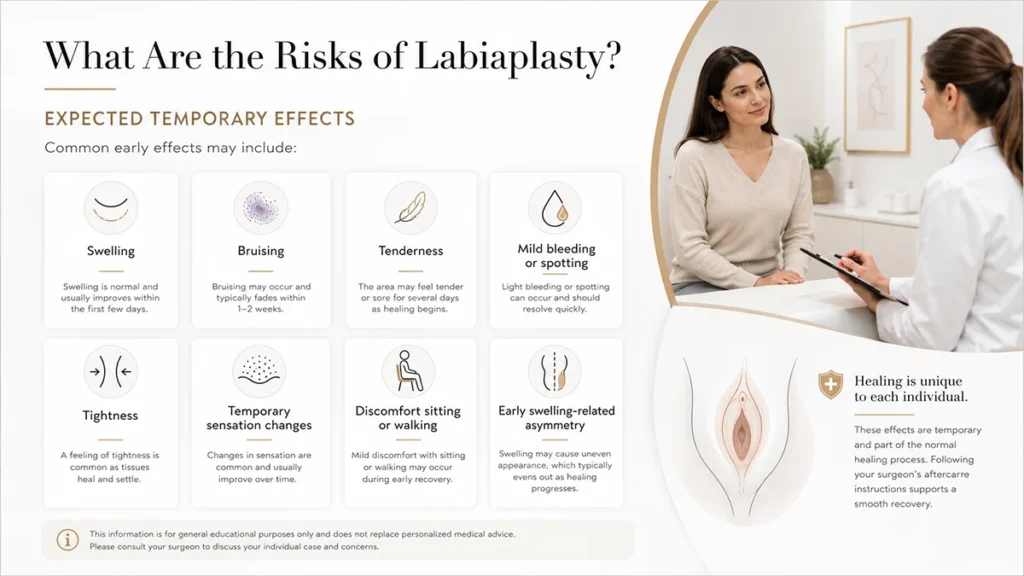
✓ Expected Temporary Effects
Common early effects may include:
- Swelling
- Bruising
- Tenderness
- Mild bleeding or spotting
- Tightness
- Temporary changes in sensation
- Discomfort when sitting or walking
- Early asymmetry caused by swelling
These effects usually improve gradually, although the rate of recovery differs between patients.
✓ Possible Complications
Potential complications include:
- Infection
- Bleeding or haematoma
- Delayed wound healing
- Wound separation
- Persistent discomfort
- Noticeable or sensitive scars
- Asymmetry
- Altered sensation
- Under-correction or over-correction
- Tissue irregularity
- Need for revision surgery
No surgeon can guarantee perfect symmetry, invisible scars, or a complication-free recovery. The aim is a safe, proportionate improvement based on the patient’s individual anatomy.
When Should You Contact the Surgical Team?
You should contact the clinic if you develop symptoms that are severe, worsening, or different from the recovery guidance you were given.
Concerning symptoms may include:
- Heavy or persistent bleeding
- Increasing rather than improving pain
- Fever
- Offensive discharge
- Spreading redness
- Rapidly increasing swelling
- Difficulty passing urine
- Wound separation
- Symptoms of an allergic reaction
Use the emergency contact details supplied by the hospital or surgeon rather than waiting for a routine appointment.
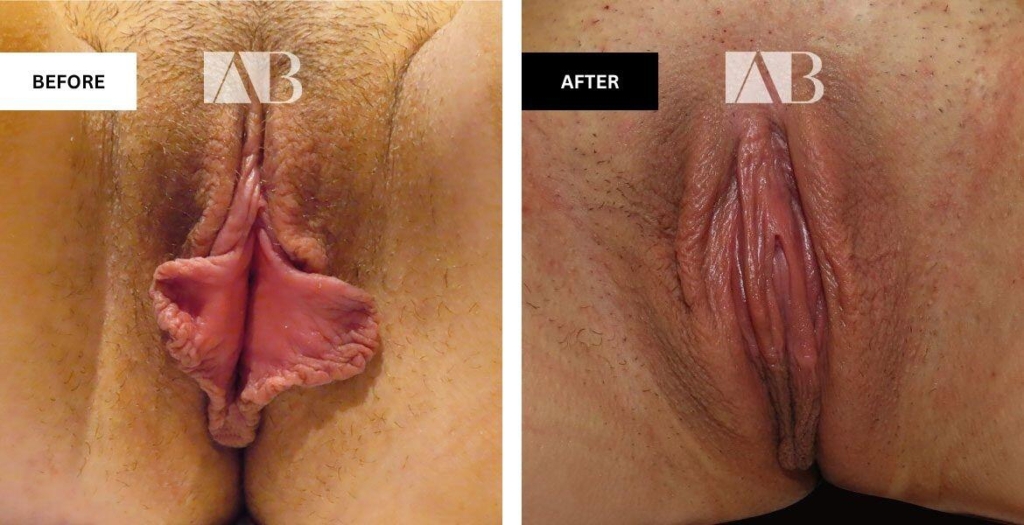
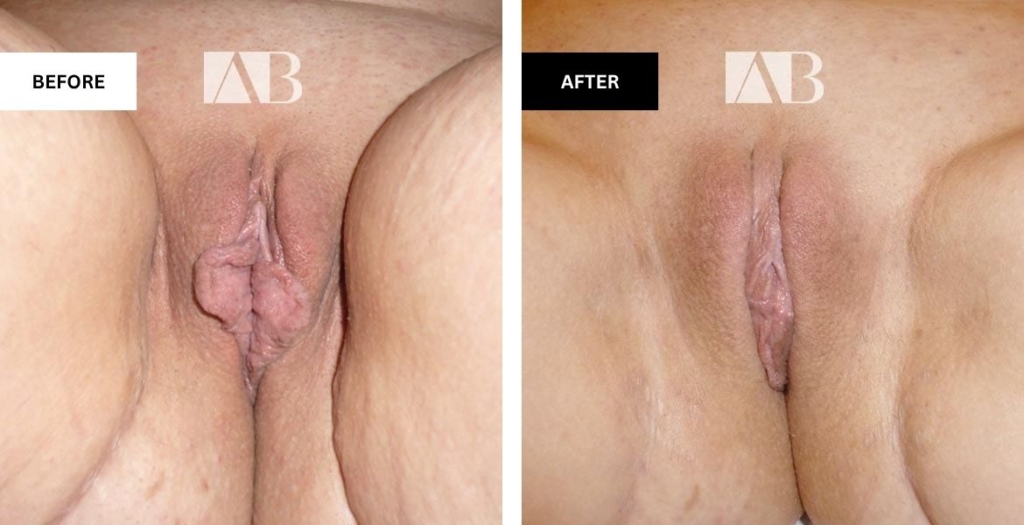
Labiaplasty Before and After Photos
What Is Recovery Like After Labiaplasty?
Labiaplasty recovery is gradual. Swelling, tenderness, and bruising are expected during the early stages, and the operated tissues may look uneven or more prominent before they begin to settle.
The recovery plan should be personalised according to the procedure performed, your work, general health, and healing progress.
✓ The First 24 to 48 Hours
The first two days are usually focused on rest, pain control, hygiene, and reducing unnecessary pressure on the area.
You may be advised to:
- Rest in a comfortable position
- Take prescribed pain relief
- Use cold packs only as instructed
- Wear loose clothing
- Change dressings or pads as advised
- Take short, gentle walks around the home
- Avoid prolonged standing
Some spotting may occur, but heavy bleeding should be reported.
✓ The First Week
Swelling and bruising after labiaplasty may remain noticeable throughout the first week. Walking and sitting can feel uncomfortable, particularly during the first few days.
During this stage, patients are generally advised to avoid:
- Strenuous exercise
- Heavy lifting
- Cycling
- Running
- Tight clothing
- Sexual activity
- Swimming
- Tampons unless specifically cleared
Follow your surgeon’s instructions about showering, cleaning the area, and wound care. Avoid applying creams, antiseptics, or home remedies unless they have been recommended.
✓ Returning to Work
The time required away from work depends on the nature of your role and your individual recovery. Someone working from home may feel ready sooner than a patient whose job involves prolonged standing, lifting, driving, or physical activity.
Before returning, consider:
- Comfort while sitting
- Walking requirements
- Access to suitable bathroom facilities
- Commute length
- Whether your role involves lifting
- Whether you can take regular breaks
Do not rush back because you feel pressure to meet a fixed timetable. Your surgeon can provide more personalised advice during follow-up.
✓ Returning to Exercise and Intimacy
Exercise should be restarted gradually and only after the wounds have healed sufficiently. Activities that create friction, pressure, or stretching around the area may need to be avoided for longer.
These may include:
- Cycling
- Running
- Horse riding
- High-intensity training
- Lower-body weight training
- Swimming
Sexual activity should not resume until healing is sufficiently advanced and your surgeon has confirmed that it is safe. Returning too early may cause pain, bleeding, wound separation, or delayed healing.
When Will the Final Result Be Visible?
Early swelling can conceal the eventual contour, so the result should not be judged immediately after surgery. The tissues continue to soften and settle as swelling reduces and scars mature.
Final healing depends on:
- The surgical technique
- The amount of tissue treated
- Your natural healing response
- Scar formation
- Whether complications occur
- Adherence to aftercare advice
Some natural asymmetry may remain, and scars may take time to become softer and less noticeable.
Are There Alternatives to Labiaplasty?
Surgery is not the only option, and choosing no treatment is valid. The most appropriate approach depends on the cause and severity of the patient’s concerns.
✓ Practical and Conservative Measures
For mild irritation or friction, some patients may benefit from:
- Changing underwear
- Choosing looser clothing
- Using suitable lubricants
- Modifying exercise equipment
- Adjusting cycling position
- Treating an underlying skin condition
- Seeking gynaecological advice
These measures do not reduce excess tissue, but they may improve selected symptoms.
✓ Non-Surgical Treatments
There is limited evidence that non-surgical treatments can reliably reduce prominent labial tissue. Energy-based or injectable treatments should not be presented as equivalent to surgical reduction.
Patients considering any non-surgical treatment should ask:
- What problem is it intended to address?
- What evidence supports it?
- Who will perform it?
- What are the risks?
- Is the result temporary?
- Could it complicate future surgery?
✓ Choosing No Treatment
Normal labial anatomy varies widely. If symptoms are mild or concerns are primarily influenced by unrealistic expectations, reassurance and observation may be more appropriate than surgery.
How Much Does Labiaplasty Cost?
The cost of labiaplasty varies according to the surgical plan, anaesthetic, hospital charges, and follow-up arrangements. A personalised quotation should be provided after consultation and examination.
The total cost may include:
- Surgeon’s fee
- Anaesthetic fee
- Hospital or theatre charges
- Pre-operative assessment
- Follow-up appointments
- Prescribed aftercare where applicable
Patients should ask exactly what is included and whether additional fees may apply if further treatment or revision surgery is required.
Cost should not be the only factor when selecting a surgeon. Qualifications, experience, hospital standards, informed consent, follow-up care, and access to help after surgery are equally important.
Take our Plastic Surgery Quiz to find out if you’d be a good candidate for cosmetic surgery.
Summary
Preparing for labiaplasty involves more than organising the day of surgery. It includes a careful consultation, full medical disclosure, medicine review, smoking cessation where required, practical home planning, and a realistic understanding of recovery.
Patients should also understand the potential risks, alternatives, limitations, and costs before deciding to proceed. Personalised instructions from the surgeon and anaesthetic team should always take priority over general online advice.
FAQs About Preparing For Labiaplasty Surgery

Do I need medical tests before labiaplasty?
Yes, most patients undergo basic blood tests and a medical history review to ensure safe anaesthesia and healing. These tests help rule out any underlying conditions that could affect your surgery.
Should I stop smoking before surgery?
Yes. Smoking impairs circulation, delays healing, and increases the risk of complications. You should stop smoking weeks before and after surgery for optimal results.
Can I take vitamins before labiaplasty?
Some vitamins support healing, but others – like high‑dose fish oil or vitamin E – may increase bleeding risk. Always confirm with your surgeon which supplements to continue or pause.
Is emotional preparation necessary?
Yes. Surgery affects both body and mind. Preparing emotionally helps reduce anxiety and sets realistic expectations for recovery.
Do I need someone to stay with me after surgery?
Yes, you should arrange for a trusted friend or family member to accompany you on the day and stay for the first 24–48 hours.
How soon should I stop drinking alcohol before surgery?
Avoid alcohol for at least one week before surgery because it can interfere with anaesthesia and hydration levels.
Can I eat on the day of surgery?
Your surgical team will provide fasting instructions. Typically, you need to avoid food and drink for several hours before anaesthesia to reduce risk.
Will I need compression garments?
Compression garments are less common for labiaplasty than for body contouring, but your surgeon may recommend supportive underwear or specialised garments for comfort.
Can I work immediately after surgery?
Most patients take at least one week off work to rest and support healing, especially in genital surgery, where mobility matters.
Is recovery painful?
Discomfort varies, but pain is typically well‑controlled with prescribed medication and diminishes significantly in the early weeks.
Medical References
- Labiaplasty, Labia Minora Reduction / StatPearls 2025 / – https://www.ncbi.nlm.nih.gov/books/NBK448086/
- Safety in Female Genital Plastic Surgery / Plastic and Reconstructive Surgery / – https://journals.lww.com/plasreconsurg/abstract/2020/10000/safety_in_female_genital_plastic_surgery.34.aspx
- Maximizing Safety and Optimizing Outcomes of Labiaplasty: A Systematic Review and Meta-Analysis / Plastic and Reconstructive Surgery / – https://journals.lww.com/plasreconsurg/abstract/2022/10000/maximizing_safety_and_optimizing_outcomes_of.16.aspx
- Safety in Female Genital Plastic Surgery / Plastic and Reconstructive Surgery / – https://journals.lww.com/plasreconsurg/abstract/2020/10000/safety_in_female_genital_plastic_surgery.34.aspx
Next Step: Take A Safe Feminine Empowerment Surgery With Miss Breahna
Preparing for labiaplasty surgery is an empowering step toward comfort, confidence, and personal wellbeing. If you are considering this procedure or want personalised guidance on how to prepare physically and mentally, visit our Contact Page to book a private consultation with Miss Anca Breahna, Consultant Plastic & Reconstructive Surgeon in Chester. You can also start with a Complimentary Photo Assessment to receive tailored advice and support as you begin your journey. Sending enquiries or scheduling an appointment with a plastic surgery specialist today is the first step toward a safe, confident, and well‑prepared surgical experience.
Download Miss Anca Breahna’s Labiaplasty Surgery Guide
Further Reading
- Read Miss Anca Breahna’s Blog about Is Labiaplasty Cosmetic or Functional?
- Read Miss Anca Breahna’s Blog about Will Labiaplasty Affect Sensitivity and Intimacy Long Term?
- Read Miss Anca Breahna’s Blog about Am I Too Old for Labiaplasty?
- Read Miss Anca Breahna’s Blog about How to Reduce Swelling and Bruising After Labiaplasty Surgery