What Are The Key Recovery Facts To Know First?
Labiaplasty recovery usually improves in clear stages, with the first 1 to 2 weeks focused on swelling, tenderness, and protecting the area from friction. Most women feel progressively better quite quickly, but exercise, intimacy, and full tissue settling take longer than the first recovery window.
The main recovery points are usually these:
- Pain And Soreness – usually most noticeable in the first few days
- Swelling And Bruising – common early on, and often most obvious around day 2 or 3
- Work – often around 1 to 2 weeks depending on the role
- Driving – depends on comfort, movement, and whether you can react safely
- Exercise – gentle walking first, with gym activity later
- Intimacy – usually delayed until healing is further along
- Clothing – loose underwear and loose clothes are usually easiest
- Sleep – comfort tends to improve when heat, rubbing, and pressure are reduced
- Scar Healing – continues well beyond the first visible recovery phase
- When To Ask For Help – worsening pain, increasing redness, discharge, fever, or wound concerns need review
The most useful principle is simple. Early recovery, return to routine, and final settling are not the same thing.
What Does Recovery After Labiaplasty Really Feel Like?
Recovery after labiaplasty usually feels more tender, swollen, and friction-sensitive than dramatically painful, especially in the first week. What many women notice most is not severe pain, but how often the area is involved in sitting, walking, wiping, underwear contact, and ordinary movement.
The most common early sensations often include:
- tenderness in the treated area
- swelling and puffiness
- bruising
- increased sensitivity with underwear or clothing
- discomfort when sitting for longer periods
- stinging or discomfort when peeing
- awareness of the area during walking or wiping
These sensations are usually normal because the tissue is delicate, highly vascular, and involved in everyday contact. Recovery often feels more awkward and noticeable than patients expect, even when it is progressing normally.
One of the main reasons patients feel anxious after labiaplasty is that early swelling can make the area look fuller, firmer, or less even than expected. In many cases, that reflects the normal healing response rather than a problem with the result.
Ms Breahna’s Clinical Note
Many women are more unsettled by the appearance of swelling than by pain itself. Early puffiness and temporary unevenness are common, and they are often one of the main reasons recovery feels more emotionally difficult in the first week than expected.
What Happens In The First 24 Hours After Labiaplasty?
The first 24 hours are best approached with a simple goal – keep the area clean, minimise irritation, and avoid doing too much too soon. A calm start usually makes the first few days feel significantly easier and helps reduce unnecessary rubbing, swelling, and anxiety.
The most useful priorities in the first 24 hours are usually these:
- rest sensibly
- wear loose underwear and loose clothing
- keep the area clean as instructed
- avoid friction as much as possible
- stay on top of prescribed pain relief
- move gently around the house rather than staying completely still
- avoid testing your comfort level too early
This is not the stage to prove how normal you feel. Small decisions in the first day often shape how comfortable the rest of the first week feels.
How Does A Week-By-Week Labiaplasty Recovery Timeline Usually Progress?
Labiaplasty recovery usually becomes much easier to understand when it is broken down into stages rather than treated as one single healing period. That approach helps patients set realistic expectations and makes it easier to judge whether progress is moving in the right direction.
What Is Usually Typical In Week 1?
Week 1 is usually the most physically noticeable stage, with swelling, bruising, soreness, and sensitivity all at their most obvious. This is also the point when the area often looks least like the final result, which can feel unsettling if that has not been explained clearly in advance.
Common week 1 features often include:
- swelling that is most obvious in the first few days
- bruising becoming more visible
- tenderness and soreness
- discomfort when sitting
- discomfort when peeing
- temporary puffiness or unevenness
- strong awareness of clothing and contact
This is often the week when patients worry most about appearance. In many cases, what they are seeing is normal early healing rather than the final outcome.
How Does Week 2 Usually Compare With Week 1?
By week 2, many women feel noticeably better, but the tissues are still healing and still need protection from pressure and friction. Improvement is usually clear by this stage, but it is very common to feel well enough to do too much too soon.
Week 2 often brings:
- less soreness at rest
- easier walking
- bruising beginning to fade
- better confidence with routine movement
- swelling that is still present
- improved comfort in loose clothing
- a strong temptation to do more than is wise
Feeling improved is not the same as being fully healed. The area still benefits from a cautious approach to work, sitting, exercise, and intimacy.
What Improvement Is Often Seen In Weeks 3 And 4?
Weeks 3 and 4 are often a turning point, with daily life usually feeling much more manageable than it did in the first fortnight. The area often looks more settled by this stage, but that should not be confused with full tissue recovery.
Progress in this stage often includes:
- less day-to-day soreness
- easier sitting
- easier walking
- reduced swelling
- more confidence in ordinary clothing
- better overall comfort during the day
This is often when patience matters most. The tissues may look improved before they are ready for friction, gym activity, or intimacy.
What Usually Continues To Improve In Weeks 5 And 6?
By weeks 5 and 6, many women feel substantially improved and much more confident in normal daily life. This is often the stage when movement feels easier, obvious swelling has reduced, and the area begins to look more like itself again.
This stage often brings:
- much less obvious swelling
- easier movement
- improved confidence
- less sensitivity during ordinary activity
- more normal daily routine
- a clearer sense that recovery is progressing well
This is usually a very encouraging stage, but subtle swelling and tissue settling may still continue beyond it.
What Happens Beyond 6 Weeks?
Beyond 6 weeks, many patients are well through the main recovery phase, but final tissue settling may continue for longer. This is often the point when recovery feels less like active healing and more like gradual refinement.
Longer-term settling often includes:
- subtle swelling continuing to reduce
- improved softness of the tissues
- more stable appearance
- less day-to-day awareness of the area
- more confidence with normal clothing and activity
Recovery becomes much less stressful when you accept that “improved” arrives before “fully settled.”
How Much Pain Should You Expect?
Most women do not describe labiaplasty recovery as weeks of severe pain, but they do often describe soreness, sensitivity, bruising discomfort, and a strong awareness of the area. In practical terms, recovery is usually more delicate and uncomfortable than dramatically painful.
A useful way to think about discomfort is this:
- 0 to 2 out of 10 – mild awareness only
- 3 to 4 out of 10 – noticeable soreness, especially with sitting or movement
- 5 to 6 out of 10 – movement still feels guarded and sitting may feel uncomfortable
- 7 out of 10 or more – significant discomfort, not typical of a smooth recovery and worth reviewing if it is worsening
Many women cope better once they understand that recovery may feel awkward and sensitive rather than simply painful. That distinction often makes the whole process feel less alarming.
How Can A Pain Scale Help You Judge Driving Readiness?
Driving is best judged by comfort, movement, and safe reaction rather than by a fixed number of days after surgery. The most important question is not whether enough time has passed, but whether you can sit, move, and brake normally without hesitation.
A practical self-check often includes:
- Can you sit without constant adjustment?
- Can you move your hips and legs comfortably?
- Can you concentrate without discomfort distracting you?
- Can you brake suddenly if needed?
- Are you no longer taking medication that affects alertness?
If the answer is no to any of these, it is usually too early to drive. This is practical guidance rather than a legal rule, so surgeon advice and insurer requirements still matter.
When Does Work Usually Start Feeling More Manageable Again?
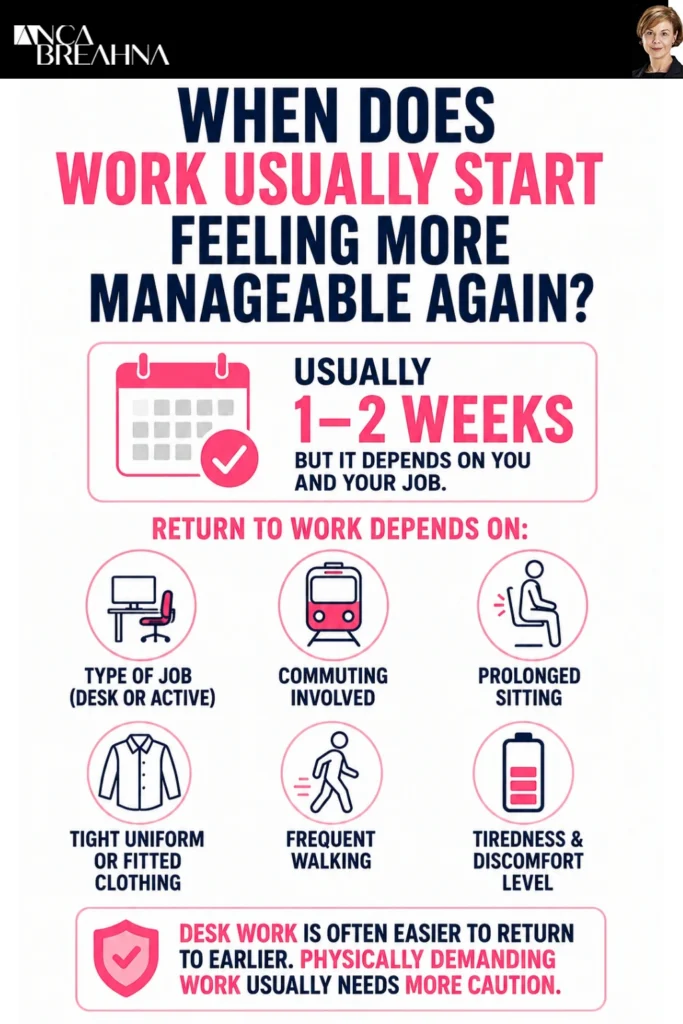
Work usually starts to feel more realistic when sitting, walking, clothing pressure, and general tiredness are less intrusive in daily life. For many women, that is around 1 to 2 weeks, but the real timing depends heavily on what the working day actually involves.
Return to work usually depends on:
- whether the job is desk-based or active
- whether commuting is involved
- whether sitting is prolonged
- whether a tight uniform or fitted clothing is required
- whether walking is frequent
- how tired and uncomfortable you still feel
Desk-based work is often easier to resume earlier, but even office roles can be surprisingly tiring if sitting is uncomfortable. Physically demanding work usually needs more caution because heat, movement, pressure, and friction can all aggravate healing tissues.
When Can You Exercise After Labiaplasty And Return To The Gym?
Exercise usually needs more patience than patients first expect because friction, compression, heat, and repetitive movement can all aggravate healing tissue. Gentle walking is often the first thing to resume, but structured exercise and gym training usually need a slower return.
A sensible return usually looks like this:
- walking first
- gradually increasing ordinary movement
- delaying vigorous exercise
- avoiding gym sessions too early
- avoiding anything that increases friction or direct pressure
- returning in stages rather than all at once
Walking and gym training stress the tissues in very different ways. Walking is easier to control, while the gym often adds heat, sweat, compression, impact, and friction.
Activities that often need the most caution include:
- spinning
- cycling
- rowing
- horse riding
- intense leg sessions
- high-impact cardio
- yoga or stretching that creates pulling or spreading
Feeling ready for movement is not always the same as being ready for the gym. In most cases, recovery goes better when you treat early improvement as progress, not as permission to return to full exercise straight away.
When Is It Safe To Resume Intimacy And Sexual Activity After Labiaplasty?
Intimacy usually needs a more cautious return than patients first expect because the tissues may feel better in daily life before they are ready for friction. NHS advises avoiding sex for at least 4 weeks after labiaplasty, while ASPS says tampons or intercourse are often resumed after 4 to 6 weeks.
A sensible approach usually involves asking:
- Does everyday contact feel comfortable?
- Has swelling settled enough to reduce friction?
- Is healing progressing normally?
- Do the tissues feel healed rather than simply less sore?
- Would pressure or stretching still feel too noticeable?
A gradual return usually feels safer and more reassuring than treating intimacy as a simple countdown. That approach is often both physically and emotionally easier for patients.
What Should You Wear During Labiaplasty Recovery?
Clothing usually has a bigger effect on comfort than many patients expect because healing tissue is easily irritated by rubbing, seams, pressure, and heat. NHS specifically advises wearing loose underwear and loose clothes during recovery to help prevent rubbing.
Clothing that often feels easier usually includes:
- soft, loose underwear
- breathable fabrics
- relaxed trousers or skirts
- loose nightwear
- clothing without rough seams or compression
Clothing that often needs more caution usually includes:
- leggings
- shapewear
- rough gussets
- tight gym fabrics
- fitted jeans or structured trousers
- tight workwear or uniforms
Comfortable clothing does more than improve convenience. It often reduces low-grade irritation that can otherwise make recovery feel longer and more frustrating.
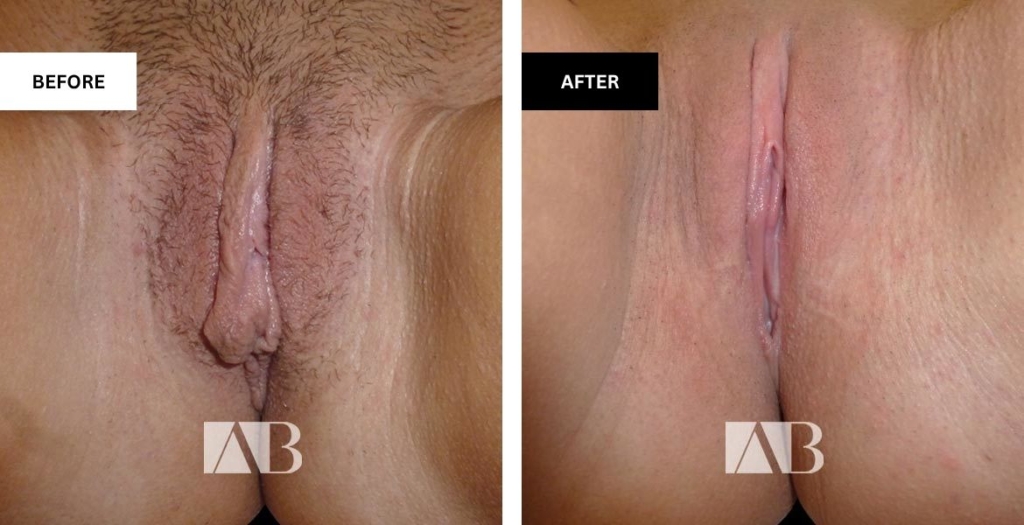
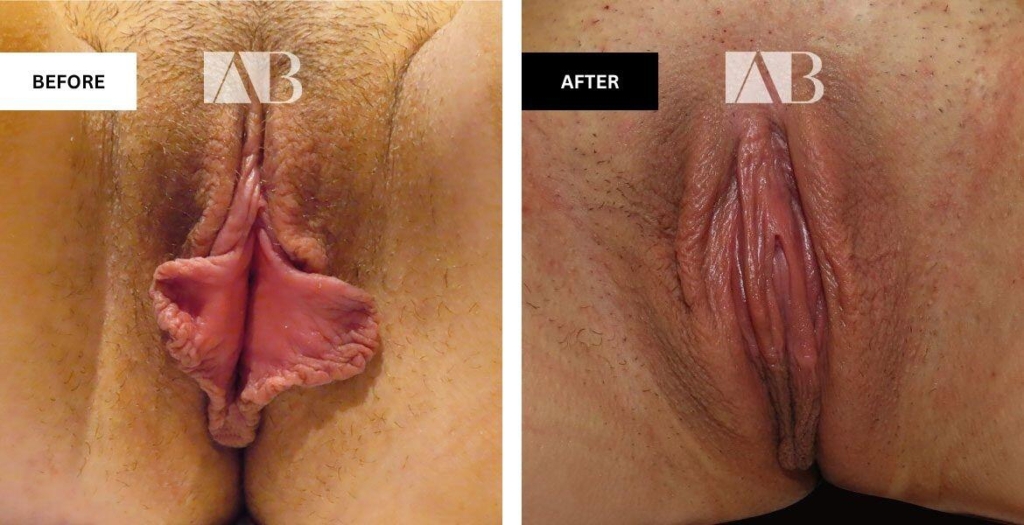
Labiaplasty Before and After Photos
How Can You Sleep Better During Labiaplasty Recovery?
Sleep usually improves when pressure, heat, and rubbing are reduced rather than from finding one perfect sleeping position. What matters most is whether the area feels calm and not repeatedly irritated overnight.
Practical changes that often help usually include:
- loose nightwear
- a cool bedroom
- clean bedding
- positions that do not create rubbing or pressure
- avoiding anything that makes the area throb or feel compressed
Most patients do not need a complicated sleep strategy. A simple setup that reduces irritation is usually enough to make nights feel easier.
How Do Food, Fluids, And Nutrition Support Healing?

Healing usually goes more smoothly when the body is properly nourished, hydrated, and not under additional stress from restrictive dieting. NHS trust dietetic guidance highlights protein, vitamin C, vitamin D, zinc, and hydration as important for wound healing and recovery.
Helpful recovery habits often include:
- eating regular meals
- getting enough protein
- drinking enough fluid
- including fruit and vegetables
- avoiding long gaps without eating
- supporting bowel comfort if medication or reduced movement affects it
It often helps to avoid:
- restrictive dieting
- poor hydration
- excess alcohol early on
- under-eating because appetite is reduced
The early healing phase is usually not the time for aggressive “clean eating” or calorie cutting. Good recovery is supported by nourishment, not deprivation.
What Helps Labiaplasty Scars Heal As Well As Possible?
Scar healing usually starts best when the area is allowed to heal calmly, with good hygiene and as little friction as possible. NHS lists scarring as a possible complication, and BAAPS notes that careful scar placement matters because poorly positioned scarring can cause discomfort along the labial edge.
Helpful early scar-care priorities often include:
- keeping the area clean
- avoiding unnecessary friction
- wearing loose underwear and clothing
- not restarting activity too early
- asking before using scar products or topical treatments
- allowing the tissues to settle before judging the appearance
The most effective early scar minimisation is often simple. Do not irritate the wound, do not rush pressure or stretching, and do not assume that because the surface looks better, the deeper tissues are ready for more.
What Are The Main Recovery Mistakes To Avoid?
Recovery usually feels smoother when improvement is treated as progress rather than permission to return to everything at once. Many setbacks happen not because something dramatic goes wrong, but because the tissues are asked to tolerate more friction or activity than they are ready for.
The most common mistakes usually include:
- restarting the gym because you are bored rather than ready
- assuming less pain means full healing
- wearing tight leggings or rough underwear too soon
- rushing intercourse because the calendar says 4 weeks
- sitting for too long without breaks
- ignoring symptoms that are worsening rather than settling
A steady approach is usually the most comfortable one. Recovery tends to go best when activity is guided by tissue tolerance, not impatience.
What Symptoms Are Usually Normal, And What Symptoms Mean You Should Call?
Normal healing after labiaplasty often includes symptoms that still feel worrying if they were not explained clearly beforehand. NHS says soreness, bruising, swelling, discomfort when peeing, and discomfort when sitting are all normal in the early phase.
Common normal signs often include:
- swelling
- bruising
- tenderness
- temporary unevenness
- discomfort peeing
- discomfort sitting
- swelling that fluctuates through the day
- one side looking slightly more swollen for a while
You should contact your surgeon if you notice:
- pain worsening rather than easing
- increasing redness
- offensive-smelling discharge
- fever
- significant bleeding
- concern that the wound is opening
- symptoms that feel clearly more severe over time
The distinction that matters most is whether things are gradually settling or clearly escalating. Once patients understand that difference, recovery usually feels much less frightening.
Why Does Recovery Feel Different From One Patient To Another?
Recovery often feels different from one patient to another because surgical technique, tissue characteristics, pain sensitivity, and aftercare habits all vary. Evidence and clinical experience both support the idea that healing is individual rather than perfectly predictable.
Factors that often influence recovery usually include:
- the surgical technique used
- tissue thickness and vascularity
- swelling tendency
- pain sensitivity
- clothing and activity habits
- work demands
- how closely aftercare advice is followed
- how soon activity is restarted
Patients usually feel more reassured when this variation is explained clearly rather than treated as surprising. Improvement can still be entirely normal even when timelines differ slightly from one person to another.