- Solutions for a Sagging Vulva: Understanding Changes and Choosing the Right Treatment
- Why Does the Vulva Sag Over Time?
- Concerns Associated with a Sagging Vulva
- When Might Surgery Be Considered?
- Non-Surgical Management and When Other Specialists May Help
- What to Expect After Labiaplasty Surgery
- Download Anca Breahna's Labiaplasty Guide
- Frequently Asked Questions about Sagging Vulva and Labiaplasty
- In Summary
- Further Reading
Solutions for a Sagging Vulva: Understanding Changes and Choosing the Right Treatment
The vulva, comprising the external part of the female genitalia, includes two sets of protective folds known as the labia – the outer labia majora and the inner labia minora. These soft tissues serve both a protective and aesthetic function. However, as they are composed largely of skin and fatty tissue, it is entirely natural for their appearance to change over time.
One such change, often described as a sagging vulva, occurs when the tissues lose their firmness and elasticity, leading to a drooping or elongated appearance. While this is a common concern, it is important to distinguish between labial enlargement – which arises due to increased tissue volume – and sagging, which stems from a loss of skin tone and support.
Labial appearance also varies considerably between individuals; see What Is a Normal Labia?
Why Does the Vulva Sag Over Time?
The skin of the vulva, like that on other areas of the body, is susceptible to the ageing process. With time, the natural decline in collagen and elastin – the structural proteins responsible for skin firmness – can result in laxity and thinning of the labial tissues.
Other contributing factors include:
- Hormonal changes during perimenopause and menopause
- Childbirth and vaginal delivery, which may stretch and weaken the perineal and labial structures
- Genetics, which influence how skin ages and responds to strain
- Weight fluctuations, which can alter the volume and tone of the area
These changes are not harmful in themselves, but many women find them physically uncomfortable or aesthetically distressing, particularly when they affect intimate confidence or cause friction during daily activities.
Concerns Associated with a Sagging Vulva
Women who experience vulval sagging may report:
- Increased visibility through tight clothing, such as activewear or swimwear
- Chafing or discomfort during exercise, cycling, or intercourse
- Urinary leakage or pelvic-floor symptoms – these may occur alongside post-childbirth changes but are separate from external labial laxity and may require pelvic-floor or specialist assessment.
- Vulval irritation or dryness (atrophic vaginitis), especially post-menopause
- Reduced self-esteem or emotional discomfort related to body image
It is important to know that these concerns can be discussed confidentially, and appropriate management will depend on the underlying cause, symptoms and individual anatomy.
When Might Surgery Be Considered?
At Anca Breahna Plastic Surgeon, Miss Anca Breahna offers bespoke surgical solutions for women seeking relief from the physical and emotional impact of a sagging vulva. Treatment is always approached with sensitivity, dignity, and a commitment to individualised care.
The appropriate treatment depends on which part of the vulva is affected and whether the concern is primarily appearance, physical discomfort or another symptom. Labiaplasty most commonly reshapes or reduces the labia minora. Changes involving the labia majora, vaginal opening or pelvic floor require separate assessment and are not treated in the same way.
Labiaplasty may be performed under local or general anaesthesia and is usually a day-case procedure. Recovery varies between patients. Incisions are planned according to the individual anatomy, and tailored aftercare instructions are provided to support healing.
Non-Surgical Management and When Other Specialists May Help
Not every concern involving the vulval area requires surgery. Management depends on the underlying symptoms and anatomy. Vulval or vaginal dryness associated with menopause may be managed with moisturisers, lubricants or vaginal oestrogen where clinically appropriate. Pelvic-floor physiotherapy may be helpful when pelvic-floor symptoms are also present.
Concerns involving urinary leakage, vaginal laxity or other gynaecological symptoms may require assessment by a GP, pelvic-health physiotherapist, gynaecologist or urogynaecologist. These treatments address different problems and do not remove excess labial tissue.
What to Expect After Labiaplasty Surgery
Recovery after labiaplasty is typically smooth, but careful adherence to aftercare guidance is essential. Most women can resume light daily activities within a few days and return to normal routines, including exercise and intimacy, within 4–6 weeks.
Key recovery principles include:
- Gentle hygiene and avoiding submersion in water until fully healed
- Wearing loose, breathable underwear to reduce friction
- Avoiding high-impact activity during the early healing phase
- Monitoring for signs of infection, swelling, or discomfort
- Attending follow-up appointments to ensure proper healing
Miss Breahna provides comprehensive post-operative care, ensuring that each patient feels confident and supported throughout their recovery journey.
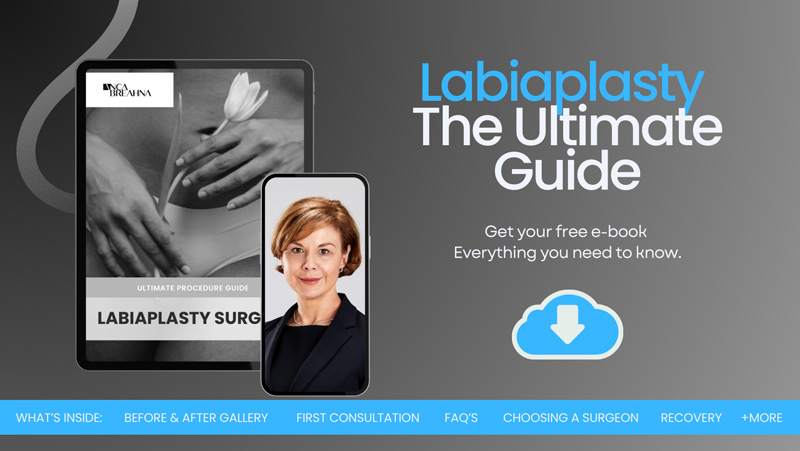
Download Anca Breahna’s Labiaplasty Guide
Frequently Asked Questions about Sagging Vulva and Labiaplasty

What is the difference between sagging labia and enlarged labia?
While both conditions may appear similar, enlarged labia typically result from increased tissue volume, often due to hormonal changes or genetics. In contrast, sagging labia refer to lax or stretched skin – usually related to ageing, childbirth, or reduced collagen in the tissue. During consultation, Miss Breahna can help assess the underlying cause and recommend the most appropriate treatment.
Is labiaplasty only cosmetic, or can it help with discomfort?
Labiaplasty is not solely cosmetic. Many women undergo the procedure to address functional concerns such as irritation, discomfort during physical activity, or visibility under clothing. By reducing stretched skin and restoring natural contour, labiaplasty can improve both comfort and self-confidence.
How long does labiaplasty surgery take?
Labiaplasty is usually a short procedure, often lasting between 45 minutes to 1.5 hours, depending on the extent of the tissue being corrected. It is typically performed as a day case, under local or general anaesthesia.
What is the recovery like after labiaplasty?
Most patients experience mild swelling and sensitivity for the first few days. With proper care, discomfort is minimal and manageable. Patients are encouraged to avoid strenuous activity and sexual intercourse for approximately 4–6 weeks. Miss Breahna provides tailored aftercare and will monitor your recovery closely during follow-up appointments.
Will there be visible scarring after labiaplasty?
Scars from labiaplasty are typically very discreet, as incisions are made along the natural contours of the labia. With good wound care and healing, most scars fade significantly over time and are barely perceptible.
Can non-surgical treatments help with sagging vulva?
Yes. For mild cases, non-surgical therapies such as radiofrequency or laser treatments may help improve skin tone by stimulating collagen production. However, these options are generally less effective for significant laxity or excess skin. Miss Breahna will advise if a non-surgical approach is suitable during your consultation.
Is it normal to feel self-conscious about changes in the vulva?
Absolutely. The vulva is a sensitive and personal area, and changes over time – whether due to ageing, childbirth, or genetics – can understandably affect a woman’s emotional wellbeing and body image. Miss Breahna’s approach is always empathetic and non-judgemental, focused on helping patients make decisions that align with their comfort, health, and confidence.
In Summary
A sagging vulva is a natural and treatable condition, and there is no need to suffer in silence. Whether the concern is cosmetic, functional, or both, a range of effective options – both surgical and non-surgical – can restore comfort, confidence, and balance.
Miss Anca Breahna brings years of specialist experience and a deeply personal approach to each consultation, helping women make empowered, informed decisions about their bodies.
If you are concerned about changes to the vulval area and wish to explore your treatment options, please contact our team to arrange a discreet consultation with Miss Breahna.
Phone: 07538 012918
Email: contact@ancabreahna.com
Further Reading
- Read Anca Breahna’s Procedure Page about Labiaplasty
- Read Anca Breahna’s Blog about What Is a Normal Labia?
- Read Anca Breahna’s Blog about Labial Hypertrophy – Enlarged Labia
- Read Anca Breahna’s Blog about Can Childbirth Change the Vulva?
- Read Anca Breahna’s Blog about Preparing for Labiaplasty Surgery