- Take our Plastic Surgery Quiz to find out if you'd be a good candidate for cosmetic surgery.
- Why a C-Section Tummy Develops
- - How Pregnancy Changes the Abdomen
- - The Impact of a C-Section Scar
- When Time and Rehab Are Not Enough
- - Natural Recovery After Birth
- - The Role and Limits of Postnatal Rehabilitation
- Download Miss Anca Breahna's Tummy Tuck Guide
- Mini Abdominoplasty: Targeted Surgery for the Lower C-Section Tummy
- What does a Mini Tummy Tuck Involve?
- Who Is Suitable for a Mini Abdominoplasty?
- Full Abdominoplasty: Comprehensive Surgery for Tummy and Muscle
- What does a Full Tummy Tuck do?
- Scars, Shape, and Core Support
- Panniculectomy and Liposuction: When and Why They Are Used
- Panniculectomy for a Heavy Apron
- Liposuction as a Refining Tool
- The Patient Journey With Miss Anca Breahna in Chester
- Consultation and Planning Your Surgery
- Surgery Day, Recovery, and Follow-Up
- Tummy Tuck Before and After Photos
- Benefits, Risks, and Realistic Expectations
- What can Surgery achieve for a C-Section Tummy?
- Understanding Risks And Long-Term Considerations
- FAQs About Surgery for a C-Section Tummy
- Time to Find Out: Is Surgery for a C-Section Tummy Right for You
- Further Reading
- About Anca Breahna – Consultant Plastic Surgeon
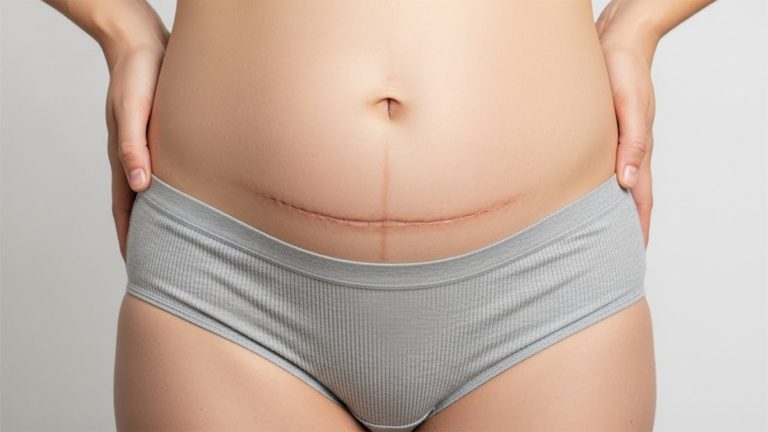
A C-section tummy is the way many women describe their abdomen after a caesarean birth. It might mean a lower tummy that still looks rounded, a pouch or apron of tissue that hangs over the scar, loose skin that wrinkles when you sit, or a general feeling that your tummy is not as firm or supported as it was before pregnancy.
This is rarely just a small pocket of fat. A C-section tummy usually reflects several changes working together: stretched skin, altered fat distribution, separation or weakening of the abdominal muscles, and a C-section scar that can tether deeper tissues and create a visible step or fold.
At her private practice in Chester, UK, Miss Anca Breahna, Consultant Plastic & Reconstructive Surgeon, sees many women who feel that their lower abdomen no longer matches the rest of their body, even if they are fit and healthy. For answers to common concerns about post-pregnancy body changes, see our Mummy Makeover FAQs in Chester. In this article, we focus on surgical options for a C-section tummy, while also explaining the role and limits of natural recovery and rehabilitation.
Take our Plastic Surgery Quiz to find out if you’d be a good candidate for cosmetic surgery.
Why a C-Section Tummy Develops
– How Pregnancy Changes the Abdomen
During pregnancy, the abdominal wall stretches to accommodate the growing baby. The skin, connective tissue, and muscles all lengthen. The paired rectus abdominis muscles often move apart along the midline, a condition called diastasis recti abdominis. This can leave the tummy looking rounder or more prominent and can reduce core support.
These changes are normal, but not every body bounces back in the same way. Factors such as genetics, number of pregnancies, baby size, age, and overall weight all influence how the abdominal wall behaves after birth.
– The Impact of a C-Section Scar
A C-section involves a horizontal incision through the lower abdominal wall. After birth, the tissues are sutured, and a scar forms. In some women, the scar heals smoothly. In others, it may tether firmly to deeper tissues. When the skin and fat above are looser, they can drape over this fixed point, creating a visible shelf or overhang.
If diastasis recti and general laxity are also present, the lower abdomen can bulge forward, making the C-section tummy more noticeable. None of this is your fault. It is the predictable outcome of stretching, healing, and scar formation in a real human body.
When Time and Rehab Are Not Enough
– Natural Recovery After Birth
In the first months postpartum, your body is still in transition. The uterus shrinks back toward its pre-pregnancy size, your fluid balance shifts, and hormones such as relaxin and progesterone gradually fall. It is very common for the tummy to look puffy, irregular, or firmer above the scar during this time.
Postnatal guidelines typically suggest allowing at least 6 to 12 months, and often until after breastfeeding has finished, before judging your final abdominal shape. During this period, gentle exercise and appropriate physiotherapy can make a real difference.
– The Role and Limits of Postnatal Rehabilitation
Women’s health physiotherapists and postnatal exercise specialists can:
- Assess and treat diastasis recti
- Help you reconnect with deep core and pelvic floor muscles
- Guide safe, progressive strengthening, and improve posture
Systematic reviews show that exercise-based programmes can reduce the interrectus distance and improve core function and pelvic floor symptoms in the first postpartum year.
However, even the best rehabilitation cannot tighten significantly overstretched skin or remove a large apron of tissue. It cannot fully correct a strong overhang that is created by redundant skin and a low-set scar. When the problem is mainly extra tissue, rather than muscle control, surgery becomes the only way to physically remove that tissue.
Download Miss Anca Breahna’s Tummy Tuck Guide
Mini Abdominoplasty: Targeted Surgery for the Lower C-Section Tummy
What does a Mini Tummy Tuck Involve?
A mini abdominoplasty, often called a mini tummy tuck, focuses on the lower abdomen below the belly button. The aim is to remove excess skin and fat in the lower zone and to smooth the contour above the C-section scar. In many cases, the old scar can be removed or revised as part of the lower incision, which is usually placed low enough to hide under underwear or swimwear.
The upper abdominal skin is not fully lifted, and the belly button is not usually moved. In some mini abdominoplasty cases, minor tightening of the lower abdominal muscles can be done, but a full muscle repair from the ribs to the pubic area is not typically part of this operation.
Who Is Suitable for a Mini Abdominoplasty?
A mini tummy tuck is most suitable if your main concern is a localised C-section tummy around the scar, with relatively good skin tone and muscle support higher up. You might have a small to moderate overhang, creased skin, or a low, thick scar that you would like improved, but no major diastasis recti.
Recovery is usually shorter than for a full abdominoplasty, but it is still a significant surgery. Time off work, limited lifting, and careful scar and garment care are all part of the process.
Full Abdominoplasty: Comprehensive Surgery for Tummy and Muscle
What does a Full Tummy Tuck do?
A full abdominoplasty, or full tummy tuck, is a more comprehensive operation. It is often the best option for women whose C-section tummy includes:
- Loose skin above and below the belly button
- A more substantial apron or pannus of tissue
- Diastasis recti and core weakness
During full abdominoplasty, a low horizontal incision is made, usually from hip to hip, allowing removal of a larger segment of skin and fat. The rectus muscles can be brought back together and tightened along the midline, improving core support and the way the abdomen projects. The remaining skin is redraped, and the belly button is brought out through a new opening in a natural position.
Scars, Shape, and Core Support
The scar from a full tummy tuck is designed to sit low so that it can be hidden under most underwear and swimwear styles. There is also a short scar around the repositioned belly button. In return for these scars, many women gain a flatter contour, a more defined waist, and improved posture. Some studies even suggest improvements in back pain and functional support after abdominoplasty with muscle repair.
For women whose C-section tummy is severe and includes both lax skin and weakened muscles, full abdominoplasty is usually the only procedure that can address all layers of the problem in one operation.
Panniculectomy and Liposuction: When and Why They Are Used
Panniculectomy for a Heavy Apron

A panniculectomy is an operation that removes an overhanging apron of skin and fat, called a pannus. It is often performed for functional reasons, such as chronic rashes, difficulty with hygiene, or discomfort when walking, rather than purely for appearance.
In some women with a very heavy C-section tummy, panniculectomy can be combined with abdominoplasty techniques to improve both comfort and contour. The exact approach depends on your health, weight, and goals.
Liposuction as a Refining Tool
Liposuction removes localised fat through small incisions using fine cannulas. For a C-section tummy, liposuction is often used to shape the flanks, waist, or upper abdomen so that the final result looks balanced. It is important to understand that liposuction does not tighten loose skin or repair muscle separation. It is best thought of as a refining tool that is added to skin and muscle surgery rather than a standalone fix for a significant pouch.
The Patient Journey With Miss Anca Breahna in Chester
Consultation and Planning Your Surgery
Your first step with Miss Anca Breahna in Chester is a detailed consultation. She will ask about your pregnancies, any symptoms such as back pain or core weakness, your current activity level, and whether you are planning more children. She will examine your abdomen, looking at:
- Skin quality and the presence of stretch marks
- Distribution of fat
- The position and condition of your C-section scar
- Any diastasis recti or muscle laxity
Based on this assessment, she will discuss whether your C-section tummy is best treated with a mini abdominoplasty, full abdominoplasty, panniculectomy, or a combination of techniques, or whether you would benefit from more time or further rehabilitation first. Timing in relation to future pregnancies is a key part of this discussion, since pregnancy after abdominoplasty can stretch the tissues again and potentially compromise results.
Surgery Day, Recovery, and Follow-Up
Surgery is carried out in an accredited hospital with a full anaesthetic and nursing team. On the day you are admitted, final markings are made, and your procedure is performed under general anaesthesia. The length of surgery depends on the extent of work planned.
Afterwards, you will wear a supportive garment to help reduce swelling and support your new shape. You may stay overnight for monitoring, especially after a full abdominoplasty. At home, you will need to limit lifting, including children, for a period and avoid strenuous activity until cleared. Swelling, tightness, and changes in sensation are normal in the early weeks.
Follow-up appointments with Miss Breahna allow her to check healing, remove any sutures or drains if needed, and advise on scar care and gradual return to exercise. Over several months, swelling settles, scars soften, and the final contour becomes clearer.
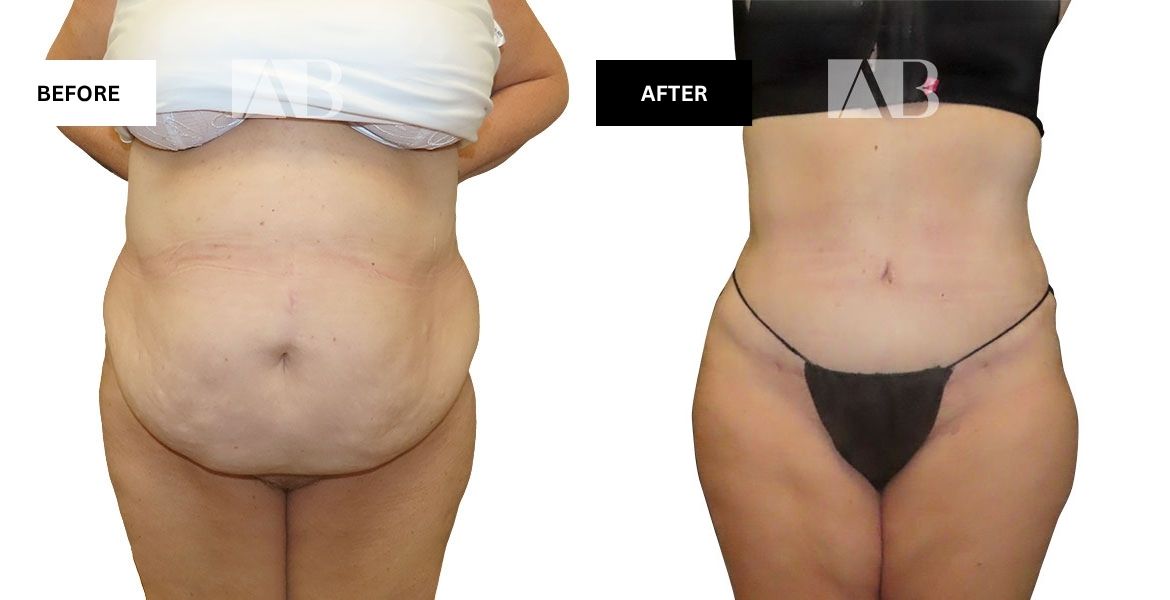
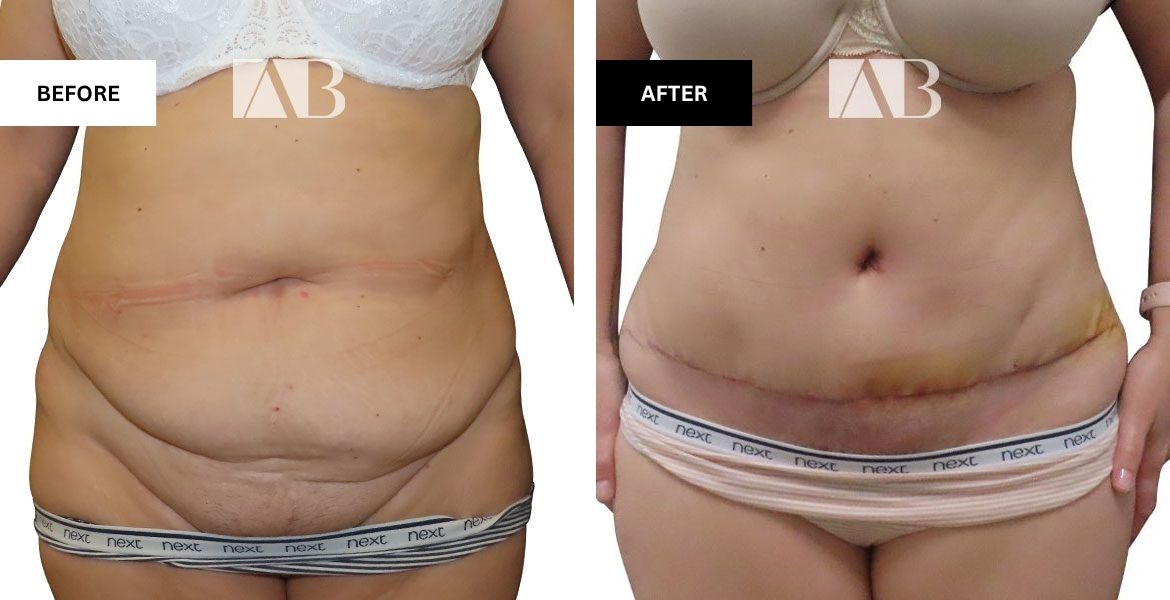
Tummy Tuck Before and After Photos
Benefits, Risks, and Realistic Expectations
What can Surgery achieve for a C-Section Tummy?
Surgery for a C-section tummy can:
- Remove redundant skin and a pronounced overhang
- Flatten and smooth the lower abdomen
- Improve the waistline and overall proportions
- Tighten separated muscles to improve core support and posture
For many women, these changes make clothes fit better, reduce irritation under an apron of skin, and restore a sense of comfort in their own bodies. Abdominoplasty is a powerful operation, but it is still about improvement rather than perfection. Weight, ageing, and future pregnancies will continue to influence your body over time.
Understanding Risks And Long-Term Considerations
Like any major surgery, tummy tuck procedures carry risks. These include infection, bleeding, delayed wound healing, seroma (fluid collection), changes in skin sensation, and issues with scars. Careful patient selection, meticulous technique, and following aftercare instructions all help to minimise these risks, but they cannot remove them completely.
Long term, maintaining a stable weight, staying active, and not smoking are key to preserving your results. Pregnancy after abdominoplasty is possible, but it can stretch the repaired area and alter the outcome, which is why most surgeons, including Miss Breahna, advise proceeding once your family is complete.

FAQs About Surgery for a C-Section Tummy
Can a C-section tummy make my back feel tired or sore, and will surgery help that?
A pronounced overhang combined with muscle separation can change posture and core support, which some women feel as back fatigue or discomfort. Repairing diastasis recti and removing excess tissue can improve alignment and support, although surgery is not a guaranteed cure for back pain.
What if my C-section tummy looks worse later in the day than in the morning?
It is common for swelling and fluid shifts to make the lower abdomen look fuller as the day goes on, especially if you spend a lot of time standing. After surgery, many women notice this fluctuation is reduced, although normal daily variations in bloating and posture will still occur.
Can a tummy tuck use my existing C-section scar so I do not have two separate scars?
In many cases, the old C-section scar is removed as part of the tissue excised, and the new scar is placed slightly lower and longer. You are left with a single, continuous low scar rather than two separate ones, although precise scar position varies between patients.
What happens to my belly button during surgery for a C-section tummy?
In a mini abdominoplasty, the belly button usually stays where it is. In a full abdominoplasty, the skin is tightened and the belly button is brought out through a new opening so that it stays in a natural position. You still have a belly button, but it will have a scar around it that softens over time.
Can a C-section tummy surgery help if my scar feels stuck when I laugh or cough?
Tight, tethered scars can pull or feel restrictive with movement. Abdominoplasty allows the scar to be released, excess tissue removed, and a new closure made under less tension. Many women find the pulling sensation improves, although some tightness is normal in the early healing phase.
Is it strange to consider tummy surgery many years after my last C-section?
Not at all. Some women seek help soon after completing their families. Others wait until their children are older or until they have had time to prioritise their own health. As long as you are medically suitable and your weight is relatively stable, it is reasonable to explore options even many years later.
Will my C-section tummy come back if I gain a little weight after surgery?
Gaining a small amount of weight is unlikely to recreate the same degree of overhang, but significant weight gain can increase abdominal fullness and stretch the tissues again. The best way to protect your result is to maintain a healthy, stable weight and stay active over the long term.
Medical References
- Subcutaneous versus retromuscular approach for the minimally invasive surgical treatment of rectus diastasis with concomitant ventral hernia: systematic review and meta-analysis of current techniques (Hernia) – https://link.springer.com/article/10.1007/s10029-025-03430-8
- Laparoendoscopic Extraperitoneal Surgical Techniques for Diastasis Recti Repair: Current Trends and Future Perspectives (Surgery, Gastroenterology and Oncology) – https://www.sgo-iasgo.com/article/laparoendoscopic-extraperitoneal-surgical-techniques-for-diastasis-recti-repair-current-trends-and-future-perspectives
- Diastasis recti abdominis: A comprehensive review (Hernia) – https://pmc.ncbi.nlm.nih.gov/articles/PMC12234620/
Time to Find Out: Is Surgery for a C-Section Tummy Right for You
A C-section tummy is a common and understandable outcome of pregnancy and surgery. For some women, time, rehabilitation, and lifestyle changes are enough to feel at ease with their abdomen again. For others, the structural changes are too great and continue to affect confidence, clothing choices, and day-to-day comfort.
If you are troubled by your tummy months or years after a C-section and you are wondering whether surgery might help, Miss Anca Breahna can guide you through your options calmly and clearly in Chester. You can arrange a private consultation for a full assessment and personalised plan. If you prefer a gradual start, you can also send confidential photographs and a brief history for a complimentary photo assessment, so that Miss Breahna can offer an initial opinion before you attend in person.
Contact Details
📍 Chester, Cheshire, United Kingdom
📞07538 012918
📧 info@ancabreahna.com
🌐 https://ancabreahna.com
Further Reading
- Read more about Body Procedures
- Read Miss Anca Breahna’s Blog on Tummy Tuck after a C Section
- Read Miss Anca Breahna’s Blog on Myths and Facts about Tummy Tuck Surgery
- Read Miss Anca Breahna’s Blog on Surgery For an Apron Belly
- Read Miss Anca Breahna’s Blog on Liposuction vs Tummy Tuck
- Read Miss Anca Breahna’s Blog on Best Candidates for the Mini Tummy Tuck
About Anca Breahna – Consultant Plastic Surgeon
 Miss Anca Breahna, PhD, MSc, FEBOPRAS, FRCS (Plast), is a Consultant Plastic, Reconstructive and Aesthetic Surgeon based in Chester with extensive experience in abdominal contouring and reconstructive surgery. Her specialist background is particularly relevant to abdominoplasty, where careful assessment of excess skin, abdominal muscle separation, fat distribution and overall waist contour is essential when planning surgery.
Miss Breahna performs tummy tuck surgery in Chester for patients affected by loose abdominal skin, stretched or separated muscles, or changes following pregnancy and significant weight loss. During consultation, she considers skin quality, muscle tone, body shape, medical history and individual goals before deciding whether a full abdominoplasty, mini tummy tuck or another approach is most suitable. As an experienced plastic surgeon in Chester, her approach focuses on balanced abdominal contouring, thoughtful scar placement, appropriate muscle repair and realistic expectations, with liposuction considered in selected cases where it may help refine the final shape.
Back to blog