- Quick Answer
- Key Takeaways
- Is It Normal for Your Body Shape to Change During Perimenopause?
- What Changes Are Usually Considered Normal?
- What Changes Are Not Considered Normal?
- What Causes Body Shape Changes During Perimenopause?
- How Do Hormonal Fluctuations Affect Body Shape?
- Why Does Fat Distribution Shift Towards the Abdomen?
- Does Muscle Loss Change Your Appearance?
- Is Water Retention Responsible for Some Body Changes?
- Does Metabolism Change During Perimenopause?
- How Do Lifestyle Factors Influence Body Shape?
- When Do Body Shape Changes Usually Happen?
- What Can You Do to Maintain Your Body Shape During Perimenopause?
- How Can Strength Training Help?
- Does Nutrition Make a Difference?
- Why Are Sleep and Stress So Important?
- Download Anca Breahna’s Tummy Tuck Guide
- Should You Consider Menopause Treatment?
- Where Does Cosmetic Surgery Fit?
- Tummy Tuck (Abdominoplasty) Before and After Photos
- When Should You Contact Your GP or Surgeon?
- How Can Miss Anca Breahna Help?
- Conclusion
- Perimenopause Body Shape Changes FAQs
- Next Step: Discuss Perimenopause Body Shape Changes With Miss Breahna
- Further Reading
- About Anca Breahna – Consultant Plastic Surgeon
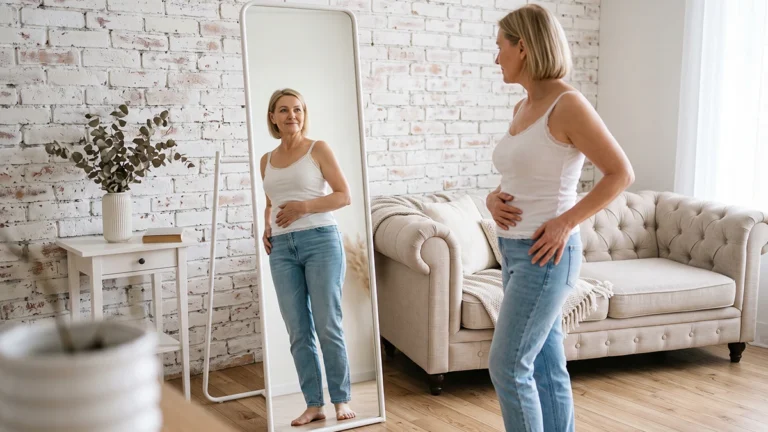
Miss Anca Breahna, PhD, MSc, FEBOPRAS, FRCS (Plast), Consultant Plastic & Reconstructive Surgeon in Chester, explains that it is entirely possible for your body shape to change during perimenopause even if your weight remains stable. Hormonal fluctuations during this stage of life can alter where your body stores fat, reduce muscle mass, affect fluid balance, and change overall body proportions without causing a significant increase on the scales.
- Perimenopause often begins several years before menopause
- Hormonal changes influence body composition as well as menstrual cycles
- Fat may redistribute towards the abdomen even when weight is unchanged
- Small reductions in muscle mass can affect body shape and firmness
- Most body changes are a normal part of the menopausal transition
Many women find these changes frustrating because they continue eating and exercising as they always have yet notice their clothes fitting differently. Understanding why these changes occur is the first step towards managing them effectively and recognising when medical advice may be appropriate.
Quick Answer
Yes, your body shape can change during perimenopause even if you have not gained weight because hormonal changes affect fat distribution, muscle mass, metabolism, and fluid retention. Rather than increasing your overall body weight, these changes often alter where fat is stored and how firm or toned your body appears.
Key Takeaways
- Body weight and body composition are not the same
- Hormonal fluctuations encourage more fat around the abdomen
- Gradual muscle loss can create a softer body shape
- Temporary bloating and water retention are common
- Persistent or unusual symptoms should always be assessed by a healthcare professional
The number on the scales only tells part of the story because it cannot distinguish between muscle, fat, and fluid. This explains why many women notice visible body changes despite maintaining a similar weight throughout perimenopause.
Is It Normal for Your Body Shape to Change During Perimenopause?
Yes, changes in body shape during perimenopause are very common and are recognised as part of the normal hormonal transition towards menopause. Although every woman experiences this stage differently, shifts in fat distribution and body composition frequently occur even when lifestyle habits remain unchanged.
- A thicker waist despite stable body weight
- Less definition around the abdomen
- Softer arms and thighs
- Clothes fitting differently without needing a larger size
- Changes in breast shape and body proportions
These changes do not necessarily mean you have become unhealthy or that you are doing something wrong. They simply reflect the body’s changing response to hormones, ageing, and metabolism during midlife.
What Changes Are Usually Considered Normal?
Most body shape changes during perimenopause develop gradually and reflect normal physiological adaptations rather than disease. Many women notice subtle differences over several months before realising their body has changed overall.
- Mild increase in abdominal fat
- Reduced muscle tone despite regular activity
- Temporary bloating that varies throughout the month
- Slight reduction in waist definition
- Fuller appearance around the hips or lower abdomen
These gradual changes often become more noticeable in fitted clothing than on the weighing scales. While they can feel frustrating, they are commonly reported during the menopausal transition and are supported by medical research.
What Changes Are Not Considered Normal?
Although many body changes are expected during perimenopause, some symptoms should not simply be attributed to hormones without appropriate medical assessment. Certain changes may indicate another medical condition that requires investigation.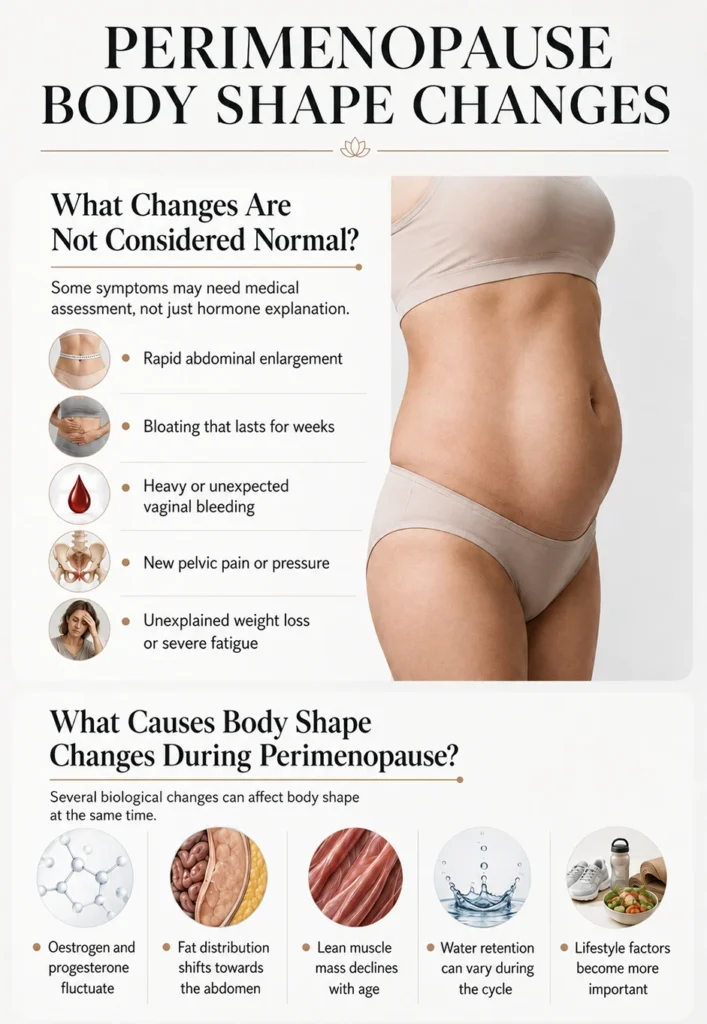
- Rapid abdominal enlargement
- Persistent bloating lasting several weeks
- Heavy or unexpected vaginal bleeding
- New pelvic pain or pressure
- Unexplained weight loss or severe fatigue
Persistent symptoms should never be ignored simply because you are approaching menopause. Your GP can assess whether the changes are related to perimenopause or another underlying medical condition that requires treatment.
What Causes Body Shape Changes During Perimenopause?
Body shape changes during perimenopause rarely have a single cause because several biological processes occur simultaneously. Hormonal fluctuations influence fat storage, muscle maintenance, metabolism, sleep, appetite, and fluid balance, all of which contribute to visible changes in body proportions.
- Oestrogen and progesterone fluctuate unpredictably
- Fat distribution gradually shifts towards the abdomen
- Lean muscle mass naturally declines with age
- Water retention may fluctuate throughout the menstrual cycle
- Lifestyle factors become increasingly important
Many women blame themselves when familiar routines no longer produce the same results. In reality, the body is responding differently to the same habits because of changing hormones rather than a sudden lack of willpower or discipline.
How Do Hormonal Fluctuations Affect Body Shape?
Hormonal fluctuations are one of the main reasons body shape changes during perimenopause because oestrogen and progesterone no longer follow predictable monthly patterns. These hormonal changes influence where fat is stored, how efficiently muscles are maintained, and how the body regulates hunger, sleep, and energy.
- Oestrogen levels rise and fall unpredictably
- Progesterone fluctuations can affect fluid retention
- Appetite regulation may change
- Sleep disruption can influence metabolism
- Stress hormone responses may become more pronounced
Hormones do not directly cause weight gain on their own, but they create conditions that make body composition more likely to change. This is why two women with similar diets and exercise routines may experience very different body shapes during perimenopause.
Why Does Fat Distribution Shift Towards the Abdomen?
Many women notice that fat gradually becomes concentrated around the waist and abdomen instead of the hips and thighs during perimenopause. This shift in fat distribution is strongly linked to changing oestrogen levels and is widely recognised in menopause research.
- Increased abdominal fat storage
- Greater accumulation of visceral fat around internal organs
- Less fat stored around the hips and buttocks
- Reduced waist definition
- More noticeable changes in fitted clothing
Even relatively small increases in abdominal fat can produce a significant change in body shape because the waist is central to overall body proportions. This explains why your silhouette may change despite only minimal changes in total body weight.
Does Muscle Loss Change Your Appearance?
Yes, gradual muscle loss can noticeably change body shape because muscle provides firmness, definition, and support to the body’s natural contours. Losing lean muscle while maintaining a similar amount of body fat often creates a softer appearance despite stable body weight.
- Arms may appear less toned
- Thighs can lose firmness
- The abdomen may feel softer
- Posture may become less upright
- Physical strength may gradually decline
Muscle loss is a normal part of ageing, but it becomes particularly relevant during perimenopause. Fortunately, resistance exercise and adequate protein intake can help slow this process and support healthier body composition.
Is Water Retention Responsible for Some Body Changes?
Not every body change during perimenopause is caused by fat because fluid retention and bloating are also common. Hormonal fluctuations can alter how the body regulates water, making some women feel noticeably puffier on certain days than others.
- Abdominal bloating that changes throughout the day
- Swollen fingers or tighter rings
- Facial puffiness
- Temporary increases in body measurements
- Symptoms that improve after hormonal fluctuations settle
Unlike fat gain, water retention tends to fluctuate rather than remain constant. Recognising this difference can help reduce unnecessary anxiety when temporary bloating makes clothing feel tighter.
Does Metabolism Change During Perimenopause?
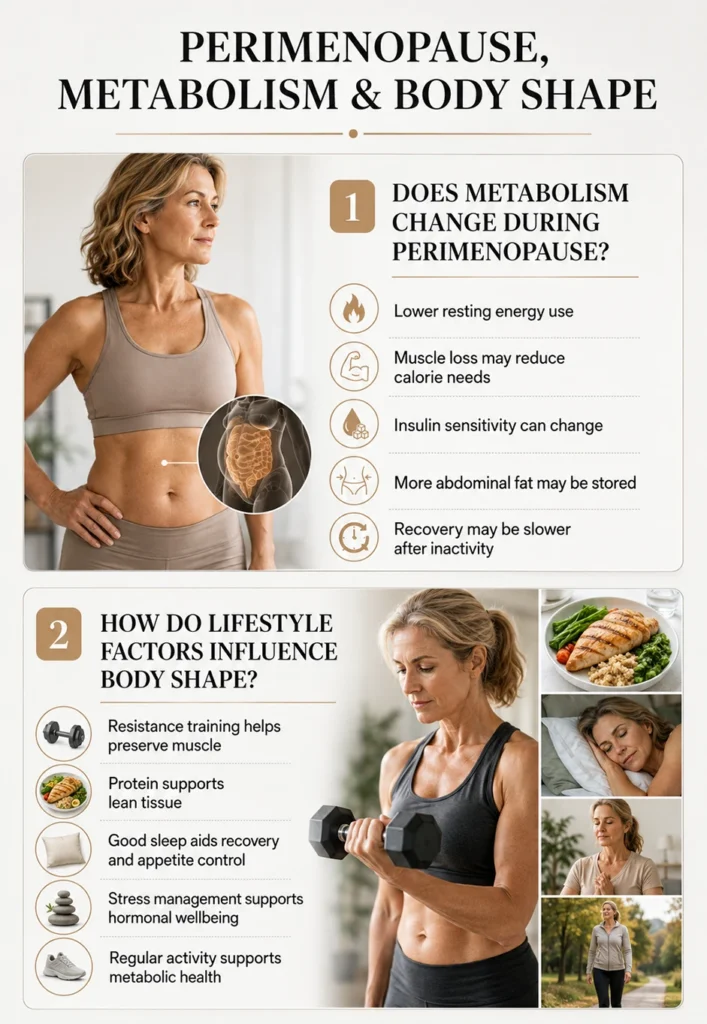
Metabolism gradually changes during perimenopause, although the effect is usually more subtle than many people expect. Hormonal changes, reduced muscle mass, and ageing together influence how efficiently the body uses and stores energy.
- Reduced resting energy expenditure
- Lower muscle mass affecting calorie requirements
- Changes in insulin sensitivity
- Greater tendency to store abdominal fat
- Slower recovery after inactivity
Many women discover that the habits which maintained their weight in their thirties are no longer enough during their forties and fifties. Small adjustments to exercise, nutrition, and recovery often become more important than pursuing restrictive diets.
How Do Lifestyle Factors Influence Body Shape?
Lifestyle plays an increasingly important role during perimenopause because healthy habits help counteract many of the hormonal changes affecting body composition. Although lifestyle cannot prevent menopause, it can significantly influence how the body adapts throughout this transition.
- Regular resistance training supports muscle preservation
- Adequate dietary protein helps maintain lean tissue
- Good sleep improves recovery and appetite regulation
- Stress management supports hormonal wellbeing
- Consistent physical activity benefits overall metabolic health
Healthy habits should be viewed as long-term strategies rather than quick fixes. Sustainable changes are far more effective than extreme diets or intensive exercise programmes that are difficult to maintain.
When Do Body Shape Changes Usually Happen?
Body shape changes during perimenopause usually develop gradually rather than appearing suddenly. Many women notice subtle differences over several years as hormone levels fluctuate before eventually stabilising after menopause.
- Early perimenopause: Mild bloating, fluctuating weight, and occasional changes in waist definition may appear
- Mid perimenopause: Fat redistribution towards the abdomen becomes more noticeable and muscle tone may gradually decrease
- Late perimenopause: Hormone levels begin to stabilise, although changes in body composition may continue
- After menopause: Muscle preservation and healthy lifestyle habits become increasingly important for maintaining body shape
- Every woman’s experience differs according to genetics, lifestyle, and overall health
Some women notice only minor changes, while others experience more obvious differences in body proportions. Understanding that these changes develop over time can help set realistic expectations and reduce unnecessary concern.
What Can You Do to Maintain Your Body Shape During Perimenopause?
Although hormonal changes cannot be prevented, there are practical steps that can help maintain muscle, support metabolism, and improve body composition. Small, sustainable lifestyle changes are generally more effective than restrictive diets or intensive exercise programmes that are difficult to maintain.
- Prioritise resistance training two to three times each week
- Include adequate protein with every meal
- Stay physically active throughout the day
- Aim for consistent, restorative sleep
- Manage stress through realistic, sustainable strategies
The goal should not be to achieve perfection but to support your body’s changing needs during midlife. Healthy habits also improve long-term wellbeing, cardiovascular health, and quality of life beyond body shape alone.
How Can Strength Training Help?
Resistance training is one of the most effective ways to preserve lean muscle mass during perimenopause. Maintaining muscle helps support strength, posture, metabolism, and overall body definition as hormone levels change.
- Improves muscle tone and firmness
- Helps preserve lean body mass
- Supports healthy bone density
- Improves insulin sensitivity
- Increases functional strength for everyday activities
You do not need to spend hours in the gym to benefit from strength training. A consistent programme using weights, resistance bands, or bodyweight exercises can produce meaningful improvements over time.
Does Nutrition Make a Difference?
Good nutrition supports muscle maintenance, energy levels, and overall metabolic health throughout perimenopause. Rather than following restrictive diets, most women benefit from eating a balanced diet that provides sufficient protein, fibre, vitamins, and minerals.
- Include protein at each meal
- Eat plenty of vegetables and whole grains
- Stay well hydrated
- Limit highly processed foods where possible
- Avoid extreme calorie restriction
Healthy eating should support long-term wellbeing rather than rapid weight loss. A realistic approach is more likely to be maintained and can help improve both body composition and overall health.
Why Are Sleep and Stress So Important?
Sleep and stress have a significant influence on appetite, recovery, exercise performance, and hormone regulation during perimenopause. Poor sleep can increase fatigue and cravings, making healthy lifestyle habits more difficult to maintain.
- Prioritise a regular sleep routine
- Address menopausal symptoms affecting sleep
- Incorporate stress-management techniques
- Allow adequate recovery between exercise sessions
- Seek medical advice if symptoms become overwhelming
Improving sleep quality often has wider benefits than many women expect. Better rest can positively influence energy levels, motivation, mood, and overall body composition.
Download Anca Breahna’s Tummy Tuck Guide
Should You Consider Menopause Treatment?
Some women find that treating troublesome menopausal symptoms helps them maintain healthy lifestyle habits more consistently. Decisions about hormone replacement therapy (HRT) or other treatments should always be made following an individual discussion with a qualified healthcare professional.
- HRT may improve troublesome menopausal symptoms for suitable patients
- Treatment decisions should be individualised
- Benefits and risks should be discussed with your clinician
- Symptom control may improve sleep and physical activity
- Regular review ensures treatment remains appropriate
Treatment should focus on improving health and quality of life rather than achieving a particular body shape. Managing symptoms effectively may simply make it easier to remain active and maintain healthy routines.
Where Does Cosmetic Surgery Fit?
Cosmetic surgery does not treat perimenopause or prevent hormone-related body composition changes. However, carefully selected procedures may help address stable concerns such as loose skin or persistent areas of fat once lifestyle measures have been optimised.
- Tummy tuck for excess abdominal skin
- Liposuction for localised fat deposits
- Body contouring after significant weight loss
- Surgery is best considered once weight is stable
- Lifestyle habits remain essential for maintaining results
If body changes remain stable and involve persistent loose skin or localised fat, you can also read about body contouring options after menopause.
Surgery should always complement healthy lifestyle measures rather than replace them. A consultation helps determine whether your concerns are more likely to benefit from surgery, non-surgical management, or continued lifestyle support.
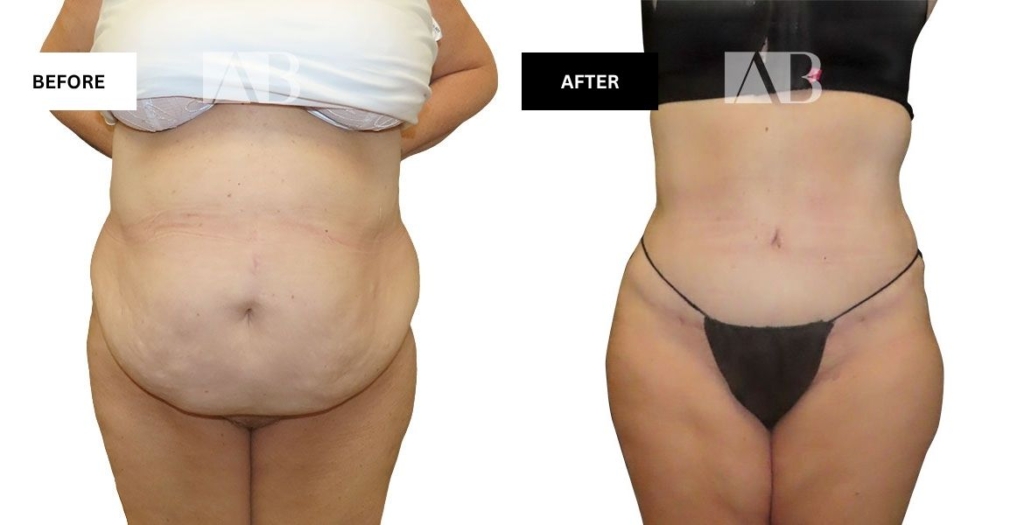
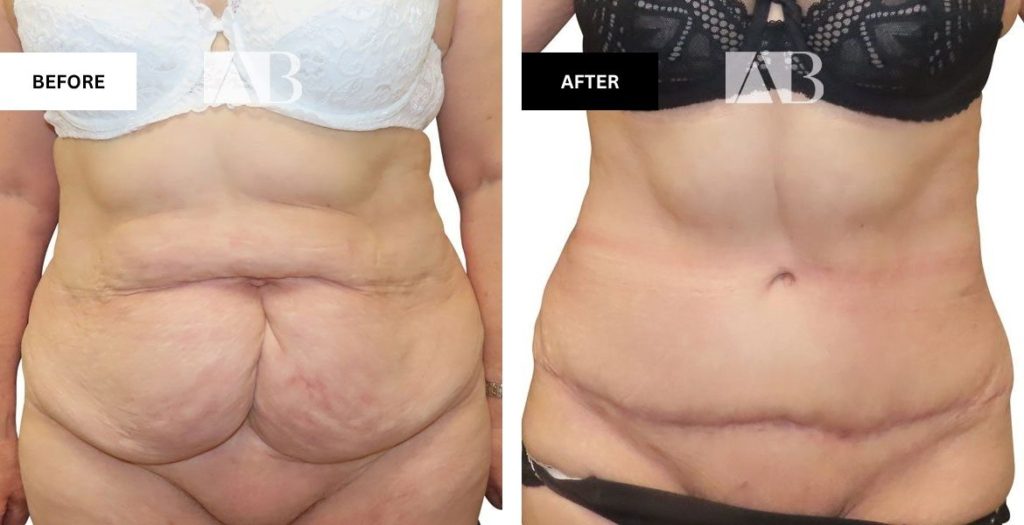
Tummy Tuck (Abdominoplasty) Before and After Photos
When Should You Contact Your GP or Surgeon?
Most body shape changes during perimenopause are normal, but certain symptoms should always be assessed promptly. Early medical review helps identify whether symptoms are related to menopause or another condition requiring investigation.
- Rapid abdominal enlargement
- Persistent bloating lasting several weeks
- Heavy or unusual vaginal bleeding
- Pelvic pain or pressure
- Unexplained weight loss, severe fatigue, or changes in bowel habits
If you have previously undergone cosmetic surgery, any concerns about swelling, pain, or changes around the surgical area should also be discussed with your surgeon. Seeking reassurance early is always preferable to delaying assessment when symptoms appear unusual.
How Can Miss Anca Breahna Help?
A consultation with Miss Anca Breahna provides an opportunity to understand why your body shape has changed and whether cosmetic treatment is appropriate for your individual circumstances. She takes a patient-centred approach, carefully assessing your anatomy, medical history, lifestyle, and treatment goals before making personalised recommendations.
- Assess whether concerns relate to fat distribution, skin laxity, or ageing
- Discuss realistic surgical and non-surgical options
- Explain what surgery can and cannot achieve
- Recommend medical assessment when appropriate
- Develop an individual treatment plan based on your goals
Many patients find that understanding the cause of their body changes is reassuring in itself. Whether the best next step is lifestyle advice, medical management, or cosmetic surgery, personalised guidance allows you to make informed decisions with confidence.
Conclusion
Body shape can change during perimenopause even when body weight remains stable because hormonal fluctuations influence fat distribution, muscle mass, metabolism, and fluid balance. These changes are common, but maintaining healthy lifestyle habits can help preserve muscle, support overall health, and improve body composition.
- Hormonal changes affect body composition more than body weight
- Fat commonly redistributes towards the abdomen
- Muscle preservation becomes increasingly important
- Most changes are a normal part of perimenopause
- Persistent or concerning symptoms should always be medically assessed
If you remain concerned about changes in your body shape or would like advice about whether cosmetic treatment could help, arranging a consultation with Miss Anca Breahna can provide clear, personalised guidance. Understanding what is normal, what can be improved, and when further assessment is needed is the first step towards feeling more confident in your body.
Perimenopause Body Shape Changes FAQs

Why does my waist look thicker if I have not gained weight?
A small increase in abdominal fat, a shift toward more central fat distribution, or a small decrease in lean mass can change silhouette without changing the scale much. Reviews describe menopausal transition links to increased abdominal and visceral fat patterns.
Is this visceral fat or just bloating?
Bloating often fluctuates through the day and relates to meals, bowel habits, and stress, while fat changes are more consistent day to day. If you have persistent bloating with pain or bowel changes, it is sensible to see a GP.
Why do my arms and legs look softer when my weight is stable?
Subtle lean mass loss changes firmness. Menopause-related muscle loss risk is discussed in clinical nutrition and sarcopenia literature, which is why strength training becomes more important.
Can HRT prevent body shape changes?
HRT decisions are individual. NICE guidance supports personalised discussion of menopause management and HRT effects on health outcomes. It is best discussed with a clinician who can tailor advice to your risks and goals.
Why do my clothes fit differently even when my weight has not changed?
Small shifts in where fat sits, changes in posture, and minor breast or hip changes can affect garment drape. This is why jeans and bras are often the first items that feel different.
What is the most overlooked habit that affects shape in perimenopause?
Sleep. Poor sleep affects appetite, cravings, recovery, and motivation, which can drive composition changes even when you think you are doing everything the same.
When should I stop self-experimenting and see a clinician?
If you have rapid changes, persistent abdominal symptoms, heavy bleeding, pelvic pressure, new bowel changes, or severe fatigue, see a GP. If you are unsure whether symptoms fit perimenopause, a clinician can help clarify.
Medical References
- Body composition analysis: A snapshot across the perimenopause / Maturitas / – https://www.sciencedirect.com/science/article/abs/pii/S0378512223005042
- Weight, Shape, and Body Composition Changes at Menopause / Journal of Mid-Life Health / – https://pmc.ncbi.nlm.nih.gov/articles/PMC8569454/
- Increased visceral fat and decreased energy expenditure during the menopausal transition / International Journal of Obesity / – https://www.nature.com/articles/ijo200825
- Body composition and cardiometabolic health across the menopause transition / Obesity (Silver Spring) / – https://pmc.ncbi.nlm.nih.gov/articles/PMC8972960/
- The Impact of the Menopausal Transition on Body Composition and Abdominal Fat Redistribution / Journal of Clinical Medicine / – https://www.mdpi.com/2077-0383/15/2/740
Next Step: Discuss Perimenopause Body Shape Changes With Miss Breahna
Perimenopause can change body shape even without weight gain because body composition can shift, fat distribution can move toward the middle, muscles can be harder to maintain without targeted training, and fluid and digestion patterns can change. Research and reviews describe increased abdominal and visceral fat risk and metabolic shifts across the menopausal transition, which helps explain why the mirror can change even when the scale does not.
If you want personalised guidance in Chester, UK, you can book a consultation with Miss Anca Breahna, Consultant Plastic & Reconstructive Surgeon. Visit the contact page or complimentary photo assessment page to send enquiries, photos or appointment requests. Miss Anca Breahna can help you understand what is likely normal, what should be checked medically, and what steps will most realistically help you feel confident in your body again.
Further Reading
- Read Miss Anca Breahna’s Procedure Page on Mini Tummy Tuck
- Read Miss Anca Breahna’s Procedure Page on Arm Lift – Arm Reduction Surgery
- Read Miss Anca Breahna’s Procedure Page on Thigh Lift
- Read Miss Anca Breahna’s Recovery Guide to Tummy Tuck Recovery
- Read Miss Anca Breahna’s Blog about What Is a Menopause Makeover?
- Read Miss Anca Breahna’s Blog about Arm Lift or Arm Liposuction
- Read Miss Anca Breahna’s Blog about Does Liposuction Last? What to Expect in the Long Term
About Anca Breahna – Consultant Plastic Surgeon
 Miss Anca Breahna, PhD, MSc, FEBOPRAS, FRCS (Plast), is a Consultant Plastic, Reconstructive and Aesthetic Surgeon based in Chester with broad experience across body contouring and reconstructive surgery. Her NHS and private practice have given her a strong understanding of anatomy, tissue behaviour, proportion and surgical planning, all of which are important when treating changes caused by pregnancy, weight loss, ageing or localised fat and skin excess.
Miss Breahna offers body surgery in Chester for women and men seeking treatment to improve shape, proportion or comfort. Her procedures include liposuction, arm lift, thigh lift, fat transfer, labiaplasty, male breast reduction, mini tummy tuck and mummy makeover surgery. As an experienced plastic surgeon in Chester, she tailors each treatment plan to the patient’s anatomy, health and goals, with careful consideration of procedure selection, scar placement, recovery, safety and realistic long-term expectations.
Back to blog