- Take our Plastic Surgery Quiz to find out if you'd be a good candidate for cosmetic surgery.
- Why a Caesarean Section Pouch Develops
- ✓ Post-Pregnancy Changes in the Abdomen
- ✓ How the Scar Contributes to the Pouch
- Natural Recovery: Giving Your Body Time to Heal
- ✓ The First Months After a Cesarean Birth
- ✓ When a Caesarean Section Pouch Becomes Persistent
- Download Miss Anca Breahna's Tummy Tuck Guide
- Non-Surgical Strategies to Improve a Caesarean Section Pouch
- ✓ Core Rehabilitation and Diastasis Recti
- ✓ Lifestyle, Weight, and Exercise
- ✓ Scar Massage, Soft Tissue Work, and Skin Quality
- When Non-Surgical Measures Are Not Enough
- ✓ Understanding Structural Limits
- ✓ Emotional Impact of Living With a Caesarean Section Pouch
- Surgical Options to Treat a Cesarean Section Pouch
- ✓ Mini Abdominoplasty for Localised Lower Abdominal Pouches
- ✓ Full Abdominoplasty for Skin and Muscle Laxity
- ✓ The Role Of Liposuction as a Complement
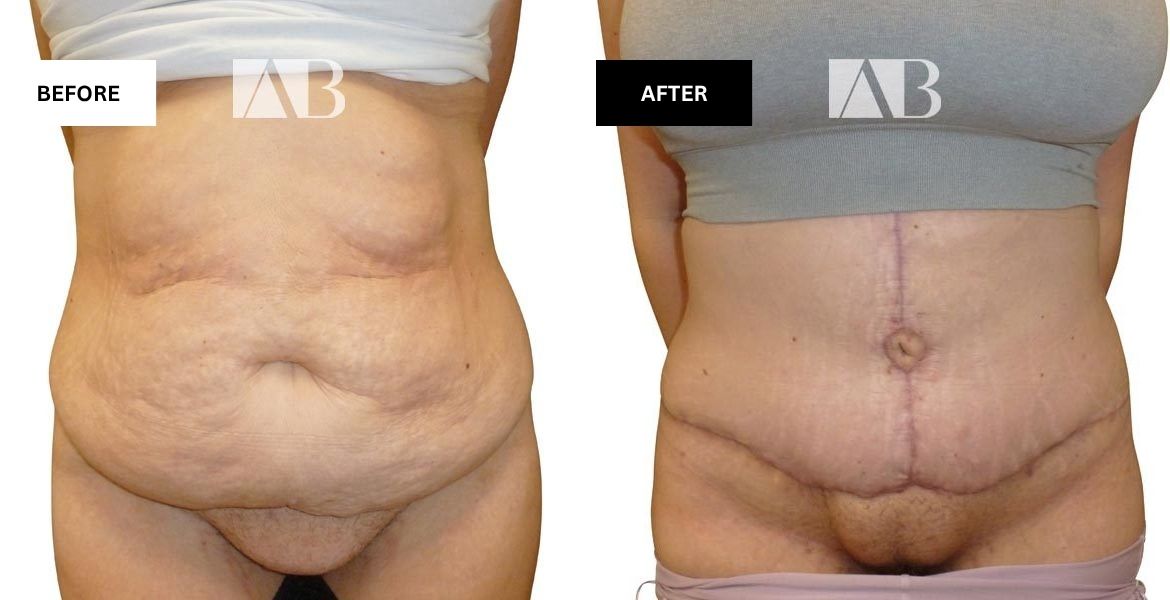
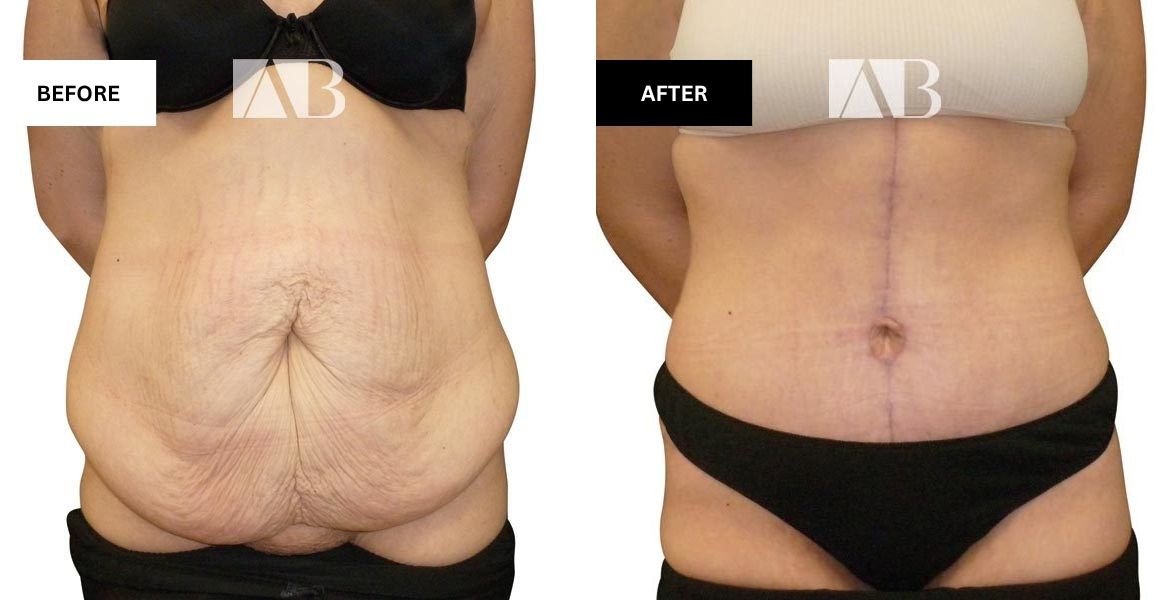
- Tummy Tuck Before and After Photos
- The Patient Journey With Miss Anca Breahna in Chester
- Consultation and Individual Assessment
- Surgery, Recovery, and Follow-Up Care
- Why Choose Miss Anca Breahna for Caesarean Section Pouch Surgery
- Consultant Plastic & Reconstructive Surgeon Expertise
- Supportive, Natural Results for Women in Chester and Beyond
- Take the Next Steps for Your Caesarean Section Pouch
- Further Reading
- Medical References
- About Anca Breahna – Consultant Plastic Surgeon
A caesarean section pouch is the soft fold or overhang of tissue that sits just above a C-section scar. Many women describe it as a little shelf or apron that seems to sit stubbornly over the scar, even when the rest of their body feels fairly back to normal. It can make fitted trousers, leggings, and swimwear feel uncomfortable and can be a daily reminder of pregnancy and surgery.
This pouch is not just a bit of extra fat. It often involves stretched skin, local fat deposits, changes in the abdominal muscles, and the way the scar anchors the lower tummy. That is why no amount of crunches or creams seems to make it disappear for some women.
At her private practice in Chester, UK, Miss Anca Breahna, Consultant Plastic & Reconstructive Surgeon, sees many women who feel frustrated or self-conscious about their lower abdomen after a C-section. In this article, we will look at why a cesarean section pouch develops, what can improve naturally, which non-surgical strategies can help, and when it may be appropriate to consider surgery.
Take our Plastic Surgery Quiz to find out if you’d be a good candidate for cosmetic surgery.
Why a Caesarean Section Pouch Develops
✓ Post-Pregnancy Changes in the Abdomen
During pregnancy, your abdominal wall does an incredible job. The skin, fascia, and muscles stretch to make space for the growing baby. The central abdominal muscles often separate along the midline, a condition called diastasis recti. This separation can change the way the tummy looks and how well it supports the organs behind it.
When a C-section is performed, the surgeon makes a horizontal incision low on the abdomen, usually near the bikini line. Several layers are opened and then carefully closed. As you heal, a scar forms through those layers. In some women, that scar becomes tethered to deeper tissue. If the skin and fat above are looser after pregnancy, they can fold over that fixed point, creating the characteristic shelf or pouch.
✓ How the Scar Contributes to the Pouch
The caesarean section pouch is often most visible where softer, heavier tissue meets the firm line of the scar. The scar can act like a ledge. The tissues above may sit over it, especially when standing or bending forward.
Your natural fat distribution, the quality of your skin, the number of pregnancies, and your weight changes all influence how pronounced this pouch becomes. This is why two women with similar births can end up with very different lower abdominal shapes. It is important to recognise that this is largely an anatomical issue, not a reflection of effort or willpower.
Natural Recovery: Giving Your Body Time to Heal
✓ The First Months After a Cesarean Birth
The postpartum period is a time of major change. Your uterus is shrinking back to its pre-pregnancy size. Fluid levels are shifting. Hormones that affect your ligaments, skin, and metabolism are changing again. It is very normal for the lower tummy to look swollen, uneven, or puffy for many months.
During this period, the scar is still softening and maturing. Swelling above the scar can make a cesarean section pouch look more prominent than it will eventually be. It is helpful to think of the first six months as a healing and adjustment phase rather than a time to judge your final shape.
✓ When a Caesarean Section Pouch Becomes Persistent
Most specialists recommend waiting at least 6 to 12 months after birth, and ideally until after breastfeeding has finished, before deciding that your abdominal contour has stabilised.
If, after that point, you are at or near a healthy weight, you are reasonably active, and you still have a distinct overhang that does not change, it may be a persistent cesarean section pouch. At that stage, targeted rehabilitation and sometimes surgery are the main options to create further change.
Download Miss Anca Breahna’s Tummy Tuck Guide
Non-Surgical Strategies to Improve a Caesarean Section Pouch
✓ Core Rehabilitation and Diastasis Recti
Diastasis recti is very common after pregnancy. It means the right and left rectus muscles have moved apart, leaving a gap along the midline. This can lead to a rounded or domed appearance of the tummy and reduced support for the spine and pelvis.
A women’s health physiotherapist can assess for diastasis recti by looking at your tummy at rest and during movement. They can then guide you through exercises that focus on deep core muscles and the pelvic floor rather than just surface abdominal work. The aim is to improve function, posture, and control. This may reduce the sense of fullness behind a mild pouch and improve how you feel in your clothes, even if it does not remove loose skin.
✓ Lifestyle, Weight, and Exercise
Gentle, regular physical activity in the postpartum period supports overall health, mood, and body composition. Walking, low-impact cardio, and carefully progressed strength work can help you regain stamina and muscle tone. Authoritative bodies like ACOG emphasise that being active after pregnancy is beneficial for most women when done safely and gradually.
If you are carrying more weight than you feel comfortable with, a combination of balanced nutrition and realistic exercise goals can help reduce overall body fat, including in the lower abdomen. However, even with a healthy lifestyle, significant redundant skin or a strong scar-related fold may remain.
✓ Scar Massage, Soft Tissue Work, and Skin Quality
Once your obstetric team confirms that your scar is fully healed, scar massage can be introduced. This involves gently moving the skin and scar line in different directions, lifting it away from the deeper tissues, and encouraging better mobility. Physiotherapists and some postnatal specialists teach women how to do this safely at home.
This work can reduce tightness, pulling, and discomfort. In some cases, it softens the visual line of the shelf a little. Skin care, hydration, and sometimes non-invasive treatments like radiofrequency skin tightening can improve mild laxity. They are not, however, a substitute for surgery when there is a substantial overhang of skin and fat.
When Non-Surgical Measures Are Not Enough
✓ Understanding Structural Limits
There is a limit to what lifestyle change, exercise, and scar work can achieve. When the skin has stretched beyond its ability to recoil, when there is a clear fold of extra tissue hanging over the scar, or when the abdominal wall is significantly lax, no amount of targeted exercises can physically remove that tissue.
At this point, it helps to view the cesarean section pouch as a structural problem. The excess skin and fat are like extra material in a garment. You can tone the body underneath, but the spare fabric will still gather and fold unless it is removed or reshaped with proven solutions for a C-section belly. Recognising this can relieve some of the self-blame many women feel.
✓ Emotional Impact of Living With a Caesarean Section Pouch
Living with a pouch can affect daily life. Some women avoid fitted clothes, high waistbands, or swimwear. Others feel self-conscious during intimacy or avoid looking at their lower tummy altogether. It is common to feel frustrated when you are doing your best with diet and exercise, yet the lower abdomen still does not match the rest of your body.
For women who have finished their families, are medically suitable, and remain very unhappy with their lower tummy, surgery can be a reasonable option to explore. It is not about chasing perfection, but about feeling more comfortable and confident in your own skin.
Surgical Options to Treat a Cesarean Section Pouch
✓ Mini Abdominoplasty for Localised Lower Abdominal Pouches
A mini abdominoplasty targets the area of the abdomen below the belly button. It is designed for women whose main concern is a lower cesarean section pouch with relatively good skin tone and muscle support higher up. During this operation, excess skin and fat in the lower zone are removed. The C-section scar can often be revised, smoothed, and placed slightly lower or straighter.
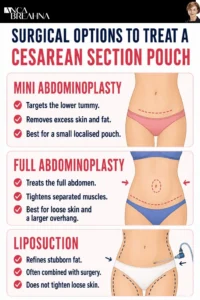
Because the upper abdomen is not lifted, the belly button usually stays in place. Recovery is often shorter than for a full tummy tuck, but it is still a significant surgery that requires time off work, limited lifting, and careful aftercare.
✓ Full Abdominoplasty for Skin and Muscle Laxity
A full abdominoplasty, or full tummy tuck, addresses the whole front of the abdomen. The surgeon removes a large segment of loose skin and fat, tightens the underlying muscles if they are separated, and repositions the belly button through a new opening in the tightened skin. This procedure is often recommended when there is a combination of upper and lower laxity, diastasis recti, and a pronounced overhang or apron.
The scar usually runs from hip to hip, low enough to sit under underwear or bikini bottoms for most patients. For many women with a severe caesarean section pouch, this is the only way to truly remove the extra tissue and restore a smoother, firmer contour.
✓ The Role Of Liposuction as a Complement
Liposuction can reduce localised fat and refine the waistline and upper abdomen. However, it does not remove loose skin or repair muscle separation. For this reason, it is often used alongside mini or full abdominoplasty rather than as a standalone solution for a pronounced pouch. Liposuction can help transition smoothly between treated and untreated areas, giving a more natural overall shape.
Tummy Tuck Before and After Photos
The Patient Journey With Miss Anca Breahna in Chester
Consultation and Individual Assessment
When you see Miss Anca Breahna in Chester, the first step is a detailed consultation. She will ask about your pregnancies, any symptoms such as back pain or core weakness, your current activity levels, and your goals. She will examine your abdomen to assess skin quality, fat distribution, muscle separation, and the position and condition of your C-section scar.
In some cases, she may advise further physiotherapy or more time if you are still relatively early postpartum. In other cases, she may outline the pros and cons of mini abdominoplasty, full abdominoplasty, or no surgery at all. Throughout, the discussion is honest and realistic, focusing on what is safe and what will genuinely help.
Surgery, Recovery, and Follow-Up Care
If you decide to proceed with surgery, it will take place in an accredited hospital with a full anaesthetic team and nursing support. On the day you will be admitted, have your measurements and markings checked, and meet your anaesthetist. The operation time varies, but is typically a few hours for a tummy tuck-type procedure.
After surgery, you will wake with a supportive garment in place. You may have drains for a short period, depending on the technique. Most women stay in the hospital overnight for monitoring and pain control. At home, you will need to limit lifting, bending, and driving for a period and follow written aftercare instructions.
Follow-up visits with Miss Breahna and her team allow your progress to be monitored. Swelling and tightness gradually subside over weeks to months. Scars evolve from red and firm to flatter and paler over time. Advice on scar care, massage, and gradual return to exercise is tailored to your recovery.
Why Choose Miss Anca Breahna for Caesarean Section Pouch Surgery
Consultant Plastic & Reconstructive Surgeon Expertise
Miss Anca Breahna is a Consultant Plastic & Reconstructive Surgeon, meaning she has completed the highest level of surgical training in her specialty. Her background includes complex reconstructive work as well as aesthetic procedures. This is particularly relevant for women with a caesarean section pouch, because it often involves scar management, muscle repair, and careful reshaping of the abdominal wall.
Her understanding of anatomy, healing, and function underpins every surgical decision. She aims not only to improve the appearance of the abdomen, but also to support core stability and comfort wherever possible.
Supportive, Natural Results for Women in Chester and Beyond
Working from her base in Chester, Cheshire, Miss Breahna cares for women from the local area, North Wales, and the wider region. Her style is warm, respectful, and non-judgmental. She understands that discussing your tummy can feel vulnerable and that making decisions about surgery is significant.
Her goal is not to create an artificial or extreme result, but to help your abdomen feel in proportion with the rest of your body so that you can dress, move, and live with greater confidence.
Take the Next Steps for Your Caesarean Section Pouch
A caesarean section pouch is a common and understandable consequence of pregnancy and surgery. It is not a reflection of effort, strength, or character. For some women, time, rehab, and a healthy lifestyle are enough to feel comfortable in their skin again. For others, the pouch remains and continues to affect daily life and self-esteem.
If you feel ready to explore your options, Miss Anca Breahna can guide you through them carefully at her clinic in Chester. You can arrange a one-on-one consultation to discuss your history, your goals, and what is realistically possible in your situation.
Miss Breahna values patient privacy, and her website has pages dedicated to secure communication. If you prefer, you can send a confidential enquiry or recent photographs for a complimentary photo assessment so that Miss Breahna can provide an initial opinion before you come in person. For those who prefer a straightforward way of communicating, here are the contact details:
📍 Chester, Cheshire, United Kingdom
📞 07538 012918
📧 info@ancabreahna.com
🌐 https://ancabreahna.com
Further Reading
- Read Miss Anca Breahna’s Blog on Tummy Tuck after a C Section
- Read Miss Anca Breahna’s Blog on Myths and Facts about Tummy Tuck Surgery
- Read Miss Anca Breahna’s Blog on Surgery For an Apron Belly
- Read Miss Anca Breahna’s Blog on Liposuction vs Tummy Tuck
- Read Miss Anca Breahna’s Blog on Best Candidates for the Mini Tummy Tuck
Medical References
- Physiotherapy Interventions And Assessment Methods For Diastasis Recti Abdominis In Postpartum Women: A Systematic Review Protocol / Muscles, Ligaments and Tendons Journal – https://www.mltj.online/wp-content/uploads/2023/07/Adigozali.pdf
- Comparing the clinical efficacy of three surgical methods for cesarean scar pregnancy / BMC Women’s Health – https://bmcwomenshealth.biomedcentral.com/articles/10.1186/s12905-023-02415-y
- Comparing the clinical efficacy of three surgical methods for cesarean scar pregnancy / BMC Women’s Health – https://pmc.ncbi.nlm.nih.gov/articles/PMC10193701/
About Anca Breahna – Consultant Plastic Surgeon
 Miss Anca Breahna, PhD, MSc, FEBOPRAS, FRCS (Plast), is a Consultant Plastic, Reconstructive and Aesthetic Surgeon based in Chester with extensive experience in abdominal contouring and reconstructive surgery. Her specialist background is particularly relevant to abdominoplasty, where careful assessment of excess skin, abdominal muscle separation, fat distribution and overall waist contour is essential when planning surgery.
Miss Breahna performs tummy tuck surgery in Chester for patients affected by loose abdominal skin, stretched or separated muscles, or changes following pregnancy and significant weight loss. During consultation, she considers skin quality, muscle tone, body shape, medical history and individual goals before deciding whether a full abdominoplasty, mini tummy tuck or another approach is most suitable. As an experienced plastic surgeon in Chester, her approach focuses on balanced abdominal contouring, thoughtful scar placement, appropriate muscle repair and realistic expectations, with liposuction considered in selected cases where it may help refine the final shape.
Back to blog