
- Take our Plastic Surgery Quiz to find out if you'd be a good candidate for cosmetic surgery.
- Why Exercise Must Be Approached Gradually After Surgery
- Timeline for Returning to Exercise
- ✓ Week 1: Rest and Healing
- ✓ Weeks 2–3: Gentle Movement
- ✓ Weeks 4–5: Light Activity
- ✓ Weeks 6–7: Controlled Reintroduction
- ✓ Weeks 8–10: Moderate Fitness
- ✓ Week 12 and Beyond: Full Return to Fitness
- Download Miss Anca Breahna's Breast Reduction Surgery Guide
- Exercises to Avoid in the First 6–8 Weeks
- Best Exercises for Early Recovery
- The Role of Proper Support Garments During Exercise
- Signs You May Be Pushing Too Hard
- Breast Reduction Before and After Photos
- The Role of Nutrition in Recovery and Exercise Tolerance
- Psychological Benefits of Gradual Return to Activity
- How Miss Anca Breahna Guides Recovery Safely
- Breast Reduction Exercise FAQs
- Next Step: Explore Your Recovery Options With Miss Breahna’s Expert Guidance
- Further Reading
- About Anca Breahna – Consultant Plastic Surgeon
Breast reduction surgery is not only about reshaping the body – it’s also about reclaiming comfort, mobility, and confidence. One of the most frequently asked questions Miss Anca Breahna receives in her Chester-based practice is: “When can I start exercising again?” While it’s natural to want to return to your usual fitness routine, knowing the right time to do so safely is key to supporting a smooth, complication-free recovery.
As a Consultant Plastic & Reconstructive Surgeon, Miss Breahna offers a step-by-step plan for a gradual return to physical activity. With a focus on healing, mobility, and long-term results, this guide empowers you with medically sound, patient-focused advice tailored to post-operative recovery. Whether you’re an active individual or simply eager to regain your lifestyle, understanding the recovery timeline will help you avoid setbacks and optimise your outcome.
Take our Plastic Surgery Quiz to find out if you’d be a good candidate for cosmetic surgery.
Why Exercise Must Be Approached Gradually After Surgery
Breast reduction involves reshaping glandular tissue, removing excess skin, and repositioning the nipples – all of which require time to settle and heal. During the initial weeks, your body focuses intensely on wound closure, inflammation reduction, and internal tissue remodeling. Introducing exercise too early can strain healing incisions and compromise the aesthetic result.
The chest muscles, connective tissue, and skin undergo significant changes during surgery. Movements involving stretching, lifting, or pressure on the upper body can lead to increased swelling, scar tension, or even wound reopening. A well-paced return to physical activity protects both short-term healing and the long-term look and feel of your results.
That said, exercise is still an essential component of recovery. Gentle movement helps stimulate circulation, reduce the risk of blood clots, and boost energy. The key is to start small and increase intensity in line with your body’s readiness, under the guidance of your surgeon.
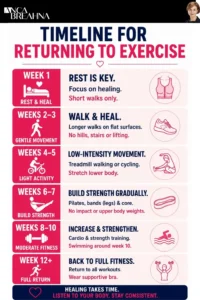
Timeline for Returning to Exercise
Every patient is unique, but the following breast reduction recovery timeline outlines general guidelines based on clinical experience and peer-reviewed evidence. Always follow your surgeon’s advice, as personal healing rates may vary.
✓ Week 1: Rest and Healing
The first week post-surgery should be dedicated entirely to rest and tissue repair. You may begin short indoor walks – around the house or to the bathroom – to help circulation, but extended movement is discouraged. Avoid raising your arms, lifting objects, or bending from the waist.
Compression garments or surgical bras are worn continuously to support your chest and reduce swelling. Pain and fatigue are common during this phase, so listen closely to your body’s signals. Gentle breathing exercises or mindfulness practices can help reduce tension and promote relaxation.
Nutrition and hydration play key roles in supporting healing during this period. High-protein meals, vitamin-rich foods, and plenty of water are ideal.
✓ Weeks 2–3: Gentle Movement
If you’re feeling stronger, you may begin taking slightly longer walks outside – but stick to flat surfaces and a slow pace. Continue to avoid hills, stairs, or brisk movement that increases your heart rate.
Upper body movement remains restricted. You should still avoid reaching, stretching, or lifting anything heavier than a kettle. Short daily walks are beneficial to combat stiffness and maintain circulation.
This is a great time to check in with your surgical team for wound assessments and further personalised guidance. Most swelling is reduced by this point, and incisions begin forming early scar tissue.
✓ Weeks 4–5: Light Activity
Around week four, most patients feel significantly better and ready to move more. At this point, low-intensity exercise like treadmill walking or stationary cycling may be introduced, always with surgeon clearance.
Focus on exercises that engage the lower body or core without involving the arms or chest. You may start gentle stretching of the lower limbs, spine, and hips to restore flexibility. Avoid yoga poses or Pilates movements that require arm engagement.
Supportive garments remain essential during activity. Choose wireless sports bras with wide straps and firm compression to limit bounce and protect incisions.
✓ Weeks 6–7: Controlled Reintroduction
With your surgeon’s approval, low-impact workouts such as gentle Pilates, elliptical trainers, or resistance band exercises for the legs can begin. You can also resume basic core work, seated movements, and balance routines.
While many patients feel well enough to increase activity, you must still avoid any bouncing, chest compression, or weight training involving arms and shoulders. Let comfort be your guide – if you feel tightness, pulling, or swelling, scale back.
Postural exercises and stability training are helpful during this phase, as the chest may feel different in terms of weight distribution. Breathing work and light functional movement can help you adapt.
✓ Weeks 8–10: Moderate Fitness
By this stage, patients often receive clearance to return to moderate-intensity cardio and select strength workouts. You may incorporate bodyweight exercises, light weights for legs, and modified arm movements.
Swimming may be considered if the incisions are fully closed and healed – usually closer to week 10. Water-based exercise is low impact and gentle on joints but still requires a high-support swimsuit or bra.
It’s also a good time to increase endurance gradually. Start with shorter durations and increase by five to ten minutes per session. Be patient with your stamina, as regaining full capacity may take time.
✓ Week 12 and Beyond: Full Return to Fitness
At the 12-week mark, most patients are back to full fitness, with surgeon clearance. High-impact activities such as running, HIIT, dance, and advanced strength training can now resume with caution.
Continue wearing supportive bras, especially during impact activities. The tissues are still adapting, and proper external support protects both comfort and long-term shape.
This is also the ideal time to reintroduce more intense yoga, strength circuits, and endurance training. Make sure to listen to your body, rest between sessions, and maintain hydration.
Download Miss Anca Breahna’s Breast Reduction Surgery Guide
Exercises to Avoid in the First 6–8 Weeks
Certain activities are particularly risky in early recovery and must be postponed. Avoid all high-impact cardio (jumping, jogging, boxing), chest-based strength movements (push-ups, presses, dumbbells), and dynamic stretches that pull the chest or arms above shoulder level.
Swimming before wounds have fully closed risks infection from water exposure and pressure changes. Even yoga and Pilates can cause harm if poses engage pectoral muscles or stretch surgical areas.
Wait for full medical clearance before resuming these forms of exercise. Missing a few extra weeks of your routine is far safer than compromising your surgical results.
Best Exercises for Early Recovery

Low-intensity, lower-body movement is ideal during the first four to six weeks. Walking remains the gold standard – it supports cardiovascular health, boosts energy, and is easy to adapt to your tolerance.
Heel raises, ankle circles, and leg lifts can be performed while seated or lying down. These support blood flow and prevent stiffness without placing strain on the chest.
Gentle breathing exercises, mobility routines for hips and calves, and even mindfulness-based movement (such as tai chi) may help reconnect you to your body while encouraging healthy circulation.
The Role of Proper Support Garments During Exercise
Post-surgical bras are essential during early recovery, and they remain important as you reintroduce movement. These garments stabilise the healing breasts, reduce bouncing, and protect incisions from tension or friction.
Look for wire-free designs with front closures, wide straps, and compressive yet comfortable fabric. During moderate to high-intensity activity, sports bras designed specifically for post-surgery support are ideal.
Miss Anca Breahna will advise when to switch from surgical to exercise bras and recommend trusted brands or styles based on your body and activity level.
Signs You May Be Pushing Too Hard
Watch carefully for signs that your body is struggling to cope with increased activity. Swelling that worsens, red or raised scars, or sharp pain around the incision site all indicate that exercise should be paused.
Wound leakage, delayed healing, or asymmetry may also result from returning to workouts too early. If you feel unusually fatigued, dizzy, or sore after mild movement, it’s time to slow down.
Any new symptoms should be discussed with your surgeon. Prompt attention ensures that minor issues don’t develop into complications.
Breast Reduction Before and After Photos


The Role of Nutrition in Recovery and Exercise Tolerance
Recovery from surgery is a metabolic process that requires energy, hydration, and specific nutrients. Protein supports muscle and tissue repair, while vitamins A and C promote collagen formation and wound healing.
Foods rich in zinc, antioxidants, and omega-3s help reduce inflammation and support immune function. Avoid high-sugar, highly processed foods that may increase inflammation and fatigue.
Staying hydrated before and after light activity improves circulation, supports detoxification, and prevents lightheadedness. A recovery-friendly diet enhances both healing and exercise readiness.
Psychological Benefits of Gradual Return to Activity
Beyond physical recovery, movement plays a powerful role in emotional wellbeing. For many women, the changes from breast reduction surgery are deeply empowering – but they also involve physical adjustments.
Gradually reintroducing exercise helps you reconnect with your new body, build self-trust, and regain confidence. This is especially important if you’re used to an active lifestyle and miss the mental clarity that movement provides.
Framing exercise as a healing, self-honouring practice – not a rush back to performance – leads to better outcomes, reduced stress, and a stronger relationship with your body.
How Miss Anca Breahna Guides Recovery Safely
Miss Anca Breahna is committed to your safe, confident recovery – before, during, and after surgery. At your pre-operative consultation in Chester, she will review your lifestyle, fitness habits, and recovery goals to create a realistic timeline.
She provides detailed instructions for post-operative care, activity pacing, and garment support. At every follow-up visit, your healing progress is carefully evaluated, and recommendations adjusted accordingly.
Her approach blends surgical precision with personal attention, ensuring you feel informed, empowered, and supported throughout your recovery journey.

Breast Reduction Exercise FAQs
Can I do gentle yoga two weeks after surgery?
It’s best to avoid yoga in the first few weeks after breast reduction, even if it feels gentle. Many yoga poses involve arm elevation, chest stretching, or torso twists that can place tension on healing tissues. Wait until at least week six and confirm with your surgeon before resuming any stretching or flow-based practices.
When can I return to weightlifting after breast reduction?
Upper body weightlifting should be postponed until at least 8 to 10 weeks post-surgery, once healing is well established. Lower body exercises using bodyweight or light resistance may be introduced around week six, but only with guidance. Always begin with low intensity and build gradually to avoid strain on incisions or breast tissue.
Can I go for a long walk if I feel fine at week 2?
While walking is encouraged early on, long distances or vigorous pace can still pose a risk. Limit walks to short, level routes, ideally under 20–30 minutes, and monitor how your body responds. If you experience increased swelling, fatigue, or discomfort, reduce your pace and duration.
Is Pilates okay after breast reduction surgery?
Pilates can be a useful way to rebuild core strength and body awareness, but timing is key. Most patients can begin light, mat-based Pilates around week six, provided they avoid chest-focused movements and overhead arm work. Miss Anca Breahna will advise on modifications and safe reintroduction tailored to your recovery.
Will I lose muscle tone if I can’t exercise for weeks?
Some temporary muscle deconditioning may occur during early recovery, but it’s usually minimal and reversible. Walking and light movement help maintain circulation and basic fitness while your body heals. Once cleared for regular activity, you can rebuild strength and tone gradually and safely.
When can I go back to the gym?
Most patients can return to the gym around 8–10 weeks after surgery, depending on their recovery and the types of workouts involved. Begin with light cardio or lower body machines, and avoid group fitness classes or upper body routines initially. Wear a supportive sports bra and check with your surgeon before starting a new routine.
Can I swim four weeks after surgery?
Swimming should be avoided for at least six weeks, or until all incisions are fully closed and healing is confirmed. Chlorinated water can irritate wounds and increase the risk of infection. Once cleared, swimming can be an excellent low-impact exercise, provided you wear a supportive swimsuit.
What happens if I start exercising too soon?
Exercising too early can lead to delayed healing, increased swelling, wound breakdown, or changes in breast shape. Overexertion may also disrupt internal sutures or lead to prolonged discomfort. Always follow your surgeon’s guidance to avoid setbacks and support long-term results.
Is it okay to do stretching or foam rolling?
Gentle lower body stretching may be safe after week four, but upper body stretching or foam rolling should be delayed. These movements can place pressure on healing tissues and affect scar formation. Discuss safe stretching strategies with your surgeon to ensure they align with your stage of recovery.
Do I need a special bra for working out after surgery?
Yes, a supportive, wireless sports bra with a front closure is recommended for physical activity during recovery. It helps reduce breast movement, protects healing tissue, and provides comfort as you resume exercise. Miss Anca Breahna will recommend the appropriate type and when to transition from surgical to sports bras.
Medical References
- Self-reported breast size, exercise habits and BREAST-Q data – an international cross-sectional study of community runners (JPRAS Open) – https://pmc.ncbi.nlm.nih.gov/articles/PMC10339238/
- Reduction Mammaplasty, Obesity, and Massive Weight Loss: Temporal Relationships of Satisfaction with Breast Contour (Plastic and Reconstructive Surgery) – https://journals.lww.com/plasreconsurg/abstract/2011/09000/reduction_mammaplasty,_obesity,_and_massive_weight.3.aspx
- BREAST-Q Analysis of Reduction Mammaplasty: Do Postoperative Complications of Breast Reduction Surgery Negatively Affect Patient Satisfaction? (Aesthetic Surgery Journal) – https://academic.oup.com/asj/article/44/12/NP852/7721054
Next Step: Explore Your Recovery Options With Miss Breahna’s Expert Guidance
Every recovery journey is different, and Miss Anca Breahna’s expertise ensures that your return to exercise is safe, supported, and aligned with your goals. Her personalised care plans, high safety standards, and commitment to natural results have earned her recognition across Chester and the surrounding regions.
Begin your recovery journey with trusted care. Visit the Contact Page or explore the Complimentary Photo Assessment to connect with Miss Breahna and create a plan that supports your active lifestyle – safely, confidently, and beautifully.
Further Reading
- Read more about Breast Uplift – Mastopexy
- Read more about Breast Implant Removal (without Replacement or Uplift)
- Read more about Breast Implant Removal And Uplift
- Read Miss Anca Breahna’s Blog on 8 Myths about Breast Reduction Surgery
- Read Miss Anca Breahna’s Blog on Reduce Swelling and Bruising after Breast Reduction Surgery
- Read Miss Anca Breahna’s Blog on Breast Reduction during Menopause
- Read Miss Anca Breahna’s Blog on How to Reduce Scars after Breast Reduction Surgery
About Anca Breahna – Consultant Plastic Surgeon
 Miss Anca Breahna, PhD, MSc, FEBOPRAS, FRCS (Plast), is a Consultant Plastic, Reconstructive and Aesthetic Surgeon in Chester with extensive experience in breast surgery. Her background in both reconstructive and aesthetic procedures is particularly relevant to breast reduction, where successful planning requires careful consideration of breast volume, shape, skin quality, nipple position and overall body proportions. She also takes into account the physical symptoms that can accompany larger breasts, including discomfort affecting the neck, shoulders and back.
Miss Breahna performs breast reduction surgery in Chester for women seeking to reduce breast size while improving shape and proportion. During consultation, she assesses the amount of tissue to be removed, existing asymmetry, nipple and areola position, scar pattern and the patient’s individual goals before recommending a suitable surgical plan. As an experienced plastic surgeon in Chester, her approach aims to balance size reduction with a proportionate breast shape, while discussing scarring, recovery, sensation and realistic expectations clearly before surgery.
Back to blog