- How Do You Know if Cosmetic Surgery Is Right for You?
- Why Is Deciding on Cosmetic Surgery So Important?
- What Does a Good Cosmetic Surgery Decision Look Like?
- ✓ A Good Decision Is Steady
- ✓ A Good Decision Is Informed
- ✓ A Good Decision Is Free From Pressure
- ✓ A Good Decision Is Planned
- What Questions Should You Ask Yourself Before Cosmetic Surgery?
- ✓ Why Do I Want Cosmetic Surgery?
- ✓ What Would Success Look Like in Everyday Life?
- ✓ Am I Ready for the Trade-Offs?
- What Are the Signs Cosmetic Surgery May Be Right for You?
- When Is It Better to Wait?
- ✓ Emotional Reasons to Wait
- ✓ Practical Reasons to Wait
- ✓ Psychological Reasons to Wait
- How Can a Cosmetic Surgery Consultation Help You Decide?
- Should Alternatives Be Discussed?
- Who Is Suitable for Cosmetic Surgery?
- Who Is More Likely to Be a Good Candidate?
- Who May Be Advised Not to Proceed Yet?
- What Are the Risks of Cosmetic Surgery?
- What Are the Emotional Risks?
- What Happens if the Result Is Not What You Expected?
- Are You Ready for Recovery?
- What Support Will You Need at Home?
- When Should You Contact the Surgical Team?
- What Are the Alternatives to Cosmetic Surgery?
- When Might Waiting Be the Best Alternative?
- What Costs Should You Consider?
- Should Discounts Influence Your Decision?
- Download Miss Anca Breahna's Cost of Surgery Guide
- What Safety Checks Should You Make in the UK?
- Why Does the Consent Process Matter?
- Summary
- FAQs About Deciding To Get Cosmetic Surgery
- Take our Plastic Surgery Quiz to find out if you'd be a good candidate for cosmetic surgery.
- Next Step: A Professional Cosmetic Surgery Consultation With Miss Breahna
- Further Reading
Miss Anca Breahna, PhD, MSc, FEBOPRAS, FRCS (Plast), Consultant Plastic, Reconstructive and Aesthetic Surgeon in Chester, explains that cosmetic surgery may be the right decision when your motivation is stable, your expectations are realistic, and you understand the risks, recovery, and limitations involved. The decision should come from you, without pressure from other people, social media, or time-limited offers.
It is normal to feel uncertain, even when you have been considering a procedure for months or years. Wanting surgery does not automatically mean that you should proceed, and having doubts does not necessarily mean that surgery is wrong for you.
The most reliable decision is informed, unhurried, and based on a careful assessment of your health, anatomy, goals, and personal circumstances. This guide explains how to assess your motivation, recognise when the timing may be right, identify reasons to wait, and use a specialist consultation to make a safer decision.
How Do You Know if Cosmetic Surgery Is Right for You?
Cosmetic surgery may be appropriate when the concern has been present for a long time and your goal is improvement rather than perfection. You should also feel able to accept scars, recovery, uncertainty, and the possibility that the final result may not match an idealised image.
- Your motivation is consistent and personal
- Your expectations are realistic
- You understand the risks and limitations
- You can manage the recovery period
- You are medically and emotionally suitable
The right decision should still feel worthwhile when you consider the full trade-offs rather than only the potential benefits. You should never feel rushed to book surgery before you are ready.
Why Is Deciding on Cosmetic Surgery So Important?
Cosmetic surgery involves more than changing a physical feature because it also requires a medical procedure, recovery period, and financial commitment. The result may be long-lasting, and the decision can affect your physical comfort, confidence, daily routine, and emotional wellbeing.
- Surgery creates permanent scars
- Healing is not completely predictable
- Recovery may disrupt work and family life
- Complications can require further treatment
- Results may change with ageing or weight fluctuation
A good decision considers all these factors before an operating date is chosen. The aim is not to remove every doubt but to ensure that your remaining questions have been answered honestly.
What Does a Good Cosmetic Surgery Decision Look Like?
A sound decision is usually steady, informed, unpressured, and practical. These qualities matter more than excitement, urgency, or certainty on a single day.
- Steady motivation
- Realistic expectations
- Freedom from pressure
- Understanding of risk
- Practical recovery planning
You should be able to explain why you want surgery and what improvement would make the process worthwhile. You should also be able to accept that surgery has limitations and cannot guarantee perfection.
✓ A Good Decision Is Steady
A steady decision is based on a concern that has remained important over time rather than appearing after one photograph, comment, or difficult period. Your motivation may still fluctuate slightly, but the underlying reason should remain recognisable and consistent.
- The concern has been present for months or years
- Your interest remains during good and difficult periods
- You are not reacting to one photograph
- The decision is not driven by a trend
- You would still want the change privately
A useful question is whether you would still want the procedure if no one else noticed the result. A personal and internally grounded motivation is generally more reliable than seeking approval from others.
✓ A Good Decision Is Informed
Being informed means understanding what surgery can realistically improve and what it cannot change. It also means knowing about scars, complications, recovery, uncertainty, and the possibility that further treatment may sometimes be needed.
- The likely degree of improvement
- The location and permanence of scars
- Common and serious risks
- Recovery restrictions
- Possibility of revision surgery
Information should come from a qualified surgeon rather than advertising, social media, or patient photographs alone. Before-and-after images may be helpful, but they cannot predict exactly how your own tissues will heal.
✓ A Good Decision Is Free From Pressure
Cosmetic surgery should be chosen because it matters to you, not because another person has criticised your appearance or expects you to change. Pressure may also come from clinic promotions, seasonal deadlines, social media comparisons, or a desire to look different before a specific event.
- Partner or family pressure
- Time-limited discounts
- Social media comparison
- Upcoming holidays or events
- Fear of missing an appointment date
You should feel free to delay, seek another opinion, or decide against surgery without embarrassment. A responsible surgeon will support reflection rather than creating urgency.
✓ A Good Decision Is Planned
A realistic decision includes the practical details of surgery and recovery. You should know how you will manage work, transport, childcare, household responsibilities, follow-up appointments, and unexpected delays in healing.
- Time away from work
- Help at home
- Transport after surgery
- Childcare or dependant care
- Attendance at follow-up appointments
Even a straightforward recovery may require more support than expected during the early stages. Planning reduces stress and makes it easier to follow postoperative advice safely.
What Questions Should You Ask Yourself Before Cosmetic Surgery?
Self-reflection helps distinguish a stable goal from an impulsive response to stress, comparison, or dissatisfaction. The questions should explore why you want surgery, what you expect from it, and whether you are prepared for the trade-offs.
- Why do I want this procedure?
- What would a good result mean to me?
- Am I expecting improvement or perfection?
- Can I accept scars and recovery?
- Would I still proceed without outside approval?
There are no perfect answers, but your responses should be specific and realistic. Vague hopes that surgery will transform every area of life may indicate that expectations need further exploration.
✓ Why Do I Want Cosmetic Surgery?
Your reason should be personal, stable, and connected to a specific physical concern. Practical motivations may include discomfort, difficulty with clothing, changes after pregnancy or weight loss, or a long-standing feature that affects confidence.
- Physical discomfort
- Difficulty with clothing or exercise
- Long-standing self-consciousness
- Changes after pregnancy or weight loss
- Desire for better proportion or balance
Surgery may support confidence, but it cannot guarantee happiness, repair relationships, or resolve broader emotional distress. The more clearly you can separate the physical goal from wider life problems, the easier it becomes to judge whether surgery is appropriate.
✓ What Would Success Look Like in Everyday Life?
A realistic definition of success focuses on ordinary life rather than photographs, filters, or celebrity comparisons. It might involve feeling more comfortable in clothes, experiencing less physical irritation, or becoming less preoccupied with a particular feature.
- Improved clothing fit
- Greater physical comfort
- Better proportion
- Less daily self-consciousness
- A natural-looking improvement
Goals such as perfect symmetry, invisible scars, or looking exactly like another person are unlikely to be achievable. A good result should still feel worthwhile even if minor asymmetry or imperfections remain.
✓ Am I Ready for the Trade-Offs?
Every cosmetic procedure exchanges one concern for a different set of considerations, including scars, swelling, downtime, and surgical risk. Readiness means accepting these trade-offs rather than focusing only on the anticipated improvement.
- Permanent scars
- Temporary swelling and bruising
- Time away from normal activities
- Uncertainty during healing
- Risk of complications or revision
You do not need to feel enthusiastic about every aspect of recovery. You do need to believe that the likely benefit remains worthwhile after the less appealing parts are included.
What Are the Signs Cosmetic Surgery May Be Right for You?
Surgery may be a reasonable option when your concern is long-standing, your expectations are proportionate, and your circumstances allow safe recovery. Medical suitability must still be assessed individually during consultation.
- You want improvement rather than perfection
- Your motivation has remained stable
- You understand the likely limitations
- You can follow recovery advice
- You are making the decision for yourself
Feeling nervous does not mean that you are unsuitable because most patients have some anxiety before surgery. The more important question is whether you feel informed and able to make a calm decision despite those nerves.
When Is It Better to Wait?
Waiting may be the safest and most constructive choice when your health, emotions, weight, or life circumstances are unstable. Delaying surgery does not close the door permanently and may improve both safety and satisfaction later.
- Major emotional upheaval
- Pregnancy or recent breastfeeding
- Significant planned weight loss
- Active smoking or nicotine use
- Unrealistic expectations
A good surgeon may recommend waiting even when an operation is technically possible. This advice is usually intended to protect your wellbeing and improve the likelihood of a satisfactory result.
✓ Emotional Reasons to Wait
Acute stress can make a physical change feel like a solution to emotional pain. Bereavement, relationship breakdown, burnout, depression, or major life disruption may affect expectations and the ability to cope with recovery.
- Recent bereavement
- Relationship crisis
- Severe work-related stress
- Significant anxiety or low mood
- Major change in identity or circumstances
Waiting allows time to see whether the desire for surgery remains once the immediate crisis has settled. Additional support may also help clarify whether the concern is primarily physical, emotional, or a combination of both.
✓ Practical Reasons to Wait
Timing matters because pregnancy, weight change, smoking, and major commitments can influence healing and alter the result. Surgery may be safer or more predictable once these factors have been addressed.
- Planned pregnancy
- Ongoing breastfeeding
- Unstable weight
- Active nicotine use
- Insufficient recovery support
Postponing treatment may reduce risk and prevent the result from being affected by foreseeable changes. It also gives you time to arrange leave, finances, transport, and support without unnecessary pressure.
✓ Psychological Reasons to Wait
Intense preoccupation with appearance may require careful assessment before surgery is considered. Constant mirror checking, repeated photo analysis, or believing that one feature prevents you from living normally may indicate that surgery alone will not address the underlying distress.
- Repetitive mirror checking
- Frequent comparison with edited images
- Difficulty thinking about anything else
- Repeated desire for multiple procedures
- Belief that surgery will transform every area of life
Discussing these concerns does not mean that they will be dismissed or judged. A responsible surgeon may recommend further support or a period of reflection to help protect you from regret.
How Can a Cosmetic Surgery Consultation Help You Decide?
A cosmetic surgery consultation should test whether your expectations are realistic and whether surgery is medically appropriate for you. It should include discussion of your health, anatomy, goals, alternatives, risks and recovery requirements. For a step-by-step guide to the appointment itself, read what happens at a cosmetic surgery consultation in the UK.
Should Alternatives Be Discussed?
A balanced consultation should include reasonable alternatives rather than presenting surgery as the only solution. Depending on the concern, these may include waiting, non-surgical treatment, lifestyle changes, supportive measures, or no treatment.
- Delaying the decision
- Non-surgical options
- Weight stabilisation
- Supportive garments or physiotherapy
- Choosing no treatment
Alternatives may not reproduce the structural changes achieved through surgery, but they should still be explained honestly. Understanding every reasonable option helps ensure that consent is based on choice rather than assumption.
Who Is Suitable for Cosmetic Surgery?
A suitable candidate is someone whose physical concern, health, expectations, and circumstances support a safe and proportionate operation. Suitability is assessed individually because the same procedure may be appropriate for one patient but unsuitable for another.
- Good general health
- Realistic expectations
- Stable and personal motivation
- Ability to follow recovery advice
- Adequate practical support
Being suitable does not mean having no anxiety or uncertainty. It means that the likely benefits, risks, and recovery requirements have been considered carefully and still feel acceptable.
Who Is More Likely to Be a Good Candidate?
Good candidates usually understand that surgery can improve a feature without creating perfection. They are also willing to take responsibility for preparation, aftercare, and the restrictions required during healing.
- The concern is long-standing
- Weight is stable where relevant
- Smoking and nicotine risks are understood
- Expectations are based on improvement
- The decision is made independently
A good candidate should also feel able to cope with temporary swelling, bruising, and uncertainty while the result develops. Emotional resilience during recovery is often as important as practical preparation.
Who May Be Advised Not to Proceed Yet?
Some patients may need to delay surgery because their current health, expectations, or circumstances increase risk. Others may benefit from further assessment before deciding whether an operation is likely to help.
- Uncontrolled medical conditions
- Active smoking or nicotine use
- Pregnancy or recent breastfeeding
- Significant planned weight change
- Severe or unrealistic expectations
Being advised to wait is not a rejection. It is often a responsible clinical recommendation intended to protect safety and improve the chance of a satisfactory outcome.
What Are the Risks of Cosmetic Surgery?
Every cosmetic procedure carries risks, even when it is performed by an appropriately qualified surgeon in a regulated hospital. The exact risks depend on the operation, your health, your anatomy, and how your body heals.
- Bleeding or haematoma
- Infection
- Delayed wound healing
- Scarring or altered sensation
- Asymmetry or dissatisfaction
Less common but important risks may include anaesthetic complications, blood clots, fluid collections, tissue loss, or further surgery. Your surgeon should explain which risks are most relevant to the specific procedure you are considering.
What Are the Emotional Risks?
Cosmetic surgery can also involve emotional adjustment, particularly when swelling, bruising, or temporary asymmetry affects the early appearance. Some patients feel more vulnerable during recovery than they expected.
- Disappointment during early healing
- Anxiety about temporary changes
- Difficulty adjusting to a new appearance
- Frustration with the pace of recovery
- Regret if expectations were unrealistic
These reactions do not automatically mean that the result is poor. Clear expectations and access to appropriate follow-up can make the recovery period easier to manage.
What Happens if the Result Is Not What You Expected?
No surgeon can guarantee an exact result because healing varies between patients. Small asymmetries, visible scars, or differences from the planned outcome may remain even when surgery has been performed carefully.
- Further observation while swelling settles
- Additional clinical review
- Scar treatment
- Minor corrective treatment
- Revision surgery where appropriate
The clinic’s revision policy should be explained before surgery. You should understand when revision may be considered, what it can realistically achieve, and whether further costs could apply.
Are You Ready for Recovery?
Surgery recovery is an essential part of the decision rather than something to consider after booking surgery. You should understand how the procedure may affect work, driving, exercise, sleep, childcare, and normal household activities.
- Time away from work
- Restrictions on lifting and exercise
- Transport after surgery
- Wound and dressing care
- Attendance at follow-up appointments
Early recovery may involve swelling, bruising, tightness, fatigue, and temporary changes in sensation. The final result often develops gradually rather than appearing immediately.
What Support Will You Need at Home?
The amount of help required depends on the procedure and your usual responsibilities. Planning support in advance can reduce stress and help you follow postoperative restrictions properly.
- Help with children or dependants
- Assistance with meals and housework
- Transport to appointments
- Support with pets
- Someone available during early recovery
You should not assume that you will be able to return immediately to every normal activity. A realistic home plan can protect healing and reduce avoidable complications.
When Should You Contact the Surgical Team?
You should receive written instructions explaining which symptoms are expected and which require urgent advice. Any sudden, severe, or worsening change should be reported promptly.
- Increasing redness or warmth
- Sudden swelling or bleeding
- Worsening pain
- Fever or wound discharge
- Breathlessness, chest pain, or calf pain
You should also know who to contact outside normal clinic hours. Clear access to postoperative advice is an important part of safe surgical care.
What Are the Alternatives to Cosmetic Surgery?
Surgery is not the only valid response to a physical concern. A balanced decision should include consideration of waiting, non-surgical options, practical measures, psychological support, or no treatment.
- Delaying the decision
- Seeking a second opinion
- Non-surgical treatments
- Supportive garments or lifestyle measures
- Choosing no treatment
Alternatives may not achieve the same structural change as surgery, but they may still meet your priorities with less recovery or risk. The right option depends on the concern and the degree of improvement you are seeking.
When Might Waiting Be the Best Alternative?
Waiting can be helpful when the desire for surgery is recent, emotionally driven, or linked to a temporary life event. It can also allow time to improve health, stop smoking, stabilise weight, or organise recovery support.
- Motivation is still changing
- A major event has recently occurred
- Weight is not stable
- Pregnancy plans may affect the result
- Practical support is not yet available
Waiting does not prevent you from reconsidering surgery later. It gives you more information about whether the desire remains consistent over time.
What Costs Should You Consider?
Cosmetic surgery involves more than the surgeon’s operating fee. A clear written quotation should explain the expected charges and what is included in aftercare.
- Surgeon’s fee
- Hospital and theatre charges
- Anaesthetist’s fee
- Implants or specialist materials
- Follow-up and revision arrangements
You may also need to budget for time away from work, transport, support garments, medication, and help at home. The lowest price is not necessarily the safest or best-value option.
Should Discounts Influence Your Decision?
A discount should never be the main reason to proceed with surgery. Time-limited offers can create pressure and make it harder to reflect properly on risks, recovery, and suitability.
- Same-day booking incentives
- Expiring offers
- Package deals
- Pressure to pay a deposit
- Additional procedures offered at reduced cost
Price transparency is appropriate, but urgency is not. You should feel able to leave the consultation and consider the decision without financial pressure.
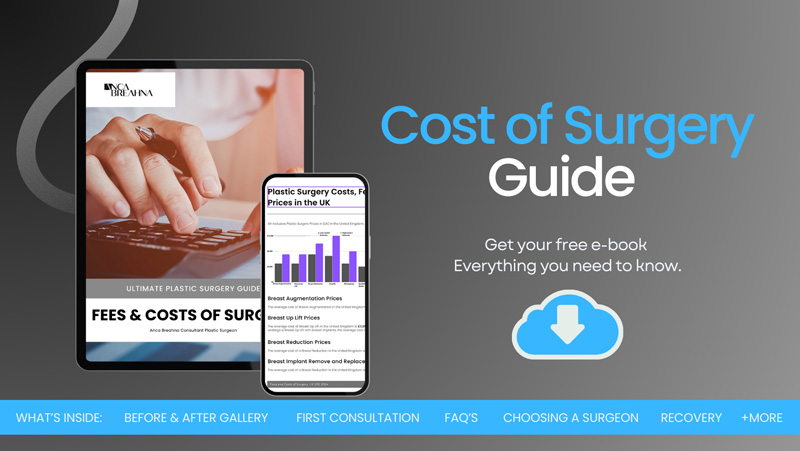
Download Miss Anca Breahna’s Cost of Surgery Guide
What Safety Checks Should You Make in the UK?
Deciding that cosmetic surgery may be right for you is separate from deciding who should perform it. Before proceeding, check professional registration, relevant specialist experience, the clinical setting and aftercare arrangements. Read our detailed guide to how to choose a plastic surgeon in the UK.
The surgeon performing the procedure should be involved in your assessment, recommendation, and consent. Important clinical decisions should not be delegated to a sales adviser or coordinator.
Why Does the Consent Process Matter?
Consent is more than signing a form because it requires genuine understanding and freedom of choice. You should receive information about benefits, risks, alternatives, recovery, and uncertainty in language that is clear to you.
- Time to ask questions
- Written information
- Explanation of alternatives
- Opportunity to change your mind
- Time to reflect before surgery
You should not feel embarrassed about asking for more time or clarification. A good consent process protects your autonomy and supports a more confident decision.
Summary
Cosmetic surgery may be the right decision when your motivation is stable, your expectations are realistic, and you understand the full practical and medical implications. The decision should remain personal, informed, and free from pressure.
- Choose improvement rather than perfection
- Consider risks and recovery honestly
- Make sure the timing is appropriate
- Confirm that you are medically suitable
- Take time before committing
There is no obligation to proceed simply because you attend a consultation. A good decision is one that still feels appropriate after you have considered the trade-offs as carefully as the potential benefits.

FAQs About Deciding To Get Cosmetic Surgery
If I only want surgery right after I take a photo, is that a sign I should wait?
Often, yes. Photo-driven urgency can come from lighting, angles, or a short-term confidence dip. A steadier sign is wanting the change even when you are not actively scrutinising images. Give it time, then revisit the idea when your motivation feels consistent.
What if I keep switching between three different procedures in my head?
That can mean you are trying to solve a broader feeling, like wanting to look fresher or more balanced, rather than a single anatomical issue. A good consultation can translate your real-life goal into the least invasive option that actually matches it.
Is it a red flag if I want surgery mostly for one person’s opinion?
Usually, yes. Surgery chosen to satisfy a partner, friend, or family member can lead to regret because your motivation is external. A stronger foundation is wanting the change for your own comfort and confidence, regardless of who notices.
How do I know if I want “change” or if I want “control”?
If your thinking sounds like “I need this fixed or I cannot relax,” that can be more about control and anxiety than about a feature. If your thinking sounds like “I would enjoy an improvement, but I will be okay if I wait,” that is often a healthier decision state.
What is the weirdest sign that I am not ready yet even if I have the money and time?
If you cannot describe your goal without referencing a celebrity, a filter, or a single ideal image. “I want this to look like me, but improved” is usually a better baseline than trying to match a specific person’s anatomy.
If I am hoping surgery Will make me feel confident in every area of life, is that too much to put on it?
Yes. Surgery can change a feature, but it cannot guarantee a new identity, a new relationship, or a permanent self-esteem upgrade. A good decision is when you see surgery as a targeted improvement, not a life reset.
Can it still be the right decision if I feel guilty for wanting surgery?
Yes. Guilt is common, especially if you were raised to believe wanting change is “vain.” The key is whether your decision is informed, calm, and realistic, and whether you understand the trade-offs and risks.
What if I am doing this because I feel “behind” compared to friends or social media?
That is a strong signal to pause. Trend-based urgency can push you into choices that do not fit your body or your long-term preferences. If your desire reduces when you take a social media break, you have learned something important.
Is it a problem if I am already planning the next procedure before I even do the first one?
It can be. Some people naturally think in projects, but “stacking” procedures mentally can be a sign of chasing an ever-moving target. A good approach is to solve one defined issue, then reassess after healing when your body and mindset have adapted.
What is a good “decision test” before booking anything?
Imagine two futures. In one, you do the surgery and it looks improved but not perfect, and you still have to live with scars and downtime. In the other, you do not do surgery and you continue with the feature as it is. If the first future still feels worth it when you include the trade-offs, you are closer to a solid decision.
Medical References
- Cosmetic procedures: what do I need to consider? – https://www.gmc-uk.org/cdn/documents/cosmetic-procedures-patient-guide_pdf-78080921.pdf
- Decision Analysis in Plastic Surgery: A Primer – https://pmc.ncbi.nlm.nih.gov/articles/PMC2972387/
- Factors that motivate people to undergo cosmetic surgery – https://pmc.ncbi.nlm.nih.gov/articles/PMC3513261/
- Consumer decision-making in cosmetic surgery: An interdisciplinary review identifying key challenges and implications for marketing theory – https://onlinelibrary.wiley.com/doi/full/10.1002/mar.22104
Take our Plastic Surgery Quiz to find out if you’d be a good candidate for cosmetic surgery.
Next Step: A Professional Cosmetic Surgery Consultation With Miss Breahna
If you are asking, should I get cosmetic surgery, the most reliable answer comes from a calm decision process, not from urgency or comparison. A good decision is steady, informed, and realistic, with clear safety checks and time to reflect. UK guidance supports this by emphasising practitioner checks, proper consent, and avoiding pressure in advertising.
If you are considering cosmetic surgery, a consultation with Miss Anca Breahna provides an opportunity to discuss your concerns, motivation, medical history, expectations, treatment options, risks and recovery before deciding whether surgery is appropriate for you.
Further Reading
- Read Patient Information about Preparing for Your Surgery – Patient Instructions
- Read Patient Information about How to Stop Smoking and Vaping before and after Surgery
- Read Patient Information about Patient Resources
- Read Patient Information about Patient Journey