- Quick Answer: What Is the Best Compression Garment After Liposuction?
- What Is a Post-Liposuction Compression Garment?
- Is a Compression Garment the Same as Ordinary Shapewear?
- Why Are Compression Garments Used After Liposuction?
- Do Compression Garments Improve the Final Result?
- What Type of Compression Garment Is Best?
- What Is a Stage-One Compression Garment?
- What Is a Stage-Two Compression Garment?
- Is a Bespoke Garment Better Than a Standard Size?
- Which Compression Garment Is Best for Abdominal Liposuction?
- What Is Best for the Waist, Flanks, and Lower Back?
- Which Compression Garment Is Best for the Thighs and Knees?
- Which Compression Garment Is Best for the Arms?
- Which Compression Garment Is Best for the Chin and Neck?
- Which Compression Garment Is Best for the Male Chest or Breast Area?
- How Should a Compression Garment Fit?
- How Tight Is Too Tight?
- What If the Garment Feels Too Loose?
- How Long Should You Wear Compression After Liposuction?
- Should You Wear the Garment Day and Night?
- Can You Sleep Without Compression?
- Can You Remove the Garment to Shower?
- How Should You Wash and Care for a Compression Garment?
- Do You Need More Than One Compression Garment?
- When Should You Replace the Garment?
- Can Compression Garments Cause Problems?
- When Should You Contact the Surgical Team?
- Liposuction Before and After Photos
- How Does Compression Fit Into Liposuction Recovery?
- What Happens During the First Few Days?
- What Happens During the First Few Weeks?
- When Can Compression Be Stopped?
- Are There Alternatives to Compression Garments?
- Can Massage Replace Compression?
- Can Foam or Abdominal Boards Help?
- Who Can Wear Compression After Liposuction?
- Who May Need a Modified Garment Plan?
- How Much Do Compression Garments Cost?
- Is a More Expensive Garment Better?
- Take our Plastic Surgery Quiz to find out if you'd be a good candidate for cosmetic surgery.
- Summary
- FAQs About Garments After Liposuction
- Next Step: Book A Consultation With Miss Anca Breahna
- Download Miss Anca Breahna's Liposuction Surgery Guide
- Further Reading
Miss Anca Breahna, PhD, MSc, FEBOPRAS, FRCS (Plast), Consultant Plastic, Reconstructive and Aesthetic Surgeon in Chester, explains that the best compression garment after liposuction is one that fits the treated area correctly, provides even support, and follows the personalised instructions given by your surgical team. It should feel secure without causing pain, numbness, restricted breathing, or excessive pressure on the skin.
Compression garments are commonly used after liposuction to help support the treated tissues and manage postoperative swelling. However, the correct garment depends on the area treated, the amount of fat removed, your body shape, the surgical technique, and how your tissues respond during liposuction recovery.
There is no single garment, brand, or compression level that is best for every patient. This guide explains what compression garments are designed to do, how they should fit, which styles may suit different treatment areas, and how to recognise when a garment is too tight, too loose, or unsuitable.
Quick Answer: What Is the Best Compression Garment After Liposuction?
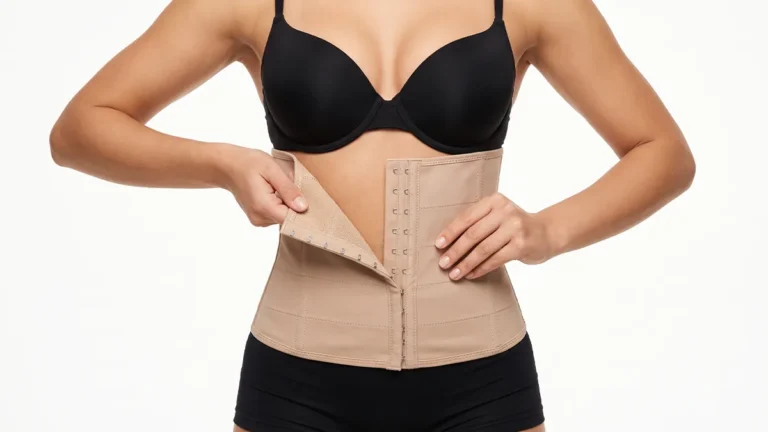
The best compression garment after liposuction is usually a medical-grade garment that fully covers the treated area and applies even, comfortable pressure. It should remain flat against the body, avoid deep folds, and allow normal breathing and movement.
A suitable garment should:
- Cover the full liposuction area
- Apply consistent pressure
- Feel supportive rather than painful
- Avoid rolling or digging into the skin
- Allow comfortable movement
- Protect incisions and dressings
- Be easy to remove for washing
The right choice should be based on your surgeon’s instructions rather than online reviews or another patient’s recovery plan. Compression requirements can change as swelling reduces, so fit should be reviewed throughout recovery.
What Is a Post-Liposuction Compression Garment?
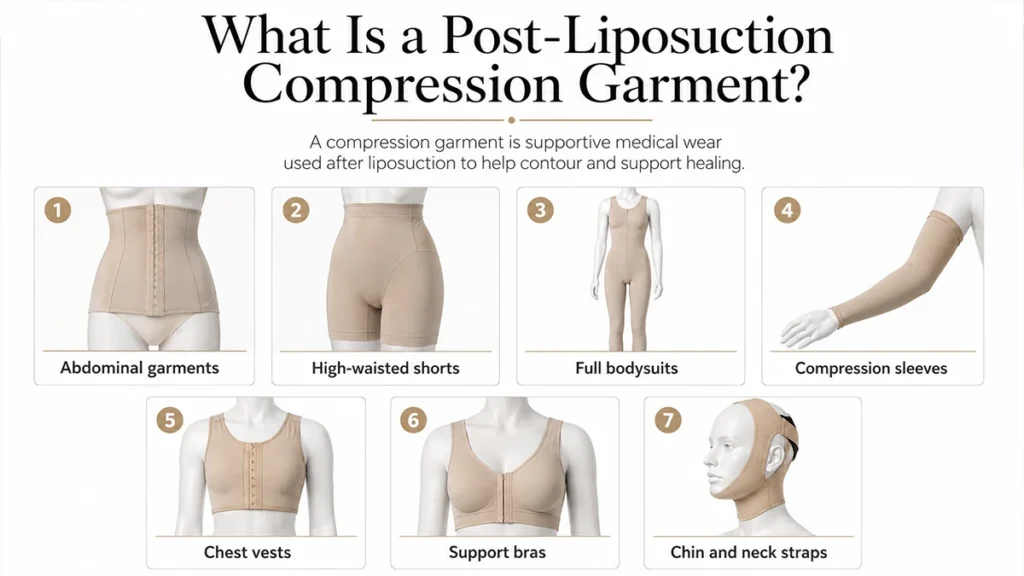
A post-liposuction compression garment is a supportive item of clothing designed to apply controlled pressure over tissues treated with liposuction. It is usually made from elasticated material and shaped to cover a specific part of the body.
Common designs include:
- Abdominal garments
- High-waisted shorts
- Full bodysuits
- Compression sleeves
- Chest vests
- Support bras
- Chin and neck straps
Post-surgical garments differ in length, fabric, fastening style, and strength. The design should match the treatment area so that the entire operated zone is supported rather than only the most visibly swollen part.
Is a Compression Garment the Same as Ordinary Shapewear?
Post-surgical compression garments and ordinary shapewear are not always interchangeable. Everyday shapewear is designed mainly to smooth the body beneath clothing, while a medical garment is selected to support healing tissues.
Postoperative garments may provide:
- More even pressure
- Better treatment-area coverage
- Adjustable fastenings
- Easier access for wound care
- More suitable seam placement
- Greater support during movement
Ordinary shapewear may contain narrow bands, strong seams, or shaping panels that place uneven pressure over healing tissues. It should only be used after liposuction if your surgeon confirms that it is appropriate.
Why Are Compression Garments Used After Liposuction?
Liposuction removes fat from beneath the skin and creates temporary changes within the treated tissues. Swelling, bruising, fluid movement, and a feeling of looseness or tightness are normal during the early stages of healing.
Compression may help by:
- Supporting the treated area
- Managing postoperative swelling
- Reducing tissue movement
- Making activity feel more comfortable
- Encouraging close contact between tissue layers
- Protecting the area during early recovery
The garment is only one part of postoperative care. Good recovery also depends on safe mobilisation, wound care, hydration, nutrition, activity restrictions, and regular follow-up.
Do Compression Garments Improve the Final Result?
Compression garments are widely used after liposuction, but they should not be presented as a guarantee of a smooth or perfect result. Final contour depends on many factors beyond the garment itself.
These factors include:
- Surgical technique
- Skin elasticity
- The amount of fat removed
- Swelling
- Scar tissue
- Weight stability
- Individual healing
- Adherence to postoperative advice
A correctly fitted garment may support recovery and help manage swelling, but it cannot compensate for poor skin quality, significant laxity, or an unsuitable procedure. It also cannot prevent every contour irregularity, seroma, or healing problem.
What Type of Compression Garment Is Best?
The most appropriate garment depends on the area treated, the extent of surgery, and the stage of recovery. A garment that works well for abdominal liposuction may be unsuitable for the thighs, arms, chin, or chest.
Important features include:
- Correct length
- Full coverage
- Even pressure
- Comfortable fabric
- Suitable fastenings
- Minimal seam pressure
- Adjustability
The garment should be practical enough to wear as instructed. A technically suitable garment may still be a poor choice if it repeatedly rolls, causes skin irritation, or is too difficult to remove safely.
What Is a Stage-One Compression Garment?
A stage-one garment is generally intended for the early recovery period when swelling is at its greatest. These garments are often easier to put on and may offer more adjustment than later-stage designs.
Typical features include:
- Softer compression
- Adjustable hooks or fastenings
- Greater allowance for swelling
- Easier access to dressings
- Supportive but flexible fabric
Not every garment needs to be marketed specifically as “stage one” to be suitable. The important issue is whether it matches your surgeon’s instructions and accommodates the expected early swelling safely.
What Is a Stage-Two Compression Garment?
A stage-two garment is sometimes introduced after the initial swelling has reduced. It may fit more closely and provide firmer support than the garment used immediately after surgery.
Possible features include:
- Closer fit
- Firmer compression
- Fewer bulky fastenings
- Smoother appearance beneath clothing
- More structured support
Patients should not automatically move into a smaller or tighter garment. A stage change should be based on healing, swelling, skin condition, and the advice of the surgical team.
Is a Bespoke Garment Better Than a Standard Size?
Bespoke garments are made according to individual measurements, while standard garments are produced in fixed size ranges. Either option can be appropriate when the fit is correct.
Standard garments may be:
- More affordable
- Easier to replace
- Available quickly
- Suitable for many body shapes
- Offered in several compression levels
Bespoke garments may be useful for patients with unusual proportions, multiple treatment areas, or difficulty achieving even coverage with standard sizing. They are not automatically superior for every patient.
Which Compression Garment Is Best for Abdominal Liposuction?
Compression after abdominal liposuction usually needs to cover the abdomen, waist, and any treated flank areas. The garment should extend beyond the full area of liposuction to avoid creating a sharp pressure edge.
Possible options include:
- Abdominal binders
- High-waisted shorts
- Full bodysuits
- Waist-to-thigh garments
- Adjustable abdominal panels
A waistband should not end directly across a treated area if it causes rolling or a deep pressure line. The garment should remain flat when sitting, standing, and walking gently.
What Is Best for the Waist, Flanks, and Lower Back?
When liposuction extends around the waist or into the lower back, front-only abdominal support may be insufficient. The garment should cover the full circumference of the treated area.
Useful designs may include:
- High-waisted shorts
- Full bodysuits
- Garments with back coverage
- Extended waist panels
- Adjustable side fastenings
Coverage should continue beyond the swollen area without restricting breathing or movement. A garment that repeatedly rolls at the waist can create discomfort and uneven pressure.
Which Compression Garment Is Best for the Thighs and Knees?
Thigh liposuction may require shorts, knee-length garments, or full leggings depending on the area treated. The lower edge should not finish across a swollen zone or dig into the skin.
Options may include:
- Mid-thigh shorts
- Knee-length garments
- Full-length compression leggings
- High-waisted thigh garments
- Garments with open or closed crotches
The fabric should sit smoothly through the groin, behind the knees, and around the upper thigh. Bunching or tight bands can create pressure points and swelling below the garment edge.
Which Compression Garment Is Best for the Arms?
Arm liposuction usually requires sleeves or a bolero-style garment that covers the upper arms fully. The design should support the treated tissue without placing excessive pressure in the underarm area.
Suitable features may include:
- Full upper-arm coverage
- Comfortable underarm seams
- Adjustable shoulder or back fastenings
- Soft sleeve edges
- Even pressure from shoulder to elbow
The hands should remain warm and their colour should remain normal. New hand swelling, numbness, or tingling may indicate that the garment is too tight or unsuitable.
Which Compression Garment Is Best for the Chin and Neck?
Chin and neck liposuction may involve a strap or facial garment that supports the tissues beneath the jawline. Correct placement is particularly important because excessive pressure around the neck can be uncomfortable and unsafe.
A suitable garment should:
- Support the chin and jawline
- Avoid obstructing breathing
- Sit comfortably around the ears
- Avoid pressure on the throat
- Remain secure without slipping
The garment should not cause headache, marked jaw pain, numbness, or skin colour changes. Any concern about neck pressure or breathing requires prompt advice from the surgical team.
Which Compression Garment Is Best for the Male Chest or Breast Area?
Chest liposuction may require a compression vest or support garment that covers the full treated area. This is especially relevant when liposuction is combined with gland excision for gynaecomastia.
A chest garment should:
- Cover both sides evenly
- Avoid direct incision pressure
- Remain flat beneath the arms
- Allow comfortable breathing
- Support the chest during movement
The garment should not create a deep edge beneath the chest or across the nipples. Placement may need to be adjusted if swelling is uneven or if dressings are present.
How Should a Compression Garment Fit?
A compression garment should feel close and supportive, but it should not be painful. It should remain flat against the skin and provide even pressure without restricting normal breathing or gentle movement.
Signs of an appropriate fit include:
- Smooth contact with the skin
- No deep folds
- No sharp pressure points
- Normal skin colour
- Comfortable breathing
- Secure coverage during movement
The garment may feel firm, especially during the early stages, but firmness is not the same as pain. Persistent discomfort should not be dismissed as a normal part of compression.
How Tight Is Too Tight?
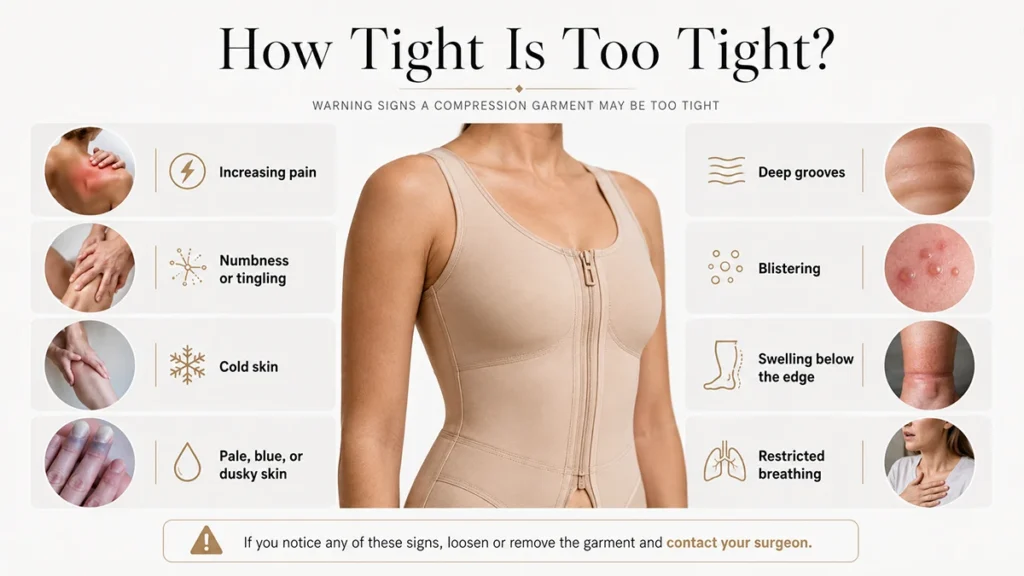
A garment is too tight if it causes symptoms suggesting excessive pressure, reduced circulation, or nerve irritation. Tighter compression does not automatically improve healing.
Warning signs include:
- Increasing pain
- Numbness or tingling
- Cold skin
- Pale, blue, or dusky skin
- Deep grooves
- Blistering
- Swelling below the garment edge
- Restricted breathing
Patients should contact their surgical team if these symptoms occur. They should not simply tolerate severe discomfort or alter the garment without professional advice.
What If the Garment Feels Too Loose?
As swelling reduces, a garment may begin to feel less supportive. This does not always mean that the patient should immediately buy a smaller size.
The surgical team may recommend:
- Adjusting hooks or fastenings
- Reviewing the fit
- Replacing stretched fabric
- Changing garment size
- Moving to a later recovery garment
Additional foam, boards, padding, or tighter shapewear should not be added unless specifically advised. Incorrect layering can create excessive pressure and contour marks.
How Long Should You Wear Compression After Liposuction?
The length of time a compression garment is worn after liposuction varies from one patient to another. It depends on the treatment area, the amount of fat removed, the degree of swelling, skin quality, healing progress, and the postoperative protocol recommended by the surgeon.
Some patients are advised to wear compression for most of the day during the early stages of recovery. Others may use it for a shorter period or move gradually from continuous wear to daytime use only.
Factors that influence wear time include:
- The size of the treated area
- The amount of swelling
- Whether several areas were treated
- Skin sensitivity
- Wound healing
- Comfort and mobility
- The surgeon’s preferred protocol
Compression should not be continued indefinitely without review. The garment plan should be adjusted as swelling settles and the tissues become more stable.
Should You Wear the Garment Day and Night?
Some patients are advised to wear their garment during both the day and night in the early stages of healing. It may only be removed briefly for washing, skin checks, or changing dressings.
Night-time use may help maintain consistent support, but it must remain comfortable and safe. A garment that restricts breathing, causes numbness, or creates severe pressure should not simply be tolerated overnight.
Can You Sleep Without Compression?
Whether you can sleep without compression depends on your stage of recovery and your surgeon’s instructions. Some patients may be allowed to stop night-time wear once early swelling has reduced.
Sleeping without the garment too soon may cause the treated area to feel unsupported or more swollen. However, continuing night-time use for longer than necessary may also increase discomfort, heat, moisture, or skin irritation.
Can You Remove the Garment to Shower?
Patients are often allowed to remove their garment for washing once their surgeon confirms that it is safe to do so. Timing depends on the wound closure, dressings, drains, and the exact procedure performed.
The first shower after surgery should be approached carefully because some patients feel light-headed when the garment is removed. It may be helpful to have someone nearby and to avoid very hot water.
How Should You Wash and Care for a Compression Garment?
Compression garments should be kept clean because they are worn close to healing skin for prolonged periods. Sweat, wound leakage, and moisture can contribute to odour, irritation, and fabric deterioration.
Good garment care may include:
- Following the manufacturer’s washing instructions
- Using a mild detergent
- Avoiding heavily fragranced products
- Avoiding fabric softener if it damages elasticity
- Air-drying rather than using high heat
- Checking seams and fastenings regularly
- Replacing overstretched garments
The garment should be completely dry before it is worn again. Damp fabric may increase skin irritation and may not provide consistent support.
Do You Need More Than One Compression Garment?
Having a second garment can be practical because one can be worn while the other is washed and dried. This may be particularly helpful during warm weather or when swelling and wound leakage require frequent garment changes.
A second garment is not always essential, and patients should not feel pressured to purchase several expensive items without advice. The number required depends on wear time, washing frequency, and whether the garment is included in the surgical package.
When Should You Replace the Garment?
A garment may need replacing if it becomes stretched, damaged, uncomfortable, or no longer supportive. Changes in swelling may also mean that the original size is no longer suitable.
Signs that a garment may need review include:
- Loose or rippled fabric
- Broken hooks or zips
- Reduced elasticity
- Persistent rolling
- Uneven pressure
- Deep folds
- Increasing skin irritation
A smaller garment should not be selected automatically. The surgical team should assess whether the change reflects normal recovery or an unsuitable fit.
Can Compression Garments Cause Problems?
Compression garments are generally well tolerated when they are correctly fitted and regularly checked. Problems can arise when the garment is too tight, poorly positioned, excessively worn, or unsuitable for the patient’s body shape.
Potential problems include:
- Skin irritation
- Blistering
- Pressure marks
- Moisture build-up
- Wound rubbing
- Nerve irritation
- Restricted circulation
- Swelling beyond the garment edge
- Breathing restriction
- Increased discomfort
A garment should support recovery rather than create additional pain or skin damage. Any concern should be discussed with the surgical team promptly.
When Should You Contact the Surgical Team?
Some symptoms require medical advice rather than a simple garment adjustment. Sudden or severe changes should not be dismissed as normal postoperative discomfort.
Contact the surgical team if you develop:
- Increasing or severe pain
- Sudden one-sided swelling
- New numbness or tingling
- Pale, blue, or cold skin
- Rapidly worsening bruising
- Wound discharge
- Unpleasant odour
- Fever
- Shortness of breath
- Calf pain or swelling
A garment should never be used to hide or self-treat a possible complication. It should be removed or adjusted only according to the advice provided.
Liposuction Before and After Photos


How Does Compression Fit Into Liposuction Recovery?
Compression is only one part of recovery after liposuction. Good healing also depends on safe movement, wound care, hydration, nutrition, activity restrictions, and follow-up.
Other important recovery measures include:
- Gentle walking
- Taking prescribed medication
- Keeping incisions clean
- Avoiding strenuous exercise
- Maintaining hydration
- Eating a balanced diet
- Attending review appointments
A garment cannot replace careful monitoring or medical advice. It should be used as part of a complete postoperative plan.
What Happens During the First Few Days?
The first few days commonly involve swelling, bruising, tightness, soreness, and temporary fluid leakage from small incisions. The garment may feel firm because the tissues are swollen.
During this stage, patients may need help with:
- Putting the garment on
- Removing it safely
- Checking the skin
- Changing dressings
- Walking gently
- Monitoring swelling
The garment should remain smooth and correctly positioned. Deep folds or rolled edges should be corrected before they create pressure marks.
What Happens During the First Few Weeks?
Swelling usually changes gradually during the first few weeks, and the garment may begin to fit differently. Some areas can remain firm, uneven, or numb while the tissues settle.
Patients may notice:
- Reduced bruising
- Fluctuating swelling
- Temporary firmness
- Improved movement
- Changes in garment fit
- Gradual return to light work
Recovery is not always completely even from one side to the other. Early asymmetry often reflects swelling rather than the final result.
When Can Compression Be Stopped?
Compression can usually be reduced or stopped once the surgeon is satisfied with healing and swelling control. This decision should be based on progress rather than a fixed date alone.
Factors considered may include:
- Reduced swelling
- Stable wounds
- Improved comfort
- Good skin condition
- Tissue support
- Follow-up findings
Patients should not continue compression indefinitely simply because the garment feels reassuring. Prolonged wear can increase heat, moisture, and skin irritation without providing additional benefit.
Are There Alternatives to Compression Garments?
Not every patient follows the same compression protocol after liposuction. Depending on the procedure and surgeon’s preference, alternatives or modified forms of support may be used.
Possible alternatives include:
- Elastic bandaging
- Abdominal binders
- Support bras
- Temporary wraps
- Area-specific dressings
- Limited compression
- No compression in selected cases
These options should not be selected without guidance. The treating surgeon should decide whether they are appropriate for the procedure and patient.
Can Massage Replace Compression?
Massage or manual lymphatic drainage may sometimes be recommended during recovery. It should only begin when the surgeon confirms that the tissues and wounds are ready.
Massage does not replace:
- Medical review
- Wound care
- Compression when prescribed
- Safe mobilisation
- Treatment of complications
Poorly timed or overly forceful massage may worsen discomfort or swelling. It should be carried out only by an appropriately trained practitioner following surgical advice.
Can Foam or Abdominal Boards Help?
Foam pads and abdominal boards are sometimes used beneath compression garments in selected patients. They may be intended to distribute pressure or provide additional support.
Incorrect use can cause:
- Pressure ridges
- Skin injury
- Excessive tightness
- Uneven compression
- Pain
- Contour marks
These products should not be added simply because they are recommended online. Their use should be based on examination and personalised advice.
Who Can Wear Compression After Liposuction?
Most patients can wear a suitable compression garment after liposuction. The design, fit, pressure, and duration should be adjusted to the individual.
Extra care may be required in patients with:
- Sensitive or fragile skin
- Reduced sensation
- Circulation problems
- Diabetes
- Nerve conditions
- Lymphatic disorders
- Material allergies
- Significant swelling
- Breathing difficulties
Suitability should be reviewed before surgery and during follow-up. A standard garment may need to be modified or replaced if problems develop.
Who May Need a Modified Garment Plan?
Some patients have body proportions, medical conditions, or treatment patterns that make standard garments less suitable. These patients may benefit from a bespoke garment or a more cautious compression schedule.
A modified plan may be considered for:
- Multiple treatment areas
- Unusual body proportions
- Previous scars
- Drains or dressings
- Skin sensitivity
- Vascular concerns
- Neurological conditions
The aim is to achieve safe and even support without creating avoidable pressure. Regular review is particularly important in higher-risk patients.
How Much Do Compression Garments Cost?
The cost of a post-liposuction compression garment varies according to its size, design, construction, and intended treatment area. Standard garments are generally less expensive than bespoke options.
The price may be influenced by:
- Brand
- Fabric
- Garment length
- Fastening style
- Compression level
- Standard or bespoke sizing
- Number of garments required
Patients should ask whether the first garment is included in their surgical quotation. They should also confirm whether replacement garments, resizing, or a second garment involve additional charges.
Is a More Expensive Garment Better?
A more expensive garment is not automatically safer or more effective. Correct fit, appropriate coverage, comfort, and surgeon approval are more important than branding.
A higher price does not guarantee:
- Better pressure distribution
- Improved healing
- Greater comfort
- Fewer complications
- A better final result
The best garment is the one that suits the procedure and the patient’s anatomy. Cost should be considered alongside quality, durability, and clinical suitability.
Take our Plastic Surgery Quiz to find out if you’d be a good candidate for cosmetic surgery.
Summary
The best compression garment after liposuction is one that covers the full treated area, applies even support, and remains comfortable enough to wear as instructed. It should not cause pain, numbness, skin colour changes, breathing restriction, or deep pressure marks.
There is no single garment, brand, or wear schedule that is suitable for every patient. Personalised advice from the treating surgeon is essential because fit and compression needs may change throughout recovery.

FAQs About Garments After Liposuction
Do I need a compression garment if I only had a small area treated?
Yes. Even small areas can develop swelling and benefit from compression. A garment designed for that specific zone helps support healing and reduce discomfort.
Can I shower with the garment on?
No. You should remove compression garments for showering to keep them clean and dry. Make sure you have a plan to put them back on immediately afterward.
Will garments reduce bruising after liposuction?
Yes. Compression helps minimise fluid accumulation and capillary leakage, which reduces the severity and duration of bruising.
Can I wear my garment while sleeping?
In the early weeks, yes – wearing it during sleep provides continuous support and helps control swelling.
How do I know if my garment fits correctly?
A correct fit is snug but not painful. You should be able to breathe comfortably and not experience numbness or tingling.
What if my garment rolls or slips?
Look for garments with wider bands, straps, or silicone grips. Your surgeon can recommend styles that stay in place without irritating your skin.
Do garments help with long‑term skin tightening?
Compression supports tissue adaptation but does not replace surgical results. It enhances contour while the body heals.
Can I exercise in my garment?
Your surgeon will advise when it’s safe to exercise. When you do, wearing your garment supports lymphatic drainage and reduces bounce or tissue movement.
How often should I replace my garment?
If your garment loses elasticity, becomes stretched, or no longer fits snugly, it should be replaced to maintain effective compression.
Are there garments suitable for warmer weather?
Yes. Breathable, moisture‑wicking fabrics are available for comfort in warm temperatures.
Medical References
- Role of Compression after Liposuction / Veins and Lymphatics / – https://www.pagepressjournals.org/vl/article/view/5990/6035
- Preliminary Results Using a Magnet-Embedded Compression Garment after Liposuction Surgery / The American Journal of Cosmetic Surgery / – https://journals.sagepub.com/doi/abs/10.1177/074880680502200302
- Effect of Compression Garments on Post-Abdominoplasty Outcomes: A systematic Review of the current Evidence / JPRAS Open / – https://www.sciencedirect.com/science/article/pii/S2352587824000780
- Restoration Liposuction of the Abdomen: High-Definition Liposuction With Umbilicus and Lower Abdomen Improvement Using Polydioxanone Threads / Aesthetic Surgery Journal / – https://pmc.ncbi.nlm.nih.gov/articles/PMC10263275/
Next Step: Book A Consultation With Miss Anca Breahna
Choosing the right compression garment after liposuction is essential to your comfort and long‑term results. If you’re planning liposuction or want personalised guidance on garment selection, sizing, and recovery strategy, book a private consultation with Miss Anca Breahna, Consultant Plastic & Reconstructive Surgeon in Chester. Start by sending an enquiry online or a Complimentary Photo Assessment to receive tailored recommendations that support your body and aesthetic goals. Visit our Contact Page and take the next step toward a smooth, confident recovery.
Download Miss Anca Breahna’s Liposuction Surgery Guide
Further Reading
- Read more about Body Procedures
- Read more about Tummy Tuck (Abdominoplasty) in Chester
- Read more about Mummy Makeover
- Read Miss Anca Breahna’s Blog on Liposuction vs Tummy Tuck
- Read Miss Anca Breahna’s Blog on How to Get Rid of Excess Fat & Skin – Treatment Options
- Read Miss Anca Breahna’s Blog on How to Get Rid of Lower Back Fat and Bulges
- Read Miss Anca Breahna’s Blog on How to Get Rid of Abdominal Fat or Belly Fat