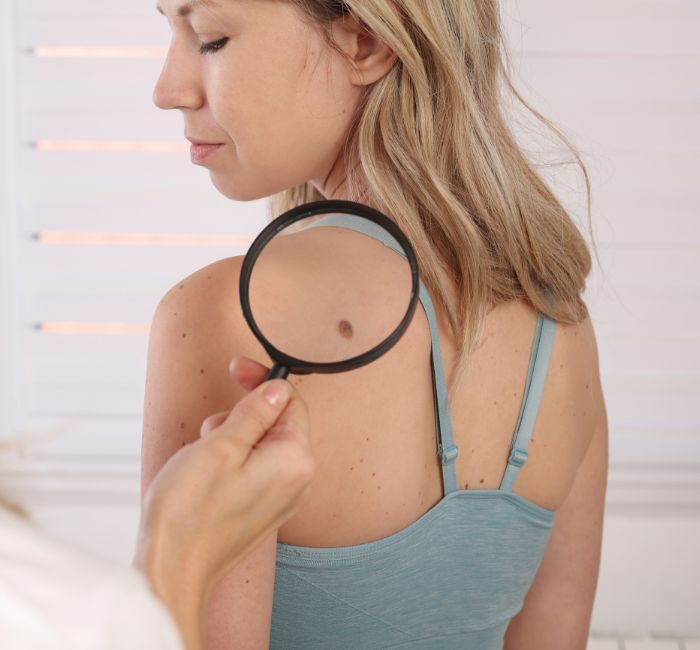
Birthmarks, the patches or spots that are visible on the skin from birth, are unique to each person. While some individuals wear them proudly as a part of their identity, others might wish for them to be less visible or even completely removed, particularly if they’re located in highly noticeable places. That’s where birthmark removal surgery comes in.
Chester Consultant Plastic Surgeon Anca Breahna performs birth mark removal surgery, as well as other face, body and skin procedures.
What is Birthmark Removal Surgery
Birthmark removal surgery is a medical procedure designed to lessen the appearance of or completely remove birthmarks. Birthmarks are irregularities on the skin that are present at birth or appear shortly thereafter. They can be any size, shape, and colour, ranging from brown, tan, black, pale blue, pink, red, or purple. The two main types of birthmarks are vascular birthmarks (such as strawberry marks and port-wine stains) and pigmented birthmarks (like café-au-lait spots and Mongolian spots).
Not all birthmarks are the same, and therefore, different techniques are used for their removal, often depending on their type, size, location, and depth. While some procedures employ laser therapy, others might involve surgical excision. Importantly, the decision to undergo birthmark removal surgery is a personal one, and it’s essential to consult with Anca to discuss the options.
Who Needs Birthmark Removal Surgery?
Birthmark removal surgery is typically considered by those who have visible birthmarks that they feel affect their appearance or cause discomfort. However, not everyone with a birthmark is a candidate for this procedure. Suitable candidates usually include:
- Individuals who have large or highly visible birthmarks that they feel affect their appearance negatively
- People who have birthmarks that might have health implications. Some birthmarks, particularly certain types of mole-like birthmarks, may have a potential risk of becoming cancerous
- Individuals who experience symptoms from their birthmarks, such as itching or bleeding
It’s vital to remember that each case is unique. Therefore, the decision should be made following an in-depth discussion with your plastic surgeon who can provide guidance based on the specific situation.
Benefits of the Birthmark Removal Procedure
While it’s a personal decision, there are several reasons why someone might choose to have birthmark removal surgery. Some of the most common benefits of this procedure include:
- Improved appearance: For many, the primary benefit is the potential enhancement of their appearance, especially if the birthmark is in a noticeable place
- Enhanced comfort: Some birthmarks can be uncomfortable or cause distressing symptoms such as itchiness or soreness. Removing the birthmark can alleviate these symptoms
- Peace of mind: For individuals with birthmarks that could carry a risk of malignancy, removal can provide a sense of relief
It’s essential to have realistic expectations about the results, though. In some cases, the procedure may not entirely remove the birthmark but could make it less noticeable. Also, some types of birthmark removal surgery may leave a scar, which should be considered when weighing up the potential benefits.
Types of Birthmark Removal Procedures
There are several types of birthmark removal procedures, and the best approach usually depends on various factors including the type, size, location, and depth of the birthmark. Here are some common methods:
✓ Laser Therapy
This is a commonly used method for the removal or reduction of vascular birthmarks such as port-wine stains and haemangiomas.
- Procedure: During laser therapy, a handheld device is applied to the skin’s surface. The device emits pulses of light energy that are absorbed by the blood vessels or pigment in the skin, causing the birthmark to fade over multiple sessions
- Effectiveness: The number of treatments required can vary widely, depending on the birthmark’s size and depth
- Considerations: There can be some discomfort during the procedure, similar to the feeling of a rubber band snapping against the skin. Cooling or numbing agents can be used to reduce this discomfort
✓ Surgical Excision
This is often used for larger birthmarks or those that have not responded to other treatments.
- Procedure: Surgical excision involves cutting out the birthmark under local or general anaesthesia, depending on the size and location. The wound is then closed with stitches, and in some cases, a skin graft may be needed
- Effectiveness: This is a one-time procedure and is usually effective at completely removing the birthmark
- Considerations: The main concern with this method is the potential for scarring, so it’s usually reserved for birthmarks that can’t be effectively treated with other methods
✓ Cryotherapy
This procedure is often used for smaller, surface-level pigmented birthmarks.
- Procedure: In cryotherapy, a specialist applies liquid nitrogen directly to the birthmark using a spray device or cotton-tipped applicator. This freezes and destroys the abnormal skin cells
- Effectiveness: The success of cryotherapy can depend on the type and size of the birthmark. Multiple sessions may be needed
- Considerations: Cryotherapy can cause mild to moderate discomfort and might result in blistering, which usually heals within a week
Pulsed Dye Laser (PDL) Treatment
This is commonly used for flat, red vascular birthmarks such as port-wine stains.
- Procedure: The pulsed dye laser emits a specific type of light that is absorbed by the blood vessels of the birthmark, causing them to shrink over time and reduce the birthmark’s appearance
- Effectiveness: Multiple treatments are usually needed, typically spaced around one month apart
- Considerations: While this treatment is well-tolerated, it can cause temporary bruising, swelling, or redness in the treated area
Each of these procedures has its own set of benefits and risks, and the most appropriate one will depend on the individual’s circumstances.
How is the Birthmark Removal Procedure Performed
The exact steps involved in birthmark removal can vary significantly based on the type of procedure used. Here’s a more detailed look at how each method is performed:
Laser Therapy: Laser therapy is a non-invasive procedure often used for vascular birthmarks.
- Before the procedure: The skin is cleansed, and a numbing cream may be applied to minimise any discomfort. You’ll wear protective eyewear to shield your eyes from the laser
- During the procedure: A handheld device that emits intense light pulses is passed over the birthmark. The energy from the light is absorbed by the blood vessels or pigment in the skin, which damages the cells causing the birthmark
- After the procedure: The area is usually cooled to ease any discomfort and minimise swelling. You may need multiple sessions, usually spaced four to six weeks apart, to achieve the best results
Surgical Excision: This method is often reserved for larger birthmarks or those that do not respond to other treatments.
- Before the procedure: The area is cleansed, and you will be given a local or general anaesthetic, depending on the size and location of the birthmark
- During the procedure: Your surgeon makes an incision around the birthmark, removes it, and then stitches the wound closed. For large birthmarks, a skin graft might be required
- After the procedure: Once the anaesthesia wears off, there may be some discomfort. The area should be kept clean, and you’ll need a follow-up appointment to have the stitches removed
Cryotherapy: This technique is used for smaller, surface-level pigmented birthmarks.
- Before the procedure: The skin is cleansed, and protective measures are taken to shield the surrounding skin from the liquid nitrogen
- During the procedure: A specialist applies liquid nitrogen to the birthmark using a spray device or cotton-tipped applicator. This freezes and destroys the abnormal skin cells
- After the procedure: The area can be washed gently with soap and water, and a bandage may be applied. The treated area may form a blister, crust over, and then fall off within one to two weeks
Pulsed Dye Laser (PDL) Treatment: This method is particularly effective for flat, red vascular birthmarks.
- Before the procedure: The area is cleaned, and a topical anaesthetic may be applied. You’ll also be given protective eyewear
- During the procedure: The specialist uses the pulsed dye laser device to direct light energy to the birthmark. The blood vessels absorb the light, which causes them to shrink and reduce the appearance of the birthmark
- After the procedure: Cooling measures are often used to soothe the area and reduce inflammation. Temporary side effects can include redness, bruising, or swelling. Multiple sessions, usually a month apart, may be necessary
Recovery after Birthmark Removal Procedure
After birthmark removal surgery, some aftercare will be needed to ensure proper healing and to minimise the risk of complications. Post-surgery care can vary based on the procedure, but it generally involves:
- Keeping the area clean to prevent infection
- Avoiding sun exposure to the treated area
- Using prescribed creams or ointments to support the healing process
For laser therapy, there may be some redness, swelling, or bruising following the procedure, which usually subsides within a few days.
Following surgical excision, there might be some discomfort, and over-the-counter painkillers may be recommended. Stitches are usually removed a week or two post-surgery, and there may be a scar that will gradually fade over time.
Cryotherapy can cause mild to moderate discomfort and might result in blistering, which usually heals within a week.
Risks of Birthmark Removal Procedure
As with any medical procedure, birthmark removal comes with potential risks, which can include:
- Scarring: There is a risk of visible scarring, especially with surgical excision. However, a skilled plastic surgeon can minimise this risk
- Infection: If post-surgery care instructions are not followed properly, there can be a risk of infection
- Changes in skin colour: The treated area might become lighter or darker than the surrounding skin
- Incomplete removal: Particularly with larger birthmarks, it may not be possible to remove the birthmark completely
- Allergic reaction to anaesthesia: This is a rare but potential risk with any procedure involving anaesthesia
While these risks might seem concerning, it’s essential to remember that birthmark removal surgery is generally safe and complications are rare.
Medical References about Birth Mark Removal Surgery
- Birthmarks: Diagnosis and Treatment – American Academy of Dermatology
- What to Know about Birthmarks – Medical News Today
- Birthmark | Mole | Hemangioma | Mongolian Spot – Medline Plus
- Red Birthmarks, Hemangiomas, and Your Skin – WebMD
- Surgical Problems in the Treatment of Birthmarks – NCBI