- Understanding Skin Cancer Treatment Options
- Types of Skin Cancer
- ✓ Basal Cell Carcinoma (BCC)
- ✓ Squamous Cell Carcinoma (SCC)
- ✓ Melanoma
- ✓ Other less common types include:
- Skin Cancer Risk Factors and Prevention
- Diagnosis of Skin Cancer
- ✓ Physical Examination
- ✓ Biopsy Techniques
- ✓ Imaging Tests
- Surgical Treatments for Skin Cancer
- Other Treatments That May Be Used for Skin Cancer
- ✓ Radiation Therapy
- ✓ Chemotherapy
- ✓ Photodynamic Therapy (PDT)
- ✓ Immunotherapy
- ✓ Targeted Therapy
- FAQs about Treatments and Solutions for Skin Cancer
- Further Reading about Skin Treatments at Anca Breahna Plastic Surgeon
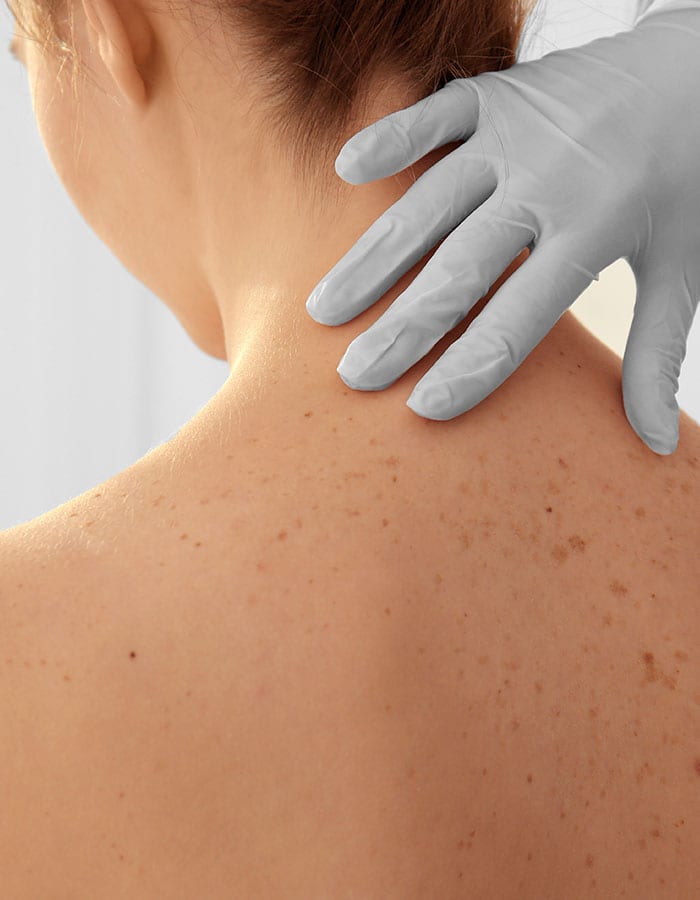
Understanding Skin Cancer Treatment Options
Treatment for skin cancer depends on several factors, including the type of cancer, its size, location, depth, pathology and whether it has spread beyond the skin. Some skin cancers can be treated with surgical excision, while others may require assessment and treatment from a wider specialist team.
Miss Anca Breahna is a Consultant Plastic Surgeon with experience in skin cancer surgery and reconstruction. Where surgical treatment is appropriate, this may involve biopsy, excision of the lesion with an appropriate margin and, in some cases, reconstruction of the resulting wound.
This guide explains the main treatment pathways that may be considered for basal cell carcinoma (BCC), squamous cell carcinoma (SCC) and melanoma, including situations in which care from dermatology, oncology or another specialist skin cancer service may be required.
Types of Skin Cancer
There are several types of skin cancer, each with its own characteristics and risk factors. Let’s explore the most common forms:
✓ Basal Cell Carcinoma (BCC)
BCC is the most prevalent type, accounting for around 75% of non-melanoma skin cancers. It develops from the basal cells in the deepest part of the skin’s outer layer (epidermis). While rare for BCC to spread to other parts of the body, it’s possible to have multiple occurrences. Most often diagnosed in middle-aged or older individuals, BCCs typically appear on sun-exposed areas.
✓ Squamous Cell Carcinoma (SCC)
Representing approximately 23% of non-melanoma skin cancers, SCCs are generally faster-growing than BCCs. They often develop on sun-exposed skin and can, in rare cases, spread to deeper layers of skin and nearby lymph nodes. SCCs most commonly affect older adults.
✓ Melanoma
Melanoma is the deadliest form of skin cancer, developing from melanocytes (pigment-producing cells). It can arise within an existing mole or appear as a new dark spot on the skin. Early detection is crucial for effective treatment and improved outcomes.
✓ Other less common types include:

Remember, early detection and regular skin checks are essential for effective management of any type of skin cancer.
For more information about recognising changes in the skin, see our guide to what skin cancer can look like.
Skin Cancer Risk Factors and Prevention
Ultraviolet (UV) exposure is an important risk factor for many skin cancers, alongside factors such as skin type, age, previous skin cancer and family history. Reducing excessive UV exposure, using appropriate sun protection and avoiding tanning beds may help reduce risk.
Patients should also be aware of new or changing skin lesions and seek medical advice about anything that appears unusual or concerning. For more information about warning signs and changes to look for, read our guide to what skin cancer can look like.
Diagnosis of Skin Cancer
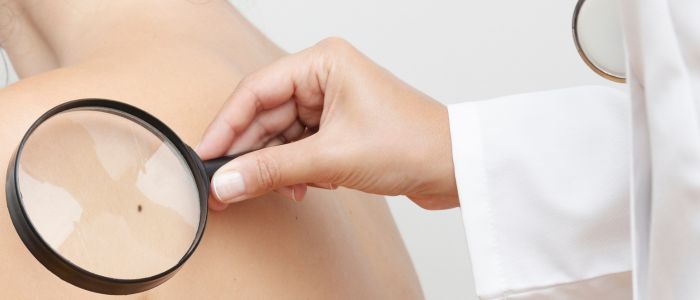
Early diagnosis of skin cancer can significantly improve the outcome and simplify the treatment process. If you have identified potential symptoms of skin cancer, the next step is to undergo a professional evaluation. Here’s what you can expect during the diagnostic process:
✓ Physical Examination
If a lesion requires surgical assessment, Miss Breahna will examine the area and review relevant clinical history, previous investigations or pathology where available. Depending on the findings, biopsy or excision may be recommended, or further specialist assessment may be appropriate.
✓ Biopsy Techniques
If a lesion appears suspicious, Anca might recommend a biopsy, the only definitive way to diagnose skin cancer. This involves removing all or part of the growth for microscopic examination. There are several types of biopsies:
- Excisional biopsy: The entire growth is removed; commonly used when melanoma is suspected.
- Incisional biopsy: Only a portion of the growth is removed; used when the lesion is too large to be entirely removed initially.
- Shave biopsy: The top layer of the skin is shaved off; often used for superficial skin layers.
- Punch biopsy: A circular tool is used to remove a small core of skin, including deeper layers.
✓ Imaging Tests
For advanced cases, especially if melanoma is diagnosed and there is a concern it has spread, imaging tests like X-rays, CT scans, MRI scans, or PET scans might be recommended to determine the extent of the spread and plan appropriate treatment strategies.
Surgical Treatments for Skin Cancer
Surgical intervention is a common and effective method for treating skin cancer, especially when detected early. The type of surgery depends on the type and stage of cancer, its size, and location. Common surgical and procedural approaches may include:
- Excisional Surgery: This is the most straightforward type of surgery where the cancerous tissue and a margin of healthy tissue around it are cut out of the skin. The removed tissue is usually sent for histopathological examination, which can confirm the diagnosis and assess the excision margins. For a closer look at how these procedures are performed and what to expect, see our blog on the removal of cancerous skin lesions. Many skin lesion excisions can be performed under local anaesthetic, although the anaesthetic and reconstructive approach depend on the lesion, its location and the extent of surgery required.
- Cryosurgery: This method uses liquid nitrogen to freeze and destroy abnormal cells. It is often used for pre-cancerous conditions and small, early-stage cancers located on the surface of the skin. Cryosurgery is less invasive than other surgical methods and usually leaves minimal scarring.
The most appropriate treatment depends on the type of skin cancer, its size, location, depth, pathology and the patient’s wider clinical circumstances.
Other Treatments That May Be Used for Skin Cancer
Treatment depends on the type, stage and location of the cancer. While Miss Breahna’s role may involve surgical assessment, excision and reconstruction, some patients require treatment from dermatology, oncology or other specialist teams. These treatments may include radiotherapy, topical or systemic medicines, photodynamic therapy, immunotherapy or targeted therapies.
✓ Radiation Therapy
Radiation therapy is a treatment option for skin cancer that involves using high-energy rays to target and destroy cancer cells. It is often used when surgical methods are not viable or in selected circumstances as part of treatment following surgery.
Radiation therapy can be an effective treatment for both basal cell and squamous cell carcinomas, particularly in the early stages. It’s also sometimes used for more advanced melanomas, especially when they have spread to other parts of the body.
✓ Chemotherapy
Chemotherapy involves the use of drugs to kill cancer cells, and it can be employed in various ways to treat skin cancer, depending on the stage and type of the disease. Chemotherapy can be a standalone treatment or part of a combination approach that includes surgery and radiation. The effectiveness of chemotherapy can vary widely, with factors such as the type of skin cancer and its stage playing critical roles in determining the best chemotherapy regimen.
✓ Photodynamic Therapy (PDT)
Photodynamic Therapy (PDT) is a treatment that combines light-sensitive medication with a light source to destroy cancer cells. It is particularly used for treating superficial skin cancers and pre-cancerous growths, such as actinic keratosis.
The treatment involves applying a light-sensitive drug, known as a photosensitiser, to the affected area of the skin. This drug is left to be absorbed by the skin cells for several hours or days. Once absorbed, the area is then exposed to a specific wavelength of light. This light activates the photosensitiser, producing a form of oxygen that kills nearby cancer cells. The treatment effectively targets and destroys abnormal cells while sparing the surrounding healthy tissue.
PDT is effective for treating certain types of skin cancers that are confined to the outer layers of the skin. PDT avoids surgical excision in selected superficial lesions, although suitability, outcomes and side effects vary. However, it is less effective against thicker skin cancers or those that have penetrated deeper into the skin. Another limitation is the requirement for the treatment area to be exposed to light, which means it is not suitable for cancers in certain locations.
PDT is generally well-tolerated, with the most common side effects being redness, swelling, and sensitivity to light in the treated area. These effects usually resolve within a few days.
✓ Immunotherapy
Immunotherapy is an important treatment option for some advanced skin cancers, particularly melanoma. This method leverages the body’s immune system to identify and destroy cancer cells.
✓ Targeted Therapy
Targeted therapy is a form of cancer treatment that uses drugs or other substances to precisely identify and attack cancer cells, usually while doing little damage to normal cells. This treatment is particularly applicable for skin cancers that have specific genetic mutations.
FAQs about Treatments and Solutions for Skin Cancer

What are the risks associated with untreated skin cancer?
Untreated skin cancer can lead to serious health issues, including significant local damage and disfigurement. In more aggressive forms like melanoma, the cancer can spread (metastasize) to other parts of the body, which can be fatal. Delaying treatment can allow the cancer to grow and reach a stage where it becomes more difficult to treat and may require more extensive surgical intervention or more aggressive systemic treatments.
Can skin cancer treatments affect my daily life?
Yes, skin cancer treatments can impact your daily activities, especially during the recovery periods from surgeries or during ongoing therapies like radiation or chemotherapy. Side effects such as fatigue, pain, and skin sensitivity might limit your ability to perform routine tasks. However, many patients are able to manage these effects with proper medical guidance and continue with most of their everyday activities.
Are there new treatments in development for skin cancer?
Yes, research into skin cancer treatments is ongoing, and new therapies are continuously being developed. Some of the promising areas include advanced targeted therapies, new immunotherapy agents, and gene therapy techniques.
Medical References about Treatments and Solutions for Skin Cancer
- Skin Cancer Treatment – National Cancer Institute: https://www.cancer.gov/types/skin/patient/skin-treatment-pdq
- Skin cancer – Diagnosis and treatment – Mayo Clinic: https://www.mayoclinic.org/diseases-conditions/skin-cancer/diagnosis-treatment/drc-20377608
- Treatment for skin cancer – Cancer Research UK: https://www.cancerresearchuk.org/about-cancer/skin-cancer/treatment
- Skin Cancer: Symptoms, Types & Treatment – Cleveland Clinic: https://my.clevelandclinic.org/health/diseases/15818-skin-cancer
- Treatment for non-melanoma skin cancer – NHS: https://www.nhs.uk/conditions/non-melanoma-skin-cancer/treatment/
Further Reading about Skin Treatments at Anca Breahna Plastic Surgeon
- Read more about Anca Breahna’s Skin Surgery Page
- Read more about Anca Breahna’s BCC Removal Surgery Page
- Read more about Anca Breahna’s SCC Removal Surgery Page
- Read more about Anca Breahna’s Skin Lesion Excision Page
- Read more about Anca Breahna’s Biopsy / Incision Page
- Read more about Anca Breahna’s What Does Skin Cancer Look Like? Blog
- Read more about Anca Breahna’s Preparing for Surgery