- Quick Answer: Can Surgery Remove a Lump From the Earlobe?
- What Can Cause a Lump in the Earlobe?
- ✓ Earlobe Cysts
- ✓ Keloid Scars
- ✓ Hypertrophic Scars
- ✓ Piercing-Related Granulomas and Inflammation
- ✓ Abscess or Infection
- ✓ Other Skin Lesions
- How Is an Earlobe Lump Diagnosed?
- Can an Earlobe Lump Be Removed Surgically?
- ✓ How Is Earlobe Lump Removal Performed?
- ✓ Will I Need a General Anaesthetic?
- ✓ Will the Removed Lump Be Tested?
- ✓ Can an Earlobe Keloid Be Removed?
- ✓ Will the Earlobe Need Reconstruction?
- ✓ Can the Ear Be Re-Pierced Afterwards?
- What Are the Risks of Earlobe Lump Removal?
- ✓ Can the Lump Come Back?
- ✓ Can Surgery Cause Another Keloid?
- ✓ Will There Be a Scar?
- What Is Recovery Like After Earlobe Lump Removal?
- ✓ When Can I Wash My Hair?
- ✓ When Are Stitches Removed?
- ✓ When Can I Sleep on the Treated Ear?
- ✓ When Can I Return to Work?
- ✓ How Should the Scar Be Cared For?
- What Are the Alternatives to Surgery?
- ✓ Can Steroid Injections Reduce an Earlobe Lump?
- ✓ Do Pressure Earrings Work?
- ✓ Can Silicone Gel Help?
- Should I Squeeze or Drain the Lump Myself?
- Who Is Suitable for Earlobe Lump Removal?
- ✓ Who May Need to Delay Surgery?
- When Should an Earlobe Lump Be Assessed Urgently?
- How Much Does Earlobe Lump Removal Cost?
- ✓ Does the NHS Remove Earlobe Lumps?
- ✓ Is Keloid Treatment Included in the Price?
- Summary
- FAQs About Removing A Lump In Your Earlobe
- Next Step: Arrange an Earlobe Lump Consultation With Miss Breahna
- Download Anca Breahna's Skin Lesion Removal Guide
- Further Reading
Miss Anca Breahna, PhD, MSc, FEBOPRAS, FRCS (Plast), Consultant Plastic, Reconstructive and Aesthetic Surgeon in Chester, explains that surgery can remove many earlobe lumps, but the correct treatment depends on whether the lump is a cyst, keloid scar, piercing-related lesion, infection, or another type of growth. An examination is important because different causes may look similar but require very different forms of treatment.
Earlobe lumps or bumps frequently appear after piercing, trauma, inflammation, or abnormal scar formation. Some remain small and painless, while others enlarge, become tender, itch, bleed, discharge fluid, or interfere with wearing earrings.
A minor surgical procedure may be suitable for a cyst or another benign lesion, often using local anaesthetic. Keloids require particular caution because surgery alone can stimulate further scar growth, so additional treatment may be needed to reduce the risk of recurrence.
Quick Answer: Can Surgery Remove a Lump From the Earlobe?
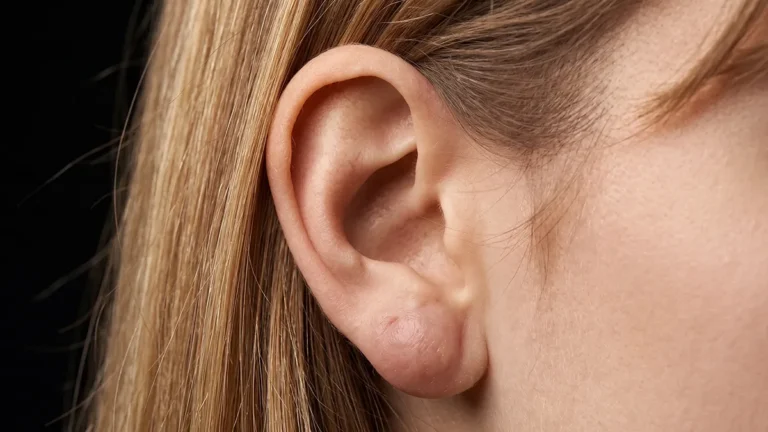
Many earlobe lumps can be removed surgically, but a diagnosis should be made before treatment is planned. The procedure may involve removing a cyst, scar, damaged piercing tract, or another lesion while preserving the natural shape of the earlobe.
Treatment may include:
- Examination and diagnosis
- Local anaesthetic
- A small incision
- Removal of the lump or scar tissue
- Closure with fine stitches
- Laboratory testing where appropriate
- Follow-up wound and scar care
Small, uncomplicated lesions can often be treated as minor procedures without a general anaesthetic. A larger keloid, recurrent lump, split earlobe, or lesion requiring reconstruction may need more detailed planning.
What Can Cause a Lump in the Earlobe?
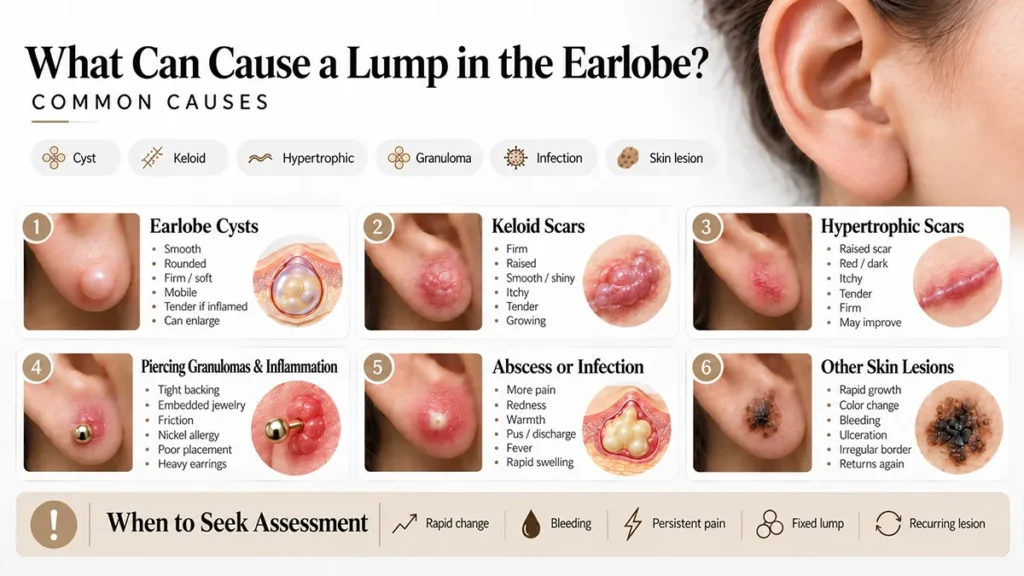
An earlobe lump is a symptom rather than a diagnosis, and several conditions can produce a similar swelling. Its cause may be related to a piercing, blocked skin structure, infection, previous injury, scar formation, or another skin lesion.
Common causes include:
- Epidermoid or skin cyst
- Keloid scar
- Hypertrophic scar
- Piercing-related granuloma
- Abscess or infection
- Foreign-body reaction
- Benign skin lesion
- Less commonly, another growth requiring investigation
The timing of the lump can provide useful information, particularly if it developed after piercing, surgery, trauma, or repeated inflammation. Changes in size, colour, tenderness, discharge, bleeding, and skin texture should also be discussed during consultation.
✓ Earlobe Cysts
A skin cyst is a rounded lump beneath the skin that contains fluid, keratin, or other material. Cysts are usually benign, although they can become tender, inflamed, infected, or repeatedly swollen.
An earlobe cyst may feel:
- Smooth or rounded
- Firm or slightly soft
- Mobile beneath the skin
- Tender during inflammation
- Larger after repeated irritation
A small opening may sometimes be visible on the skin, and thick material may discharge if the cyst ruptures. This does not necessarily mean that the cyst has been permanently treated because its lining may remain beneath the skin.
✓ Keloid Scars
A keloid is an overgrowth of scar tissue that extends beyond the boundaries of the original wound. Earlobe keloids commonly develop after piercing and may appear weeks, months, or even years after the skin was injured.
Keloids may be:
- Firm and raised
- Smooth or shiny
- Skin-coloured, red, brown, or darker
- Itchy
- Tender or painful
- Gradually increasing in size
Unlike an ordinary scar, a keloid can continue to grow outside the original piercing site. Some patients develop a rounded lump on the front, back, or both sides of the earlobe.
✓ Hypertrophic Scars
A hypertrophic scar is raised and thickened but generally remains within the borders of the original injury. It may follow a piercing, wound, burn, or operation and can look similar to a small keloid.
Features may include:
- Raised scar tissue
- Redness or darker pigmentation
- Itching
- Tenderness
- Firmness
- Gradual improvement over time
Hypertrophic scars may flatten as they mature, while keloids are more likely to extend beyond the original wound. The distinction matters because the expected behaviour and recommended treatment may differ.
✓ Piercing-Related Granulomas and Inflammation
A lump close to an earring hole may be caused by ongoing irritation, metal sensitivity, infection, or a reaction to foreign material. It may look red, moist, inflamed, or prone to bleeding.
Possible triggers include:
- Tight earring backs
- Embedded jewellery
- Repeated friction
- Nickel sensitivity
- Poorly positioned piercings
- Chronic infection
- Trauma from heavy earrings
A small inflammatory growth is not treated in the same way as a cyst or keloid. Jewellery may need to be removed or changed, and any active infection or skin reaction should be treated before elective surgery is considered.
✓ Abscess or Infection
An abscess is a collection of infected material beneath the skin and may cause rapid swelling, heat, redness, pain, or discharge. This usually requires treatment of the infection rather than routine cosmetic removal.
Warning signs include:
- Increasing pain
- Spreading redness
- Heat around the ear
- Pus or unpleasant-smelling discharge
- Fever
- Rapid enlargement
- Feeling generally unwell
Treatment may involve drainage, antibiotics, removal of embedded jewellery, or wound care. Elective excision is usually delayed until the infection and surrounding inflammation have settled.
✓ Other Skin Lesions
Not every earlobe lump is caused by a cyst, piercing, or scar. Benign moles, fibrous growths, inflamed skin lesions, and other abnormalities can also occur on the earlobe.
Assessment is particularly important if the lesion:
- Grows rapidly
- Changes colour
- Bleeds repeatedly
- Becomes ulcerated
- Develops an irregular border
- Feels fixed to deeper tissue
- Returns after previous removal
These features do not necessarily mean that the lesion is serious, but they justify prompt medical assessment. Tissue removed during surgery may be sent for histopathological examination when the diagnosis is uncertain.
How Is an Earlobe Lump Diagnosed?
Diagnosis usually begins with a clinical examination and a detailed history of how the lump developed. The surgeon assesses its size, position, firmness, relationship to a piercing, skin appearance, symptoms, and effect on the earlobe’s shape.
The consultation may cover:
- When the lump first appeared
- Whether it is growing
- Previous piercings or trauma
- Pain, itching, bleeding, or discharge
- Episodes of infection
- Previous surgery or injections
- Personal or family history of keloids
- Medication and medical conditions
- Smoking or nicotine use
- Healing problems after previous procedures
Most superficial earlobe lumps do not require a scan before treatment. Further investigation may be recommended if the lesion is unusually deep, fixed, recurrent, or difficult to identify clinically.
Can an Earlobe Lump Be Removed Surgically?
Many benign earlobe lumps can be removed through a minor operation, often under local anaesthetic. The technique depends on whether the problem is a cyst, scar, damaged piercing tract, benign lesion, or a defect requiring reconstruction.
Surgery may involve:
- Complete cyst excision
- Removal of a benign lesion
- Excision of a damaged piercing tract
- Reduction of keloid scar tissue
- Wedge excision
- Split earlobe repair
- Reshaping of the earlobe
Surgical removal is not always the first or only treatment, particularly for keloids or active infection. The anticipated benefit must be balanced against scarring, recurrence, and the possibility that further treatment will be required.
✓ How Is Earlobe Lump Removal Performed?
Small earlobe lesions can often be removed in a treatment room or day-surgery setting using local anaesthetic. The patient remains awake, but the earlobe is numbed so that sharp pain should not be felt during the procedure.
Typical steps include:
- Examining and marking the area
- Cleaning the skin
- Injecting local anaesthetic
- Making a carefully positioned incision
- Removing the lump or scar tissue
- Controlling bleeding
- Reshaping the earlobe where required
- Closing the wound with fine stitches
- Applying a small dressing
The local anaesthetic injection may briefly sting or feel uncomfortable. Pressure, movement, or pulling may still be noticed during surgery, but significant pain should be reported immediately.
✓ Will I Need a General Anaesthetic?
General anaesthesia is not usually necessary for a small and uncomplicated earlobe lump. Local anaesthetic is often sufficient because the treatment area is limited and can be numbed effectively.
General anaesthesia or sedation may occasionally be considered when:
- The lesion is particularly large
- Extensive reconstruction is required
- Several procedures are being combined
- The patient cannot tolerate local anaesthetic surgery
- There are other clinical reasons
The anaesthetic plan should reflect the extent of treatment and the patient’s health. A larger anaesthetic is not automatically better for a minor procedure.
✓ Will the Removed Lump Be Tested?
Removed tissue may be sent to a laboratory for histopathological examination. This allows a specialist to examine the cells and confirm the diagnosis.
Testing is particularly relevant when:
- The diagnosis is uncertain
- The lesion has changed
- It has bled or ulcerated
- It has returned after treatment
- Its appearance is unusual
- The surgeon considers confirmation appropriate
Not every straightforward scar requires laboratory analysis, but this decision is made on clinical grounds. Any result requiring additional care should be discussed with the patient.
✓ Can an Earlobe Keloid Be Removed?
An earlobe keloid may sometimes be reduced or removed surgically, but excision alone carries a recognised risk of recurrence. The treatment plan therefore often includes measures intended to control new scar growth.
Additional treatment may include:
- Steroid injections
- Silicone gel or sheets
- Pressure earrings or clips
- Cryotherapy in selected cases
- Laser treatment in selected cases
- Specialist radiotherapy in rare circumstances
Patients should understand that no treatment can guarantee that a keloid will never return. A realistic goal may be to reduce its size, improve symptoms, and make the earlobe easier to manage rather than promise permanent complete removal.
✓ Will the Earlobe Need Reconstruction?
Removing a larger lump may leave a defect that cannot be closed without careful reshaping. Reconstruction aims to preserve a natural earlobe contour while minimising distortion, notching, or unnecessary loss of tissue.
Possible techniques include:
- Direct closure
- Wedge excision
- Local tissue rearrangement
- Split earlobe repair
- Scar revision
- Staged reconstruction
The technique depends on the size and position of the lesion, the amount of healthy tissue remaining, and whether the front, back, or both sides of the earlobe are involved. A small cyst may leave only a short scar, while a large keloid can require more extensive planning.
Reconstruction may also be needed if a heavy earring or previous piercing has stretched or divided the earlobe. In these cases, the surgeon may remove the damaged tract and carefully rebuild the lower edge of the ear.
The final shape cannot always be predicted precisely before surgery because it depends on tissue quality and healing. Larger defects may also produce more noticeable asymmetry than minor procedures.
✓ Can the Ear Be Re-Pierced Afterwards?
Re-piercing may be possible after the earlobe has healed fully, but it should not be rushed. Patients who have previously developed a keloid may be advised to avoid further piercing because another skin injury can trigger new scar growth.
Before re-piercing, consider:
- Whether the wound has completely healed
- Whether the scar is soft and settled
- Whether there has been recurrent swelling
- The original cause of the lump
- The risk of another keloid
- The proposed position of the new piercing
A new piercing should generally avoid passing directly through a recent surgical scar. The timing and position should be discussed with the surgeon, particularly after reconstruction or treatment for abnormal scarring.
What Are the Risks of Earlobe Lump Removal?
Earlobe lump removal is usually a limited procedure, but every operation carries potential risks. The likelihood of complications depends on the diagnosis, the size of the lump, previous scarring, tissue quality, and the type of reconstruction required.
Possible risks include:
- Bleeding
- Bruising
- Infection
- Swelling
- Delayed healing
- Wound separation
- Altered sensation
- Tenderness
- Visible scarring
- Asymmetry
- Contour irregularity
- Recurrence
- Need for further treatment
The risk profile is different for a small cyst and a large recurrent keloid. Patients with a known tendency to develop raised scars require particularly careful counselling and follow-up.
✓ Can the Lump Come Back?
Some earlobe lumps can recur after treatment, although the likelihood depends on the underlying diagnosis rather than the surgery itself. Understanding why recurrence happens helps patients set realistic expectations and recognise when further assessment may be needed.
Recurrence is more likely when:
- Part of a cyst wall remains after removal, allowing the cyst to reform
- A keloid develops again because surgery creates a new wound in scar-prone tissue
- The original cause of the lump, such as ongoing irritation from a piercing, has not been addressed
- Follow-up scar treatments, such as steroid injections or pressure therapy for keloids, are not completed
- New symptoms such as thickening, itching, tenderness, or swelling develop after treatment
Although recurrence cannot always be prevented, careful surgical planning and appropriate aftercare can reduce the risk. Patients should seek review if they notice a new lump or changes around the treated area, as early intervention is often simpler than treating a larger recurrent lesion.
✓ Can Surgery Cause Another Keloid?
Any injury to the skin can trigger keloid formation in a susceptible patient. This means that an incision made to remove a keloid can sometimes stimulate another raised scar.
Factors that may increase concern include:
- Previous keloids
- Family history of keloids
- A keloid that continued to grow
- Recurrence after earlier treatment
- Darker skin types
- Repeated trauma to the same area
A surgeon may recommend postoperative steroid injections, silicone treatment, or pressure therapy to reduce the chance of excessive scar growth. These measures often require consistent use over several months.
✓ Will There Be a Scar?
Every surgical incision produces a scar, although many earlobe scars become less noticeable with time. The scar’s final appearance depends on the incision, wound tension, skin type, aftercare, and individual healing tendency.
A scar may initially appear:
- Red
- Firm
- Raised
- Tender
- Darker or lighter than nearby skin
Most scars mature gradually, although the process can take many months. Patients prone to hypertrophic or keloid scarring may require additional treatment.
What Is Recovery Like After Earlobe Lump Removal?
Recovery after a small earlobe procedure is often straightforward, with mild discomfort, swelling, or bruising during the first few days. Larger excisions, keloid treatment, or reconstructive surgery may require longer healing and more extensive aftercare.
Typical instructions may include:
- Keeping the dressing clean
- Avoiding pressure on the ear
- Taking recommended pain relief
- Protecting the wound from contamination
- Avoiding earrings
- Attending wound checks
- Returning for suture removal where required
The ear may feel tight or numb initially, particularly if a larger amount of tissue has been removed. These symptoms often improve gradually, although altered sensation can occasionally persist.
✓ When Can I Wash My Hair?
Hair washing should follow the specific wound-care instructions provided after surgery. The main aim is to avoid soaking, rubbing, or contaminating the incision during early healing.
When washing hair:
- Keep water pressure away from the wound
- Avoid pulling the ear
- Use a clean towel
- Pat rather than rub
- Keep hair products away from the incision
- Dry the area carefully
Some dressings are designed to remain dry, while others can be changed after gentle washing. Patients should not remove a dressing earlier than advised.
✓ When Are Stitches Removed?
The timing of stitch removal depends on the type of suture, the wound, and the surgeon’s preference. Some stitches dissolve, while others need to be removed during a follow-up appointment.
The decision may be influenced by:
- Wound tension
- Size of the incision
- Type of reconstruction
- Skin healing
- Signs of inflammation
- Location of the stitches
Patients should not attempt to cut or remove their own sutures. Leaving non-dissolving stitches in too long may increase irritation or leave small stitch marks.
✓ When Can I Sleep on the Treated Ear?
Pressure on the treated side should usually be avoided while the wound is sore or newly closed. Sleeping on the opposite side can reduce discomfort, swelling, and accidental rubbing.
Helpful measures may include:
- Using an extra pillow
- Sleeping on the untreated side
- Keeping hair away from the wound
- Avoiding tight headwear
- Using a travel pillow to protect the ear
Normal sleeping positions can be resumed once the area is comfortable and sufficiently healed. Patients using a prescribed pressure device for keloid treatment should follow their individual instructions.
✓ When Can I Return to Work?
Many patients can return to non-physical work relatively quickly after minor earlobe surgery. The timing depends on discomfort, dressings, appearance, workplace hygiene, and the risk of the ear being knocked.
Additional precautions may be needed for work involving:
- Helmets
- Headsets
- Dust
- Water
- Chemicals
- Physical contact
- Protective masks or straps
Patients working in healthcare, catering, construction, hairdressing, or sport may need to protect the wound more carefully. A dressing may remain visible for a short period.
✓ How Should the Scar Be Cared For?
Scar care begins only after the wound has healed sufficiently and the surgeon confirms that treatment is safe. Early care focuses on protecting the incision, while later care aims to support scar maturation.
Recommended measures may include:
- Silicone gel or sheets
- Sun protection
- Gentle massage when advised
- Pressure treatment for selected keloids
- Avoiding friction
- Avoiding premature piercing
- Attending follow-up appointments
Silicone products are generally used consistently over a prolonged period rather than for a few days. Pressure clips or earrings also require a personalised fitting and regular use.
What Are the Alternatives to Surgery?
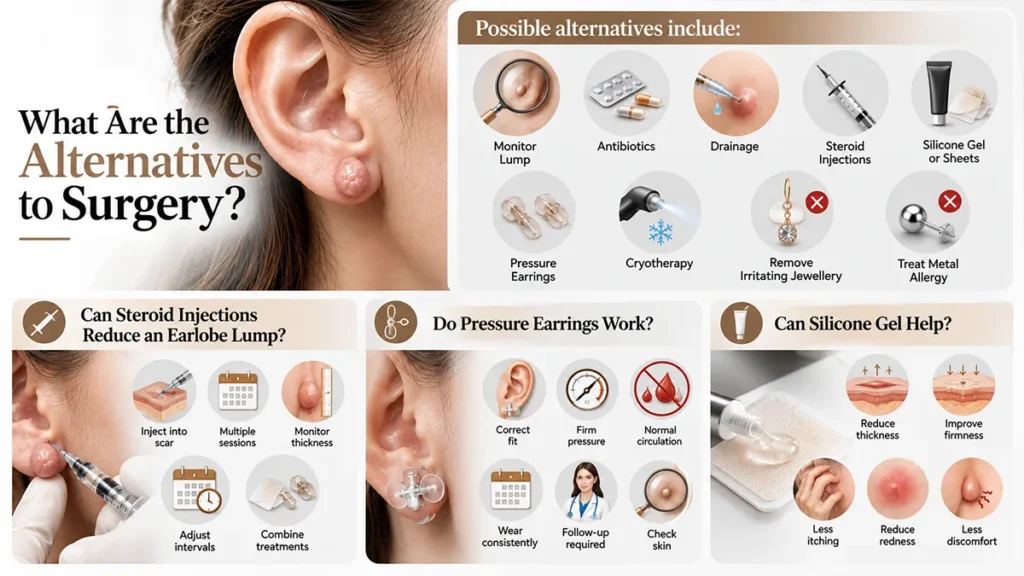
Not every earlobe lump needs immediate surgical removal. Observation, medication, injections, pressure treatment, or management of an underlying piercing problem may be more suitable.
Possible alternatives include:
- Monitoring a small stable lump
- Antibiotics for infection
- Drainage of an abscess
- Steroid injections
- Silicone gel or sheets
- Pressure earrings or clips
- Cryotherapy
- Removing irritating jewellery
- Treating metal allergy
The correct alternative depends on the diagnosis. Antibiotics do not treat a non-infected cyst, while steroid injections are not appropriate for every skin lesion.
✓ Can Steroid Injections Reduce an Earlobe Lump?
Steroid injections can help soften and flatten keloid or hypertrophic scar tissue. They may also reduce itching, tenderness, and inflammation associated with raised scars.
Treatment often involves:
- Injection directly into the scar
- More than one appointment
- Monitoring of scar thickness
- Adjustment of the interval between injections
- Combination with silicone or pressure treatment
Possible side effects include thinning of the skin, colour change, visible small blood vessels, or a temporary indentation. The dose and injection depth must therefore be selected carefully.
✓ Do Pressure Earrings Work?
Pressure earrings or custom clips may help flatten earlobe keloids by applying consistent compression. They are often used after surgery or alongside other scar treatments.
For pressure treatment to be useful:
- The device must fit correctly
- Pressure should be firm but tolerable
- Circulation must not be compromised
- The device must be worn consistently
- Follow-up is required
- Skin should be checked regularly
A poorly fitted device may cause pain, skin damage, or pressure injury. Patients should not create or modify pressure clips without appropriate advice.
✓ Can Silicone Gel Help?
Silicone gel and silicone sheets may help soften and flatten raised scars. They are usually most effective when used consistently on fully healed skin.
Silicone treatment may help with:
- Scar thickness
- Firmness
- Itching
- Redness
- Discomfort
The product should not be applied to an open wound unless specifically designed and recommended for that purpose. Some patients may develop skin irritation and need to adjust how the product is used.
Should I Squeeze or Drain the Lump Myself?
An earlobe lump should not be squeezed, cut, or drained at home. Doing so can cause infection, bleeding, inflammation, tissue damage, and additional scarring.
Home treatment may also:
- Push material deeper
- Rupture a cyst beneath the skin
- Spread infection
- Stimulate keloid growth
- Make diagnosis more difficult
- Distort the earlobe
A persistent, enlarging, or symptomatic lump should be assessed by a qualified clinician. Safe treatment depends on identifying the cause rather than simply emptying the swelling.
Who Is Suitable for Earlobe Lump Removal?
Suitable patients generally have a persistent or symptomatic lump with a diagnosis that is appropriate for surgery. They should understand the likely scar, recurrence risk, recovery, and possible need for additional treatment.
Reasons for considering removal may include:
- Repeated inflammation
- Pain or tenderness
- Interference with earrings
- Increasing size
- Cosmetic concern
- Confirmed benign lesion
- Distortion of the earlobe
- Recurrent discharge
Suitability depends on more than the patient’s wish to remove the lump. The surgeon must also consider medical conditions, medication, healing history, infection, and the risk of abnormal scarring.
✓ Who May Need to Delay Surgery?
Surgery may need to be delayed when inflammation, infection, or general health concerns increase the risk of poor healing. Treating these issues first can make removal safer and more predictable.
Reasons for delay may include:
- Active infection
- Uncontrolled medical conditions
- Poor wound healing
- Medication requiring medical review
- Current nicotine use
- Pregnancy when treatment is not urgent
- Unrealistic expectations
- Lack of an appropriate keloid plan
Patients taking blood-thinning medication should not stop it without advice from the prescribing clinician. A coordinated plan may be needed before surgery.
When Should an Earlobe Lump Be Assessed Urgently?
Most earlobe lumps are benign, but certain changes should prompt early medical assessment. Rapid progression, infection, bleeding, or ulceration should not be ignored.
Seek prompt advice for:
- Rapid growth
- Severe or increasing pain
- Persistent bleeding
- Ulceration
- Spreading redness
- Fever
- Pus or discharge
- Colour change
- Hard fixation
- Recurrence after removal
These features do not automatically indicate a serious condition. They do mean that examination should take place without unnecessary delay.
How Much Does Earlobe Lump Removal Cost?
There is no single cost for earlobe lump removal because treatment varies according to the diagnosis and complexity. A small cyst, large keloid, recurrent lesion, or earlobe reconstruction may involve different fees.
The quotation may include:
- Consultation
- Surgeon’s fee
- Local anaesthetic
- Treatment-room or hospital charges
- Histopathology
- Dressings
- Follow-up care
- Steroid injections
- Pressure devices
- Reconstructive repair
A personalised price should be provided after clinical examination. This allows the surgeon to determine whether simple excision, scar treatment, reconstruction, or laboratory testing is required.
✓ Does the NHS Remove Earlobe Lumps?
NHS treatment may be available when an earlobe lesion is infected, painful, suspicious, functionally problematic, or medically necessary. Purely cosmetic removal may not be routinely funded, and access can vary between local services.
Factors that may influence eligibility include:
- Repeated infection
- Diagnostic uncertainty
- Significant pain
- Rapid change
- Functional difficulty
- Suspicious clinical features
- Local commissioning policy
Patients can begin by discussing the lump with their GP when they believe there is a medical concern. Referral pathways and funding criteria differ by area.
✓ Is Keloid Treatment Included in the Price?
Keloid treatment often involves more than one appointment because surgery may be combined with injections, silicone therapy, or pressure treatment. Patients should ask for a clear explanation of what the quotation covers.
The treatment plan may include:
- Excision
- Postoperative steroid injections
- Silicone products
- Pressure earrings
- Wound reviews
- Scar monitoring
- Further treatment for recurrence
Cost should not be the only consideration when choosing treatment for a keloid. Experience in scar management, follow-up arrangements, and a realistic recurrence plan are equally important.
Summary
Surgery can remove many earlobe lumps, but the correct treatment depends on whether the cause is a cyst, keloid, infection, damaged piercing tract, or another skin lesion. Clinical assessment is essential because each condition has different risks, treatment options, and chances of recurrence.
Small benign lesions can often be removed under local anaesthetic, while larger keloids or distorted earlobes may require reconstruction and additional scar therapy. The safest approach is a personalised plan that considers diagnosis, healing tendency, appearance, recurrence risk, and preservation of the earlobe’s natural shape.
FAQs About Removing A Lump In Your Earlobe

Can a lump in my earlobe come and go depending on stress or hormones?
While it’s uncommon, some cysts and skin lesions may appear more inflamed during hormonal shifts or periods of stress. However, most persistent lumps are not directly related to hormone fluctuations and should still be evaluated.
Is it true that re-piercing through a removed lump site can cause it to come back?
Yes, re-piercing scarred or previously treated areas may trigger a new lump or keloid formation. Miss Breahna generally advises against re-piercing near a surgical site without personalised medical advice.
Could my earlobe lump be related to an allergy from earrings I wore years ago?
Old allergic reactions, especially to nickel or metals, can sometimes cause tissue changes or embedded debris. Even if the original reaction subsided, lingering inflammation or trapped material could lead to a lump developing over time.
Do earlobe lumps have a smell if they are infected or cystic?
Yes, sebaceous cysts can sometimes emit a foul odour if they become infected or rupture internally. This is typically a sign that the cyst wall has broken down and should be removed professionally.
Are certain people more prone to developing earlobe lumps than others?
Yes, individuals with a history of acne, oily skin, frequent piercings, keloid tendency, or genetic predispositions may develop earlobe lumps more easily. Miss Breahna tailors treatment and prevention advice accordingly.
Can removing a lump change the shape of my earlobe permanently?
If performed expertly, most removals will not alter your natural earlobe shape. In rare cases, reconstruction techniques are used to restore symmetry, especially when dealing with larger lumps or keloids.
Could my earlobe lump be linked to a deeper ear issue like hearing problems?
Most superficial lumps in the earlobe are unrelated to hearing. However, infections or rare growths near the external canal should be assessed in case of any symptoms like earache, discharge, or hearing changes.
Is it possible for the lump to be something serious like skin cancer?
Though rare, some skin cancers can present as lumps or nodules in the earlobe. Any rapidly growing, ulcerated, or irregular lump should be evaluated by a specialist like Miss Breahna to rule out malignancy with a biopsy.
Medical References
- Efficacy and Safety of Excision Combination Therapies for Earlobe Keloids: A Systematic Review and Meta-analysis / Aesthetic Plastic Surgery / https://link.springer.com/article/10.1007/s00266-024-04092-0
- The clinical application of ear keloid using five-blade core excision combined with pressure and superficial electron beam radiation / Frontiers in Medicine / https://www.frontiersin.org/journals/medicine/articles/10.3389/fmed.2025.1634961
- Successful Treatment of Recurrent Earlobe Keloid Through Removal of Concealed Underlying Epidermoid Cysts: A Case Report / Cureus / https://pmc.ncbi.nlm.nih.gov/articles/PMC10546951/
Next Step: Arrange an Earlobe Lump Consultation With Miss Breahna
If you have noticed a persistent, changing or bothersome lump in your earlobe, a clinical assessment can help determine whether it is an earlobe cyst, keloid, piercing-related lesion or another condition.
Miss Anca Breahna can assess the cause of the lump and discuss whether observation, medical treatment, scar management or surgical removal may be appropriate. The expected scar, recovery, recurrence risk and any need for further treatment can also be discussed during consultation.
You can contact Anca’s team to arrange an appointment or request further information.
Download Anca Breahna’s Skin Lesion Removal Guide

Further Reading
- Read Miss Anca Breahna’s Blog about Causes And Solutions For An Earlobe Cyst
- Read Miss Anca Breahna’s Procedure Page on Skin Lesion Excision
- Read Miss Anca Breahna’s Procedure Page on Lipoma Removal Surgery
- Read Miss Anca Breahna’s Procedure Page on SCC Removal Surgery
- Read Miss Anca Breahna’s Blog about Treatment Options for Lipoma and Other Swellings
- Read Miss Anca Breahna’s Blog about What Does Skin Cancer Look Like?
Back to blog