- Take our Plastic Surgery Quiz to find out if you'd be a good candidate for cosmetic surgery.
- Understanding Why Swelling and Bruising Happen
- How Long Does Swelling and Bruising Last After Breast Augmentation?
- Immediately After Surgery (Days 1 to 3)
- First Week (Days 4 to 7)
- Weeks 2 to 4
- Weeks 5 to 8 and Beyond
- Download Miss Anca Breahna's Breast Augmentation Guide
- Top Methods to Minimise Swelling and Bruising During Recovery
- 1. Wear Your Post-Surgical Bra as Instructed
- 2. Elevate Your Upper Body While Resting
- 3. Apply Cold Compresses in the First 72 Hours
- 4. Move Gently and Avoid Strenuous Activity
- 5. Maintain Excellent Hydration and Nutrition
- 6. Refrain from Smoking and Drinking Alcohol
- 7. Take Medications Only as Directed
- Breast Augmentation Before and After Photos
- Individual Recovery Plans Designed for You
- When You Should Seek Immediate Advice
- Staying Positive During Recovery
- Long-Term Healing and Achieving Your Best Results
- FAQs About Breast Augmentation
- Take the Next Step with Confidence
- Ready to learn more or book your consultation?
- Further Reading
- About Anca Breahna – Consultant Plastic Surgeon
Breast augmentation is more than just a cosmetic procedure. For many women, it marks a deeply personal step toward greater confidence, restored femininity, or aesthetic balance. Whether you’re choosing implants for the first time or undergoing a revision, it is natural to feel both excited and nervous about the process. Among the most common concerns patients express is how to reduce swelling and bruising after the operation.
Miss Anca Breahna, Consultant Plastic & Reconstructive Surgeon based in Chester and Liverpool, understands that post-operative care is just as important as the surgery itself. She performs breast augmentations at both Nuffield Health The Grosvenor Hospital in Chester and ASET Hospital in Liverpool. With years of surgical experience and a strong focus on patient safety, Miss Breahna provides each individual with the tools and knowledge to ensure optimal healing.
This guide outlines how you can reduce swelling and bruising after breast augmentation surgery. It includes practical advice, professional insight, and emotional reassurance so you can move through recovery with confidence.
Take our Plastic Surgery Quiz to find out if you’d be a good candidate for cosmetic surgery.
Understanding Why Swelling and Bruising Happen
Swelling and bruising are completely normal after any surgery. They are part of the body’s natural healing response. During breast augmentation, soft tissues are stretched or separated to accommodate the implant. Even when performed with precision and care, this surgical manipulation disrupts small blood vessels and causes fluid to collect in the surrounding tissues.
Bruising occurs when blood leaks from these tiny vessels and pools under the skin. The initial colour may be deep purple or blue, and as healing progresses, it typically fades to green, yellow, or brown. Swelling develops as the immune system sends fluid, white blood cells, and other repair agents to the surgical site. It may feel like tightness, heaviness, or fullness in the chest.
Miss Breahna uses meticulous techniques to reduce trauma to tissue during surgery. This often results in less post-operative swelling and quicker recovery compared to more invasive approaches. However, each patient’s body responds differently, and some degree of bruising and swelling is inevitable.
How Long Does Swelling and Bruising Last After Breast Augmentation?
Recovery timelines vary from person to person, but there are general patterns most patients can expect. Miss Breahna offers a structured follow-up plan in both Chester and Liverpool to monitor healing and provide tailored guidance at every stage.
Immediately After Surgery (Days 1 to 3)
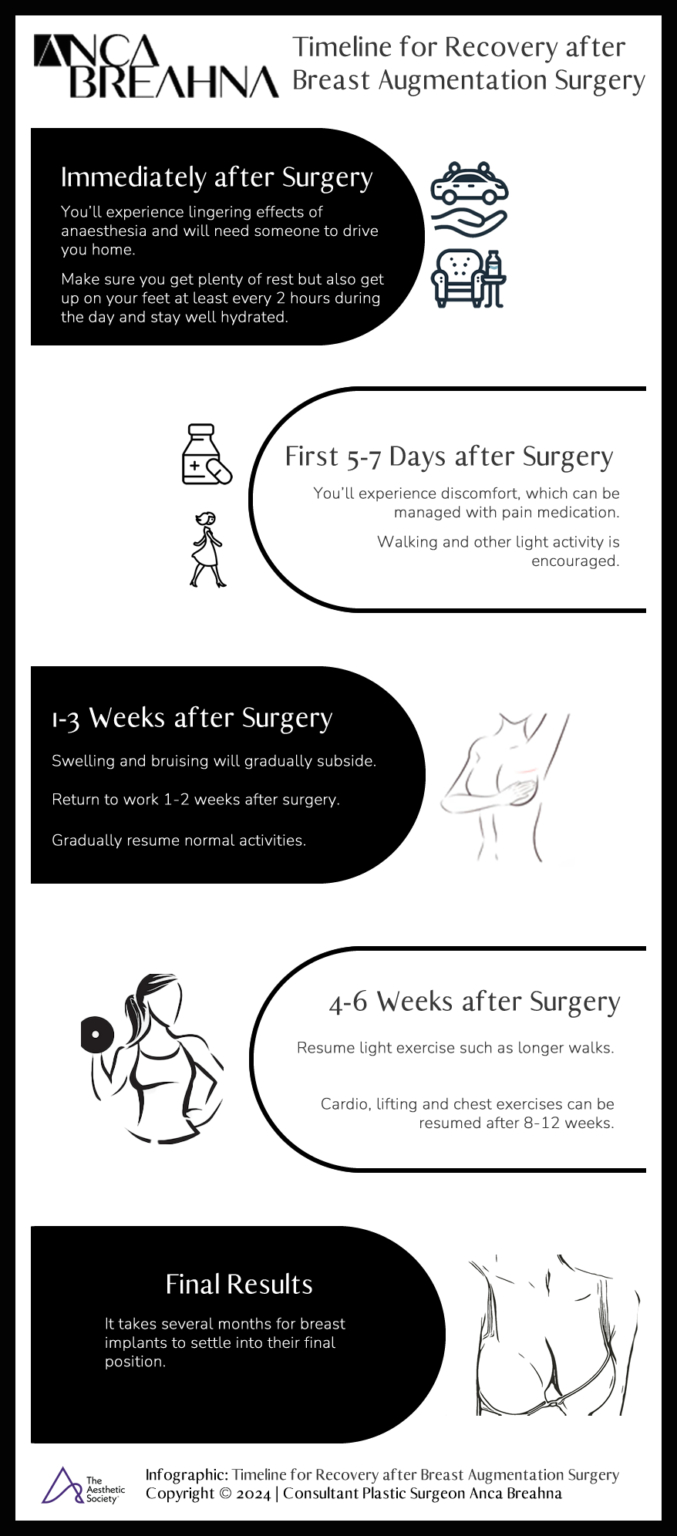
Swelling usually peaks during the first 48 to 72 hours after surgery. You may notice that your breasts look larger and feel firmer than expected. This is temporary. Bruising may begin to appear along the lower poles of the breasts or near incision lines. Patients typically feel pressure or tightness in the chest during this time.
First Week (Days 4 to 7)
Swelling begins to stabilise and may start to decline slowly. Bruising continues to evolve in colour and intensity. Light walking is usually encouraged to promote circulation, though rest remains a priority.
Weeks 2 to 4
Visible bruising usually fades significantly by the end of the second week. Swelling gradually reduces as fluid disperses and tissues begin adapting to the implants. By this point, many patients return to work, provided their jobs are not physically strenuous.
Weeks 5 to 8 and Beyond
Residual swelling may still be present but is often subtle. The implants begin to settle into their final position as the chest muscles and skin relax. This process is sometimes referred to as “drop and fluff.” Final results may not be fully visible until three to six months after surgery.
Throughout this process, Miss Breahna provides close follow-up and care, ensuring patients feel supported at each step of their recovery. Her hands-on approach, whether at Nuffield Health in Chester or ASET Hospital in Liverpool, ensures that patients are never left to navigate healing alone.
Download Miss Anca Breahna’s Breast Augmentation Guide
Top Methods to Minimise Swelling and Bruising During Recovery
Now that you know what to expect, here are the most effective ways to reduce swelling and bruising after breast augmentation. These recommendations are based on both clinical research and Miss Breahna’s experience guiding hundreds of patients through surgery and recovery.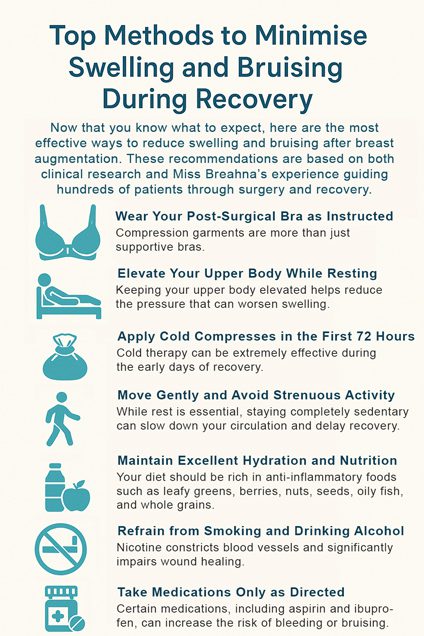
1. Wear Your Post-Surgical Bra as Instructed
Compression garments are more than just supportive bras. They are designed to reduce fluid buildup, stabilise implants, and provide gentle compression to the surgical area. Wearing the right bra, as recommended by Miss Breahna, helps speed up the healing process and minimises swelling.
Your surgical bra should fit snugly but not feel restrictive. It should offer support without digging into your skin or causing pressure on the incisions. Typically, you’ll need to wear the bra continuously for at least four to six weeks, depending on your progress.
2. Elevate Your Upper Body While Resting
Keeping your upper body elevated helps reduce the pressure that can worsen swelling. During the first few weeks of recovery, sleep on your back with your head and shoulders elevated using pillows or a wedge cushion. Avoid sleeping flat or on your side, as this may increase swelling and affect implant positioning.
Miss Breahna recommends maintaining this sleeping posture for at least two to three weeks post-surgery. Patients often find that elevation also helps improve overall comfort during the night.
3. Apply Cold Compresses in the First 72 Hours
Cold therapy can be extremely effective during the early days of recovery. Cold compresses reduce blood flow to the area, which helps control bruising and limits the spread of swelling. Apply cold packs wrapped in a soft cloth to the upper chest for 15 to 20 minutes at a time, taking breaks between applications.
Never place ice directly on the skin or near incisions. Avoid prolonged use after the initial 72 hours, as the body will begin transitioning into deeper stages of healing, where warmth and circulation become more important.
4. Move Gently and Avoid Strenuous Activity
While rest is essential, staying completely sedentary can slow down your circulation and delay recovery. Miss Breahna encourages gentle walking from day one. Moving your legs, stretching your feet, and getting up for brief walks throughout the day promotes blood flow and reduces fluid retention.
At the same time, avoid lifting, stretching, or any upper body exercises that could strain the chest muscles or shift implant position. Activities such as driving, reaching overhead, or lifting shopping bags should be postponed until you receive medical clearance.
5. Maintain Excellent Hydration and Nutrition
Water is essential to the healing process. Staying well-hydrated flushes out excess fluid, supports healthy circulation, and aids in tissue repair. Aim to drink 1.5 to 2 litres of water daily, unless advised otherwise.
Your diet should be rich in anti-inflammatory foods such as leafy greens, berries, nuts, seeds, oily fish, and whole grains. Foods high in salt can cause the body to retain water, which worsens swelling. Processed snacks, fried foods, and sugary drinks should be avoided during recovery.
6. Refrain from Smoking and Drinking Alcohol
Nicotine constricts blood vessels and significantly impairs wound healing. Even if you only smoke occasionally, doing so after surgery increases your risk of complications, delays healing, and contributes to poor scarring. Similarly, alcohol thins the blood and may increase bruising.
Miss Breahna advises all patients to stop smoking and drinking alcohol at least two weeks before surgery and to continue abstaining for several weeks after. This gives your body the best chance to heal properly.
7. Take Medications Only as Directed
After your surgery, Miss Breahna will provide you with detailed instructions regarding pain management and any medications prescribed. It is important not to self-medicate with anti-inflammatories, herbal supplements, or over-the-counter remedies unless you’ve been told it is safe.
Certain medications, including aspirin and ibuprofen, can increase the risk of bleeding or bruising. If you have concerns about any medications you’re taking, always consult directly with Miss Breahna or her clinical team.
Breast Augmentation Before and After Photos


Individual Recovery Plans Designed for You
No two patients are alike. Factors such as age, skin elasticity, muscle tone, implant size, and surgical technique all influence how your body heals. That is why Miss Breahna provides customised post-operative care for every individual.
Whether you’re seen in Chester at Nuffield Health or in Liverpool at ASET Hospital, you’ll receive a detailed recovery plan tailored to your procedure and medical history. This includes when to resume exercise, what bras to wear, and how to monitor for signs of complications.
By listening carefully to your concerns and closely tracking your progress, Miss Breahna ensures your recovery is not only safe but also as smooth and comfortable as possible.
When You Should Seek Immediate Advice
While some discomfort, bruising, and swelling are normal, it’s important to know when to get in touch with your surgeon. You should contact Miss Breahna promptly if you experience:
- Sudden or dramatic swelling in one breast
- Increasing pain that doesn’t improve with medication
- Redness, warmth, or a sensation of heat around the incisions
- Fluid leakage or signs of infection
- Fever or chills
Miss Breahna and her team provide comprehensive aftercare and are available to support you at any time during your recovery. You will be given full contact details and access to follow-up appointments as needed.
Staying Positive During Recovery 
Recovery from breast augmentation is not just physical; it is emotional too. The first few weeks can be filled with questions and uncertainty, especially when your body feels unfamiliar. Swelling and bruising can distort your perception of the final result, but with patience and guidance, those early changes give way to beautiful, natural-looking outcomes.
Miss Breahna is known for her caring and transparent approach. She explains each phase of recovery clearly and helps patients navigate their healing with confidence. As the swelling subsides and the implants settle, your body begins to reflect the vision you had when you first considered surgery.
Long-Term Healing and Achieving Your Best Results
Final results from breast augmentation are typically visible three to six months post-surgery. During this time, your implants will gradually settle into position, incisions will fade, and the swelling will resolve entirely. Following your recovery instructions closely can make a meaningful difference in both the aesthetic outcome and how you feel throughout the healing process.
Miss Anca Breahna’s goal is not just to deliver excellent surgical results but to support each patient fully. Her dual presence in Chester and Liverpool allows patients convenient access to consultations, surgery, and aftercare.
FAQs About Breast Augmentation
Can I get a lymphatic drainage massage after breast augmentation?
Lymphatic drainage massage can help reduce swelling in some cases, but it should only be performed by a qualified therapist and after approval from your surgeon. It is usually not recommended until several weeks post-surgery.
Why does one breast swell more than the other after surgery?
Mild asymmetry in swelling is common due to the way your body heals. However, if one breast becomes dramatically more swollen or painful, it could indicate a complication and should be reviewed.
Can certain sleeping positions make swelling worse?
Yes, sleeping flat or on your stomach can increase pressure on the chest and worsen swelling. It is best to sleep on your back with your upper body elevated during the initial recovery phase.
Do herbal teas or supplements help reduce bruising?
Some people believe arnica or bromelain may help, but scientific evidence is limited. Always consult with your surgeon before taking any supplements, as some can interfere with healing.
Is it normal for bruising to appear days after surgery?
Yes, bruising can migrate and appear in new areas as blood settles into surrounding tissues. This is often harmless and part of the natural healing process.
Can hydration really make a difference in reducing swelling?
Absolutely. Proper hydration supports lymphatic function and circulation, both of which help the body clear fluid buildup more efficiently.
Will applying heat instead of cold help after a few days?
After the first 72 hours, gentle warmth can promote circulation and assist healing. However, heat should be used cautiously and never directly on the breasts without guidance.
Is bruising around the armpits or ribs normal?
Yes, depending on implant placement and tissue manipulation, bruising may extend beyond the breast area. This is usually temporary and fades on its own.
Can emotional stress increase swelling?
Yes, high stress levels can elevate blood pressure and trigger inflammation, potentially worsening swelling. Rest and relaxation are essential parts of recovery.
Should I avoid certain types of clothing during recovery?
Tight clothing, especially anything that presses against the chest, can restrict circulation and increase swelling. Loose, breathable garments are ideal in the first few weeks.
Medical References
- Recognizing and Managing Breast Implant Complications: A Review for Health Care Providers – Dovepress – https://www.dovepress.com/recognizing-and-managing-breast-implant-complications-a-review-for-hea-peer-reviewed-fulltext-article-MDER
- Hematoma and deep surgical site infection following primary breast augmentation – ScienceDirect – https://www.sciencedirect.com/science/article/abs/pii/S1748681518302559
- Incidence of Long‑Term Complications in Breast Implant Prostheses – MDPI – https://www.mdpi.com/2077-0383/11/3/624
Take the Next Step with Confidence
Swelling and bruising are part of the journey, but with expert guidance, they can be managed successfully. If you’re planning breast augmentation or already booked in for surgery, make sure you are informed, prepared, and supported.
Miss Anca Breahna offers expert care with a personal approach, from initial consultation through every stage of healing. With surgical privileges at Nuffield Health The Grosvenor Hospital in Chester and ASET Hospital in Liverpool, she provides patients with exceptional continuity of care.
Ready to learn more or book your consultation?
Reach out today and take the next step towards renewed confidence.
Contact Information
Nuffield Health The Grosvenor Hospital, Chester
ASET Hospital, Liverpool
Phone: 07538 012918
Email: contact@ancabreahna.com
Website: www.ancabreahna.com
Further Reading
- Read Dr Breahna’s Blog on What to Eat After Plastic Surgery for the Best Recovery
- Read Dr Breahna’s Blog on Treating, Reducing and Minimising Plastic Surgery Scars
About Anca Breahna – Consultant Plastic Surgeon
 Miss Anca Breahna, PhD, MSc, FEBOPRAS, FRCS (Plast), is a Consultant Plastic, Reconstructive and Aesthetic Surgeon in Chester with extensive experience in breast surgery. Her reconstructive and aesthetic background gives her a detailed understanding of breast shape, volume, symmetry and tissue characteristics, all of which are important when planning breast enlargement. She assesses each patient’s chest width, existing breast tissue, skin quality and overall proportions before discussing whether augmentation is appropriate.
Miss Breahna performs breast augmentation in Chester for women seeking greater breast volume, improved symmetry or restoration of fullness following pregnancy, breastfeeding or weight loss. Treatment planning includes careful discussion of implant size, shape and placement, as well as incision position, expected scarring and long-term considerations. As an experienced plastic surgeon in Chester, Miss Breahna focuses on selecting an implant and surgical approach that suits the patient’s individual anatomy and goals, while ensuring that expectations, risks and recovery are clearly understood before surgery.
Back to blog